
Last updated November 17, 2026
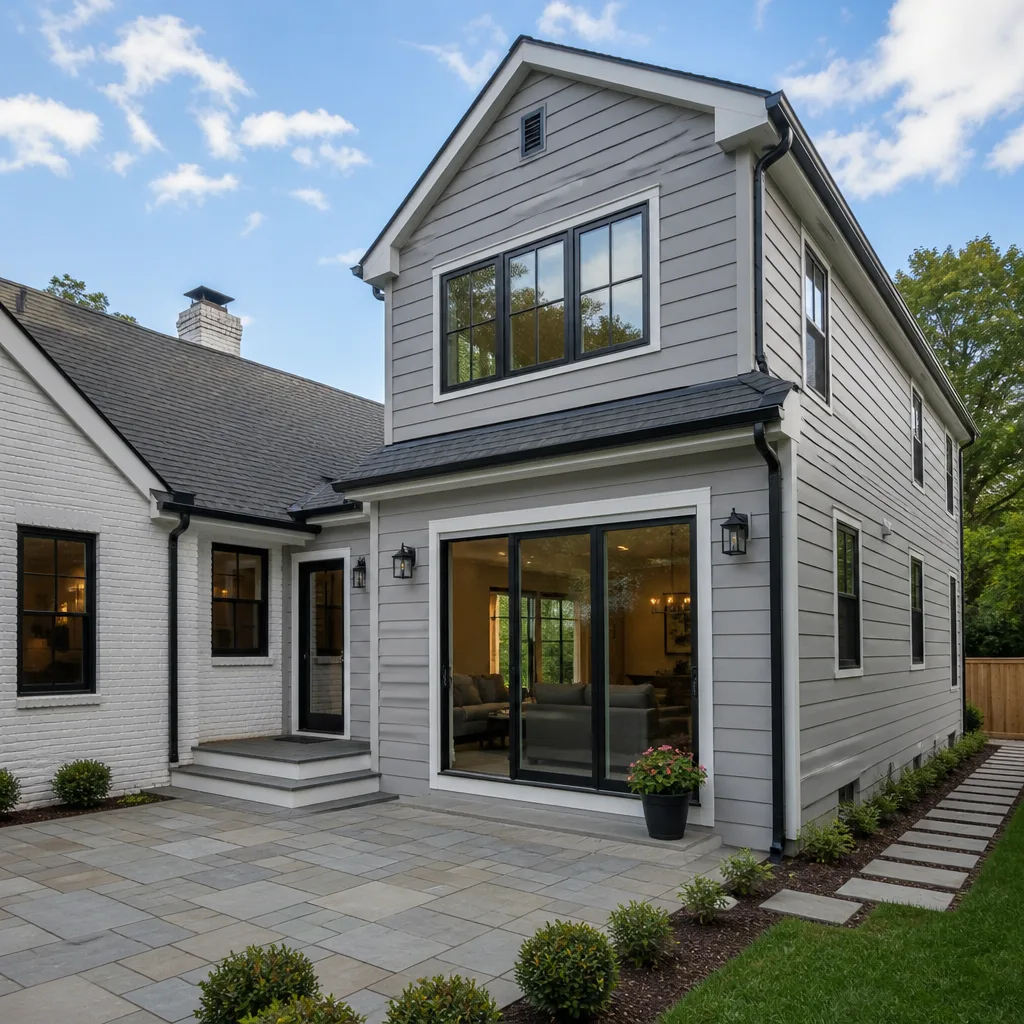 Home additions & ADU
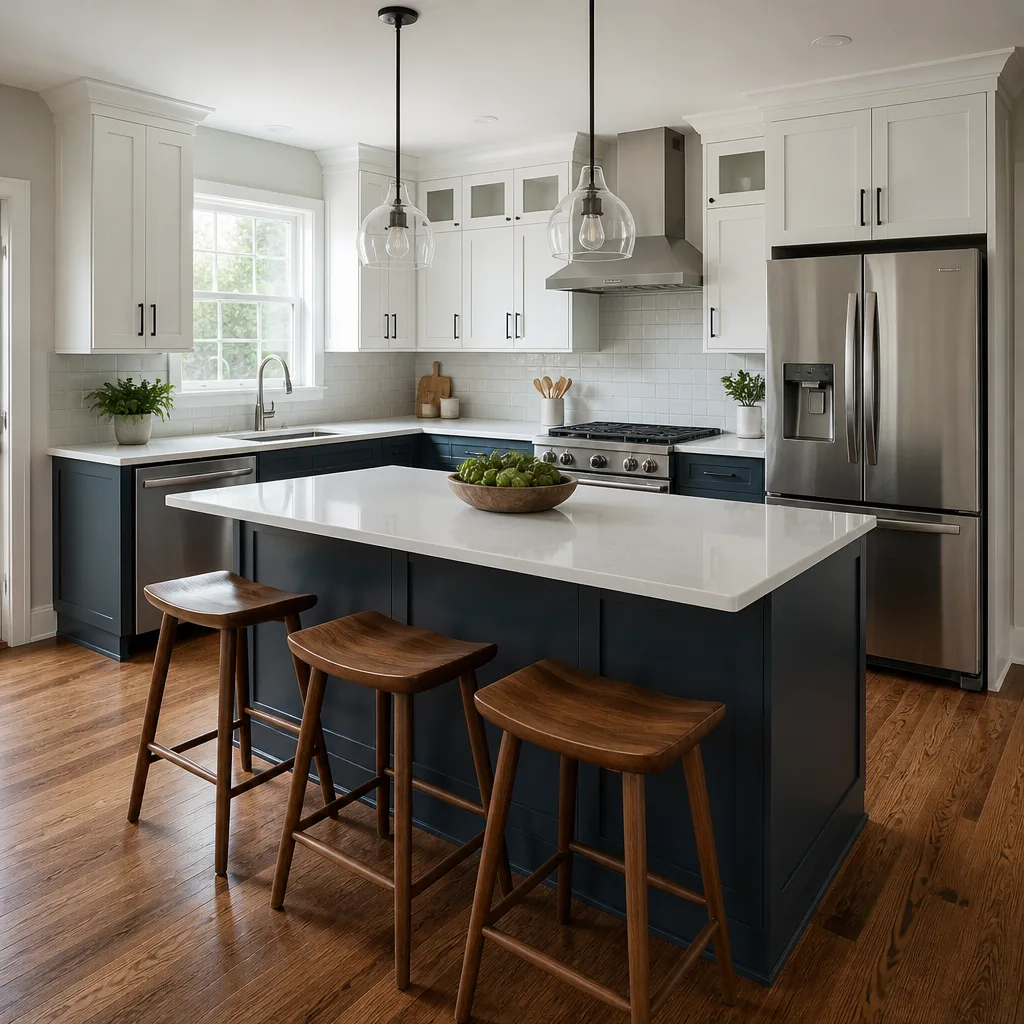 Kitchen remodeling
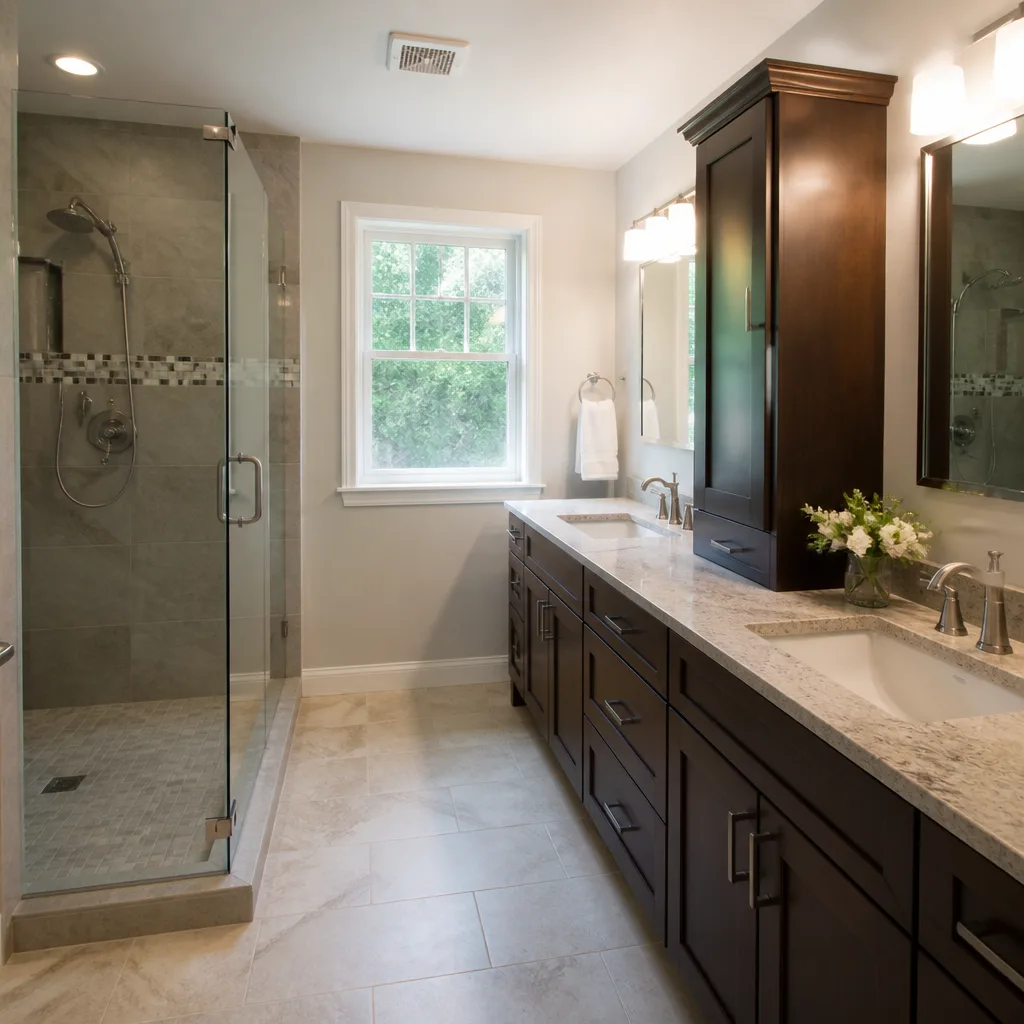 Bathroom remodeling
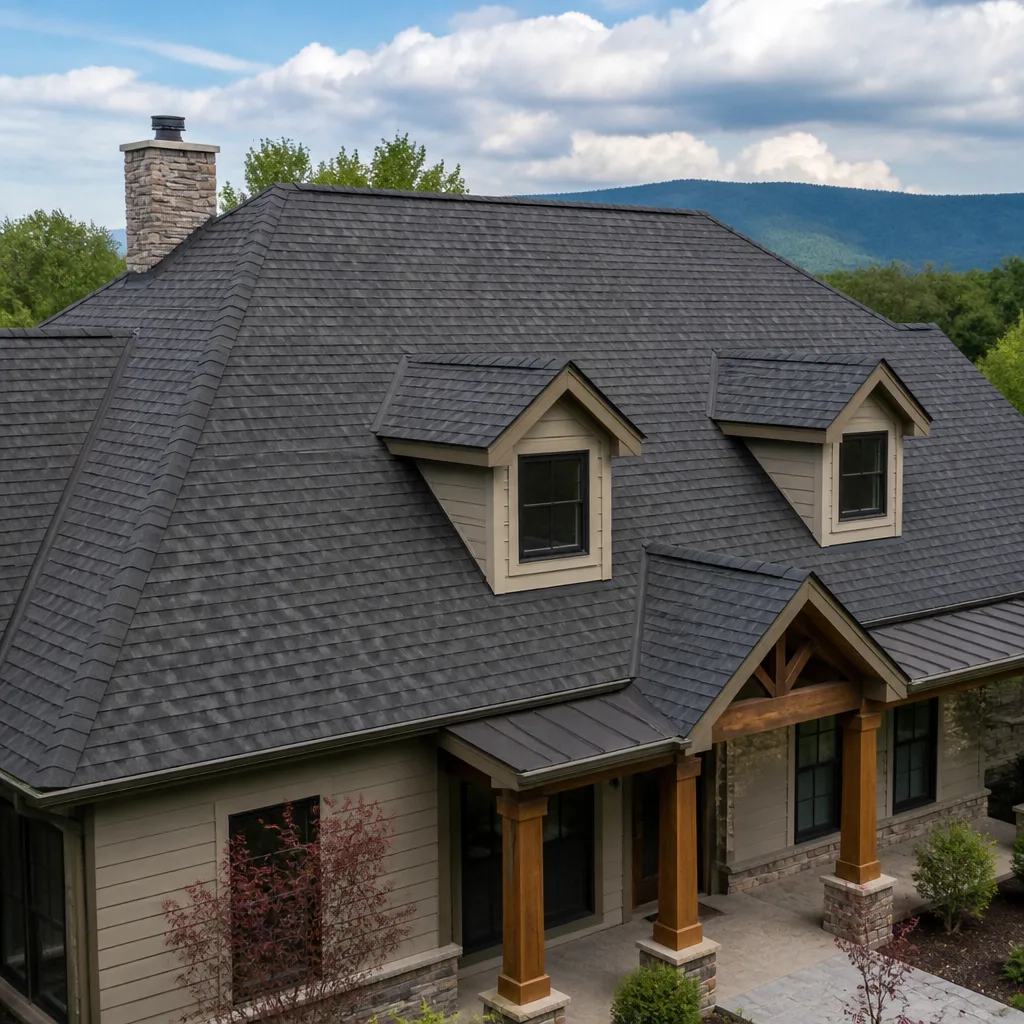 Roofing
 Windows & doors
 Driveway & pavers
 Fence
Free written scope consultation - allowances, timeline, and change-order rules on paper before a single trade is scheduled
Construction Cost Breakdown: The Antioch Homeowner’s Reference for 2026
The national average cost per square foot for a bathroom remodel in 2026 is $150. The Antioch market rate is closer to $210, and that gap is not a scam. It’s clay soil, Contra Costa County labor rates, city permit fees, and the logistics of getting materials over the Antioch Bridge. Understanding exactly why the gap exists is the only way to tell a fair bid from a padded one. This guide breaks down where your money actually goes on an Antioch project in 2026: labor percentages, material costs, permit fees, contractor overhead, and the line items a contractor should always show you but often doesn’t.
Quick Answer
Construction costs in Antioch in 2026 run roughly 15 – 25% above national averages, driven mainly by higher Bay Area labor rates, clay soil that requires deeper foundations on additions and flatwork, and City of Antioch permit and inspection fees that typically add 3 – 6% to a project total. A fair bid in Antioch shows labor as a percentage, materials as line items, permits as a pass-through, and overhead and profit as a separate, explicit line. When any of those are bundled into a single lump-sum price with no breakdown, you can’t audit the bid, and that’s exactly the problem this guide solves.
Styles & brands we work with
- Kitchen remodeling
- Bathroom remodeling
- Home additions & ADU
- Roofing
- Windows & doors
- Driveway & pavers
- Fence
Table of Contents
- Where your Antioch construction dollar actually goes
- Why Antioch costs run 15 – 25% above national averages
- What Antioch’s clay soil does to foundation and flatwork costs
- City of Antioch permit and inspection fees in 2026
- How to audit a construction bid line by line
- 2026 material cost volatility: what’s still inflated and what’s normalized
- Cost breakdown by service: kitchens, bathrooms, roofs, additions
- Common mistakes to avoid
Where your Antioch construction dollar actually goes
Most cost guides stop at “labor and materials.” That’s not a breakdown, that’s a headline. Here’s what actually happens to a dollar on an Antioch job in 2026. We’ve pulled these percentages from projects we’ve run across the city, from the older housing stock off G Street to the newer builds out toward the Vineyards.
- Labor: 40 – 48% of project total. In Antioch, skilled trade labor runs $85 – $135 per hour depending on the trade. Electrical and plumbing are at the top, finish carpentry and drywall somewhere below. Tile setters are among the hardest trades to schedule in East Contra Costa right now.
- Materials: 30 – 38%. This swings more than anything else. Roofing shingles, paint, and lumber have largely stabilized. Windows and special-order cabinetry have not.
- Permits and inspections: 3 – 6%. Antioch’s Building Division fees are set by the municipal fee schedule, not by your contractor. Any bid with permits bundled into general “overhead” is hiding the number.
- Overhead: 8 – 12%. Insurance, licensing, office costs, vehicle maintenance, and the estimating time that goes into a good bid. A contractor who shows zero overhead on a bid is either new or cutting safety corners.
- Profit: 8 – 12%. A healthy margin is how a contractor stays in business long enough to honor a warranty. We put profit on every estimate, and we say so. Hiding it inside materials is where trust evaporates.
Those percentages are what a fair bid looks like. The Groundwork Construction Co. of Antioch home page has more on how we structure estimates, but the principle is simple: upfront pricing, no surprises. The number you see should be the number you pay, and you should be able to see where it came from.
One note on those percentages: they shift depending on scope. A roof replacement runs heavier on materials (50%+). A bathroom in an older Antioch home runs heavier on labor, because the rough plumbing is cast iron and the subfloor has to be rebuilt before tile goes down. The percentages are a framework, not a fixed recipe.
Why Antioch costs run 15 – 25% above national averages
The simplest answer is that Antioch is in the Bay Area labor market, and that market sets the wage floor for every trade here. A tile setter who can earn a certain hourly rate in Walnut Creek is not going to commute 40 minutes east on Highway 4 to earn less. That reality alone accounts for roughly 10 points of the gap over the national average.
The other 5 – 15 points come from things that are specific to this city and this stretch of East Contra Costa:
- Highway 4 traffic logistics. Getting trades from Concord or the Peninsula to Antioch costs time, and time is billed. A crew that loses an hour each way to traffic is a crew whose rate reflects that.
- Clay soil. More on this in the next section, but it’s the single biggest cost driver on additions and flatwork.
- Permit fees. Antioch’s fees are competitive, but they’re real and they’re not optional.
- Older housing stock. A large share of Antioch’s residential inventory was built before 1990. Older homes mean surprises behind the drywall: aluminum wiring, missing shear walls, undersized framing. Good contractors price for these. Bad ones don’t, and they make it up later in change orders.
- Special-order supply chains. KraftMaid cabinets or Cambria counters ship through regional distribution; the Bay Area location is competitive, but lead times and freight are not free.
Which of those cost centers is legitimate and which varies by contractor efficiency? Labor and logistics are legitimate. Permits are legitimate and non-negotiable. Overhead and profit should be explicit and reasonable (8 – 12% each is normal). Where you should push back: any bid that prices “miscellaneous” as a flat percentage with no line items, any bid that refuses to break out permits, and any bid with change-order language that lets the contractor walk away from a fixed price. That last one is where the biggest real savings live.
What Antioch’s clay soil does to foundation and flatwork costs
Here’s the single biggest regional surprise most Antioch homeowners run into: the ground under your house. Much of Antioch sits on expansive clay soil, and that clay swells when wet and shrinks when dry. We get both cycles in the same year. A wet winter followed by a hot dry summer moves that soil more than the soils under Pleasanton or Walnut Creek, which are generally more stable.
What that means for your wallet:
- Additions. A home addition or ADU in Antioch typically requires deeper footings than you’d need a few miles west. Depending on the engineering report, footings that might run $10,000 – $14,000 in Walnut Creek can run $14,000 – $20,000 here. An engineered plan with a geotechnical report is not optional on additions in this clay.
- Driveways and pavers. A standard driveway pour on clay needs a deeper compacted aggregate base (6 – 8 inches instead of 4), and that base is most of what keeps the slab from cracking. Cost difference on a typical 600-square-foot driveway: roughly $2,000 – $3,500 more in Antioch than in a better-subgrade city. Same story on patios and walkways.
- Fencing. Post holes on expansive clay need deeper embedment and often a concrete collar rather than a gravel fill. A 150-foot fence line costs more here for the same reason.
- Drainage. Standing water against a foundation in clay is the fastest route to a cracked slab. Good contractors include positive drainage away from the house as part of any flatwork bid, and that’s a justified line item.
If you’re budgeting a driveway, patio, or fence project, the Driveway & Pavers in Antioch page covers base prep and paver selection in detail. The short version: on Antioch clay, base prep is not where you cut corners, and any bid that skips a proper compacted base is the one that ends up cracked in three winters.
One more point for comparisons: homeowners often quote Pleasanton or Walnut Creek prices as “what it should cost.” On interior finish work, those cities are valid comparisons. On anything touching the ground, they aren’t. You’re pricing a different subgrade.
City of Antioch permit and inspection fees in 2026
Permit fees are set by the City of Antioch Building Division, not by your contractor. They are a pass-through, and a good bid shows them as a separate line. Here’s what to expect on the most common residential scopes:
- Kitchen or bathroom remodel (interior, no structural): typically $400 – $1,200 in total permit and inspection fees, depending on scope and whether electrical or plumbing rough-ins are altered.
- Roof replacement: typically $250 – $600. Roofs get re-permitted more often than homeowners expect.
- Fence installation: typically $100 – $250 for a standard 6-foot residential fence, and check the height limit before you buy materials.
- Driveway or flatwork: typically $150 – $400, and any widening of an existing curb cut triggers a separate right-of-way review.
- Home addition or ADU: typically $2,000 – $6,000-plus, driven by square footage and the number of trade inspections required. ADUs have their own fee schedule and often require a separate planning review.
Two things worth knowing about Antioch’s process. First, the city requires engineered plans for structural changes on additions and for anything that alters an existing foundation, which means an extra plan-review cycle and a few hundred dollars in engineering. Second, inspections are scheduled through the city’s online portal; a contractor who is unfamiliar with the Antioch system loses days waiting on an inspector, and those days can push a job past the point where a subcontractor has moved on. Ask any contractor you’re considering how many Antioch permits they’ve pulled recently. A vague answer is your answer.
The plan-review timeline is where Antioch jobs most often drift. A straightforward bathroom permit can clear in a couple of weeks. Additions and ADUs commonly take six to ten weeks from submittal to permit in hand, and that window is part of your project schedule whether or not it shows up in the bid. If a contractor quotes four weeks for an addition and doesn’t mention plan review, they’re quoting a number they can’t deliver. Details on scope and planning for this category are on the Home Additions & ADU in Antioch page.
How to audit a construction bid line by line
Here’s the practical part. A bid you can audit is a bid you can trust. A bid you can’t audit is a bid you’re paying for on faith. Use this checklist on every number you receive.
- Check that labor appears as a dollar amount or a percentage, not just “install.” If a line item says “install cabinets: $4,000,” that’s fine. If it says “labor: included,” you’ve lost the thread. Labor should be roughly 40 – 48% of the project total.
- Check that permit fees are itemized. A pass-through should be a pass-through. If permits are buried in overhead, ask for the fee schedule.
- Check that materials are brand-named and specified. A bid that says “mid-grade vinyl” or “premium cabinets” is a bid that lets the contractor substitute whatever is cheapest at the time. Look for the specific product line: James Hardie siding and KraftMaid cabinetry are standard for us on the jobs where they apply, and they should be named in writing.
- Check for an explicit overhead and profit line. 8 – 12% each is normal. A contractor who won’t show it is either hiding it or hasn’t thought about it.
- Check for a fixed-price clause. “Fixed pricing with no change orders” should be in writing. If the bid has an open-ended allowance for “unforeseen conditions,” ask what the budget cap on that allowance is.
- Check the warranty language. Workmanship warranty should be specific and in writing. Our 730-Day Done Right Promise is one of the longest in residential construction, and it’s on every estimate because it’s a real commitment, not marketing language.
- Check the scope description against your plans. A bid that’s missing the light switch relocation or the subfloor rebuild is not a cheap bid; it’s an incomplete bid that will grow.
If a bid fails three or more of those tests, you’re not being quoted fairly. If it passes all seven, you’re dealing with a contractor who manages projects the way a general contractor should: with a plan and a paper trail. That’s the difference between upfront pricing, no surprises and the change-order shuffle that burns most homeowners.
2026 material cost volatility: what’s still inflated and what’s normalized
The post-pandemic material market has mostly settled, but not equally. Here’s the current state of play for the categories that matter most on Antioch projects, and what it means for how you time your purchases on a longer-lead job.
- Lumber and framing: normalized. Dimension lumber and engineered framing are back in line with 2019 prices adjusted for inflation. Good news if you’re framing an addition.
- Roofing shingles: mostly stabilized, with modest increases. GAF and CertainTeed both have reliable supply through regional distribution. A roof replacement scheduled in the fall (post-fire-season, pre-winter rain) tends to price slightly better than one rushed in spring.
- Windows and doors: still 15 – 25% above 2019 pricing, with the longest lead times on the list. Special-order windows and doors from Andersen and Pella can run 8 – 14 weeks in 2026. Order them at permit submittal, not after demo. Waiting costs you schedule, and schedule costs you money.
- Cabinetry: semi-custom lines like KraftMaid and Wellborn are running 6 – 10 weeks. Custom is longer. Ordering cabinets early is the single biggest schedule lever on a kitchen.
- Countertops: Cambria quartz and other engineered stone have leveled off. Fabrication slots are the constraint more than material price. Book the template date when you order the cabinets, not after.
- Concrete: up somewhat and stable. Ready-mix pricing in Contra Costa County is driven by local batch plant capacity; the market is healthy right now.
How to time purchases on a longer-lead project: work backward from your target completion, not forward from your start. On a 12-week kitchen, cabinets should be ordered at week zero, counters templated at week six, and appliances ordered in parallel with cabinets. On an addition, windows and doors are ordered at permit submittal. A contractor who says “we’ll order when we get there” is the one whose job runs long. Material built to last, backed in writing is worth the wait; a stalled job is not.
Cost breakdown by service: kitchens, bathrooms, roofs, additions
Here’s the practical price landscape on the most common Antioch project types in 2026. Treat these as ranges for planning, not quotes: a real number requires walking the house.
- Kitchen remodel, mid-range: roughly $55,000 – $95,000. Cabinetry and countertops are 35 – 40% of the total. Labor is 40%. A full gut with relocated plumbing and electrical pushes toward the top of the range.
- Bathroom remodel, mid-range: roughly $18,000 – $35,000 per full bath. Roughly $210/square foot in the Antioch market. Tile labor and plumbing rough-in are the biggest swing items.
- Roof replacement: roughly $14,000 – $28,000 for a typical Antioch single-family home, depending on pitch, tear-off layers, and whether decking needs replacement. Materials are about half the total.
- Fence installation: roughly $35 – $65 per linear foot installed, driven by material (wood vs. composite vs. ornamental) and post depth on clay. See the Fence Installation in Antioch page for a full breakdown by material.
- Driveway and pavers: roughly $12 – $28 per square foot installed, with the base prep on clay accounting for 30 – 40% of the cost.
- Home addition or ADU: roughly $280 – $450 per square foot finished for an addition, and $250 – $400 for a detached ADU depending on site work, utilities, and finish level.
Across all six categories, budget a 10 – 15% contingency on top of the quoted number for an older Antioch home. You will hit something behind the drywall, under the slab, or in the electrical panel, and a contingency is the difference between a managed surprise and a busted budget.
Common Mistakes to Avoid
- Comparing Antioch bids to Walnut Creek or Pleasanton numbers. Interior finish work is roughly comparable, but anything touching clay soil is not. A Walnut Creek foundation quote on an Antioch addition will undershoot by several thousand dollars.
- Choosing the lowest bid without auditing it. The cheapest bid in Antioch is usually cheapest because a line item is missing, and that line item shows up as a change order.
- Ordering materials after demo. Windows and cabinets ordered post-demo put a job in a two-to-three-month stall. Order at permit submittal.
- Letting permits get bundled into “miscellaneous.” If the permit line isn’t explicit, you can’t know what you were charged or whether the permit was even pulled.
- Skipping the contingency on pre-1990 housing stock. A house built in the 1970s in Antioch will have surprises; a fixed budget with zero contingency is a budget that breaks.
- Grading a driveway or patio without proper base depth on clay. A 4-inch base instead of 6 – 8 inches saves a few hundred dollars at install and costs thousands at repair.
- Accepting a warranty that isn’t in writing and doesn’t specify a term. A verbal “we stand behind our work” and a written 730-Day Done Right Promise are different products. Get the term in writing.
- Signing a bid with an open-ended “unforeseen conditions” clause. If the allowance has no cap, your fixed price isn’t fixed.
See the difference
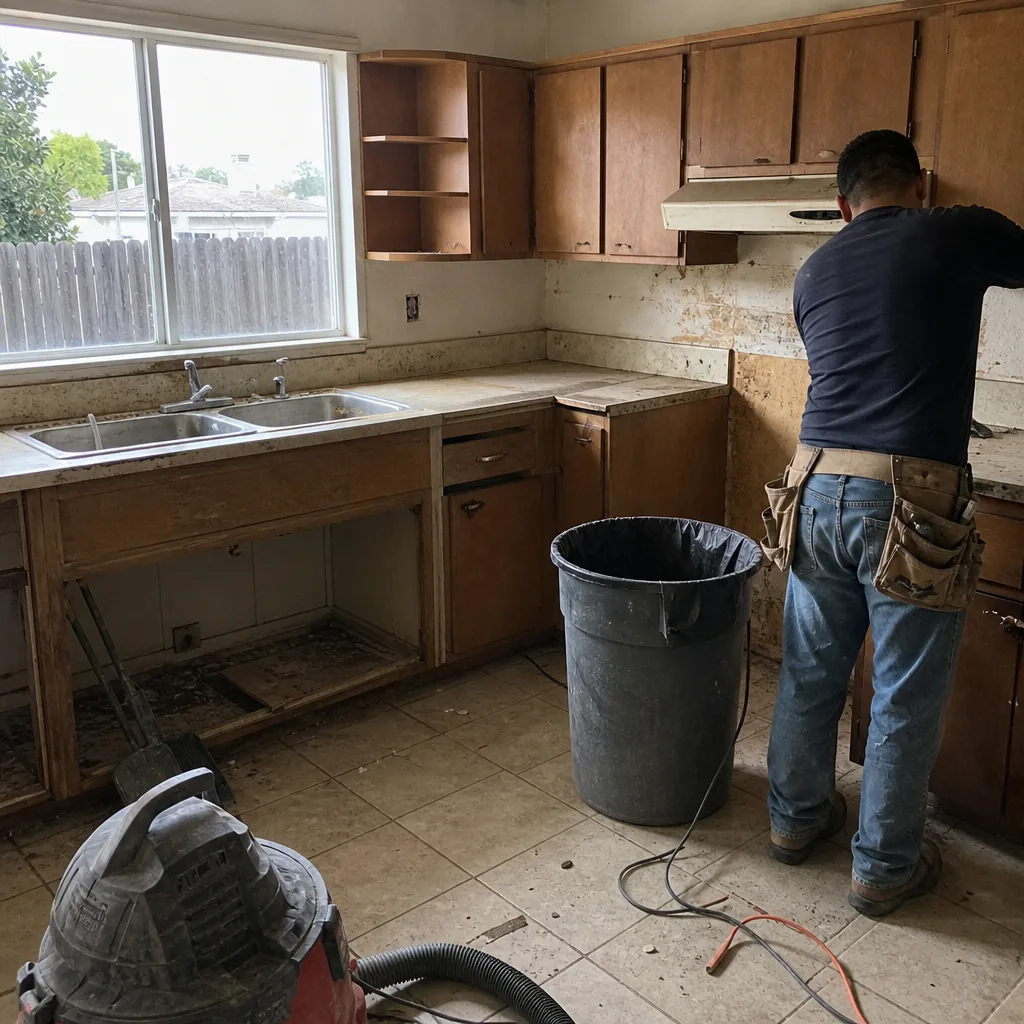 Before
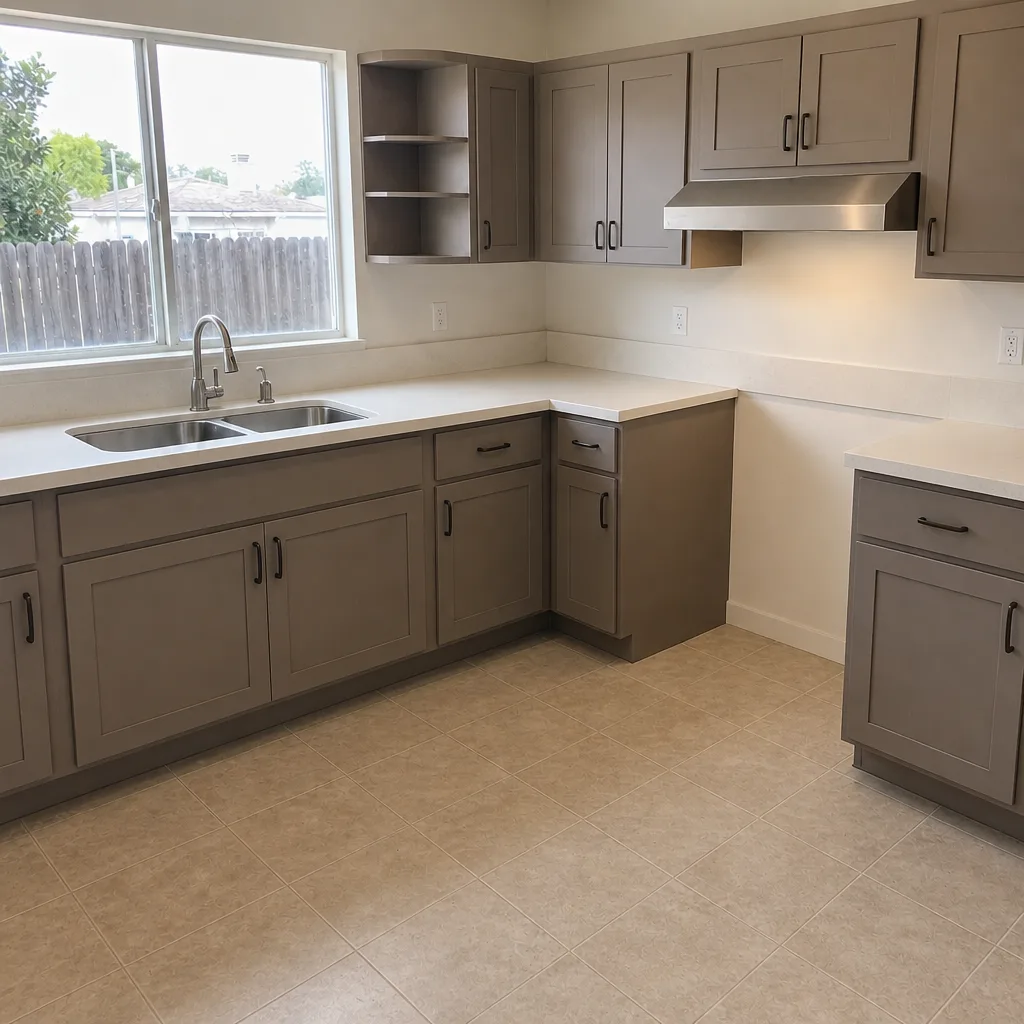 After
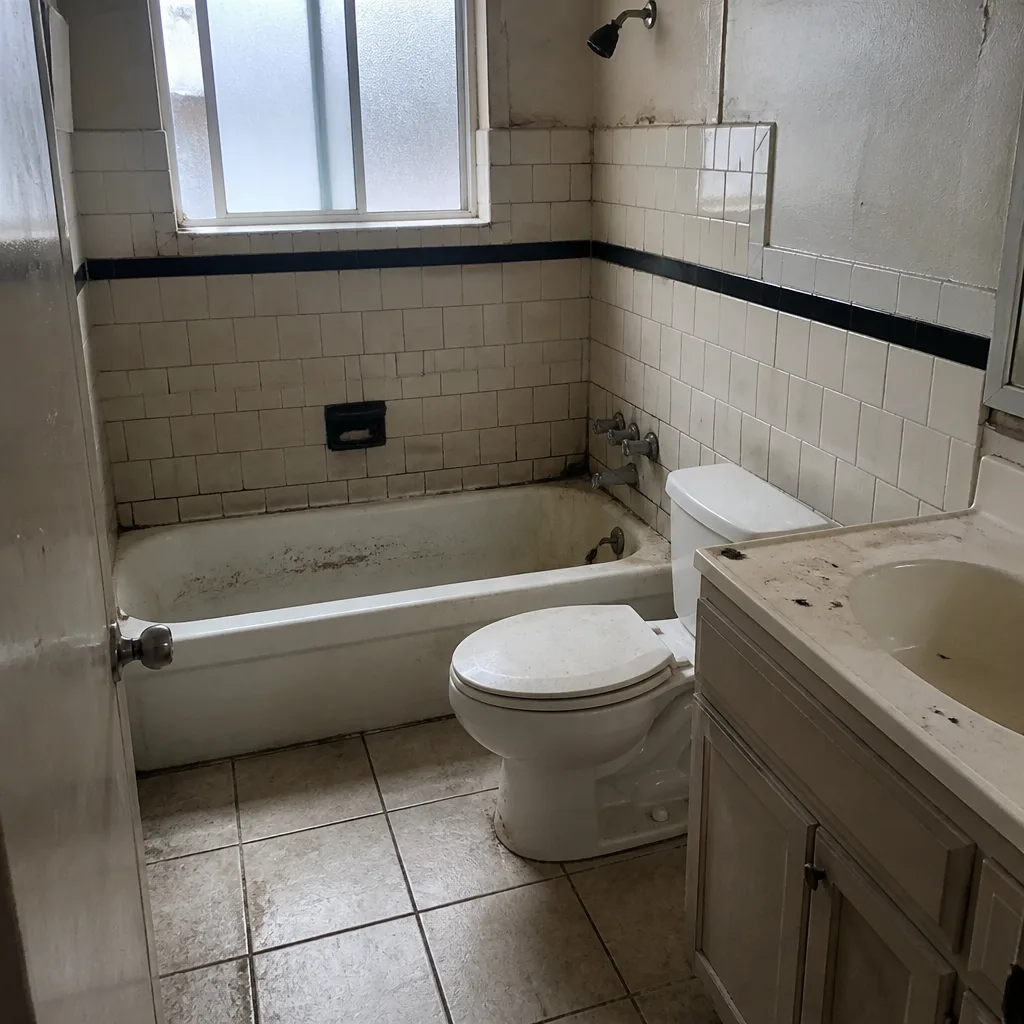 Before
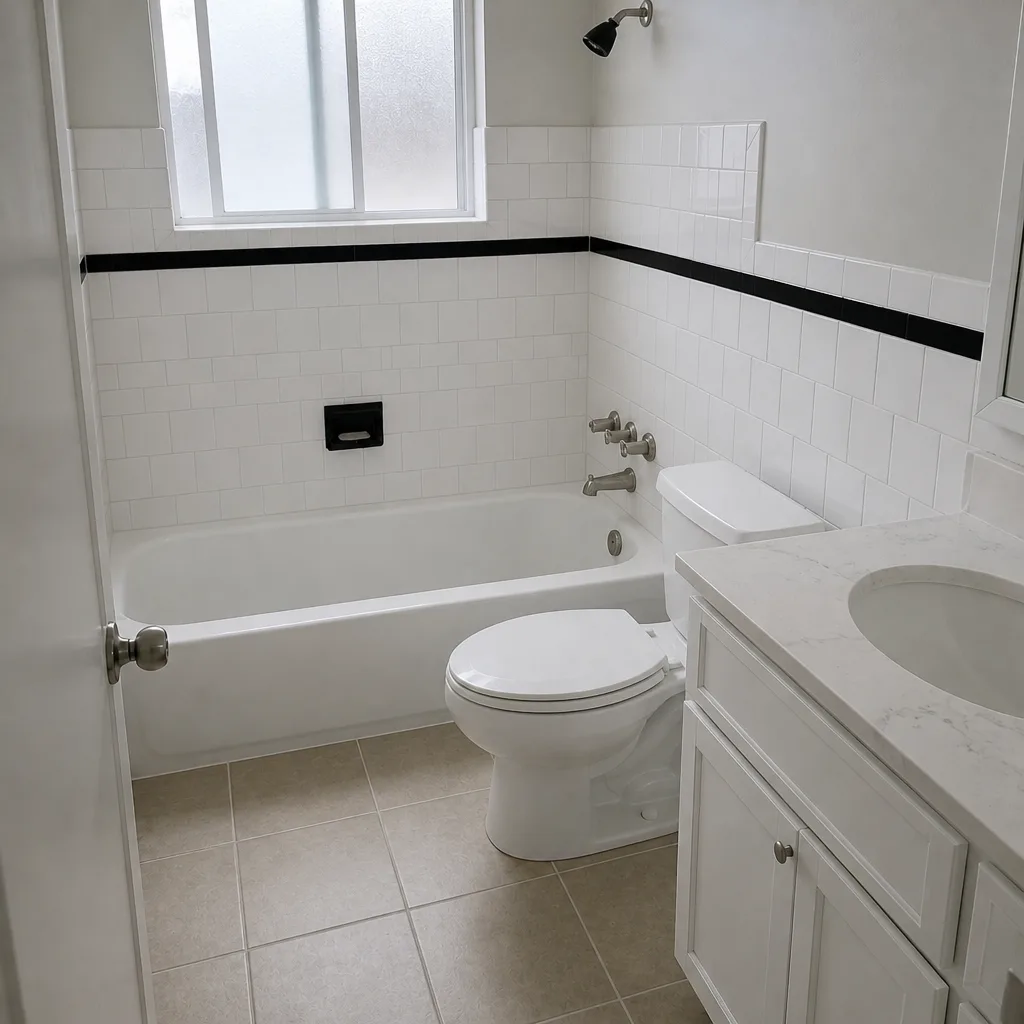 After
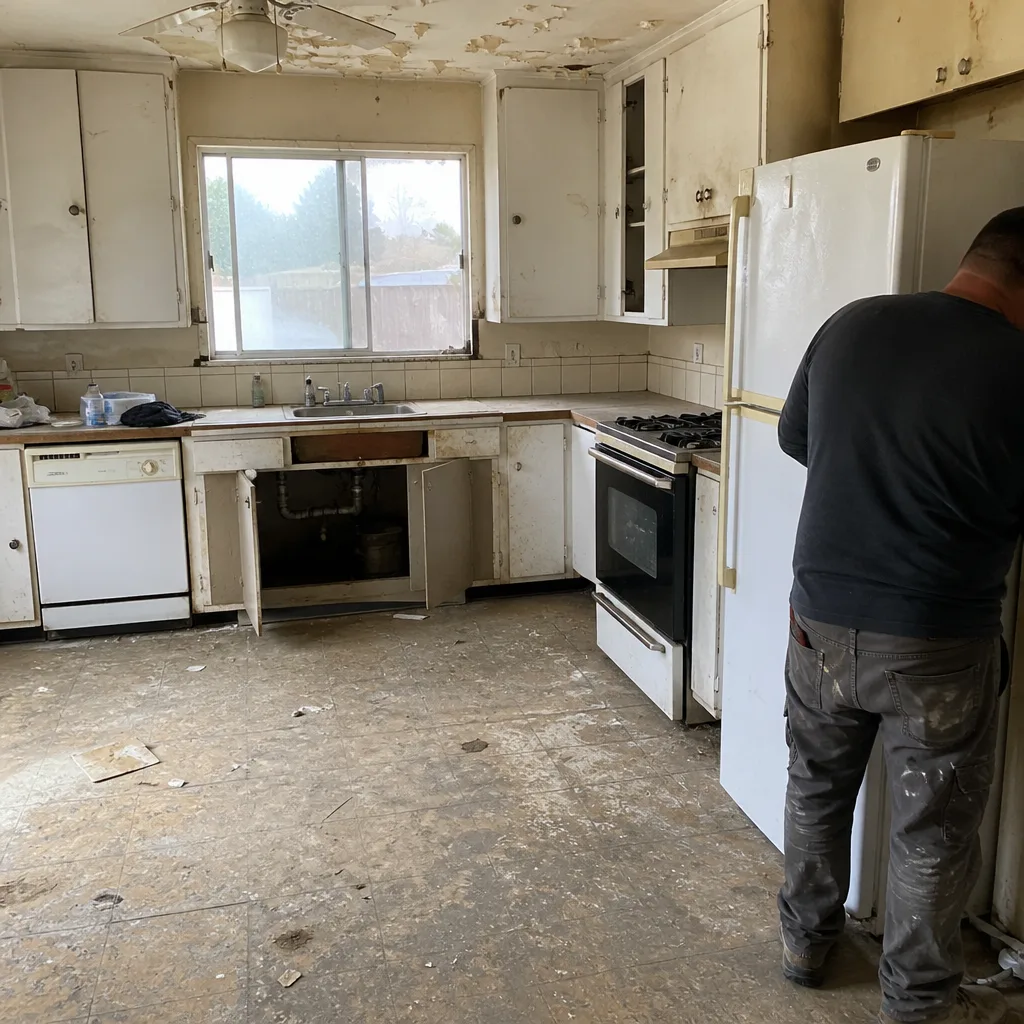 Before
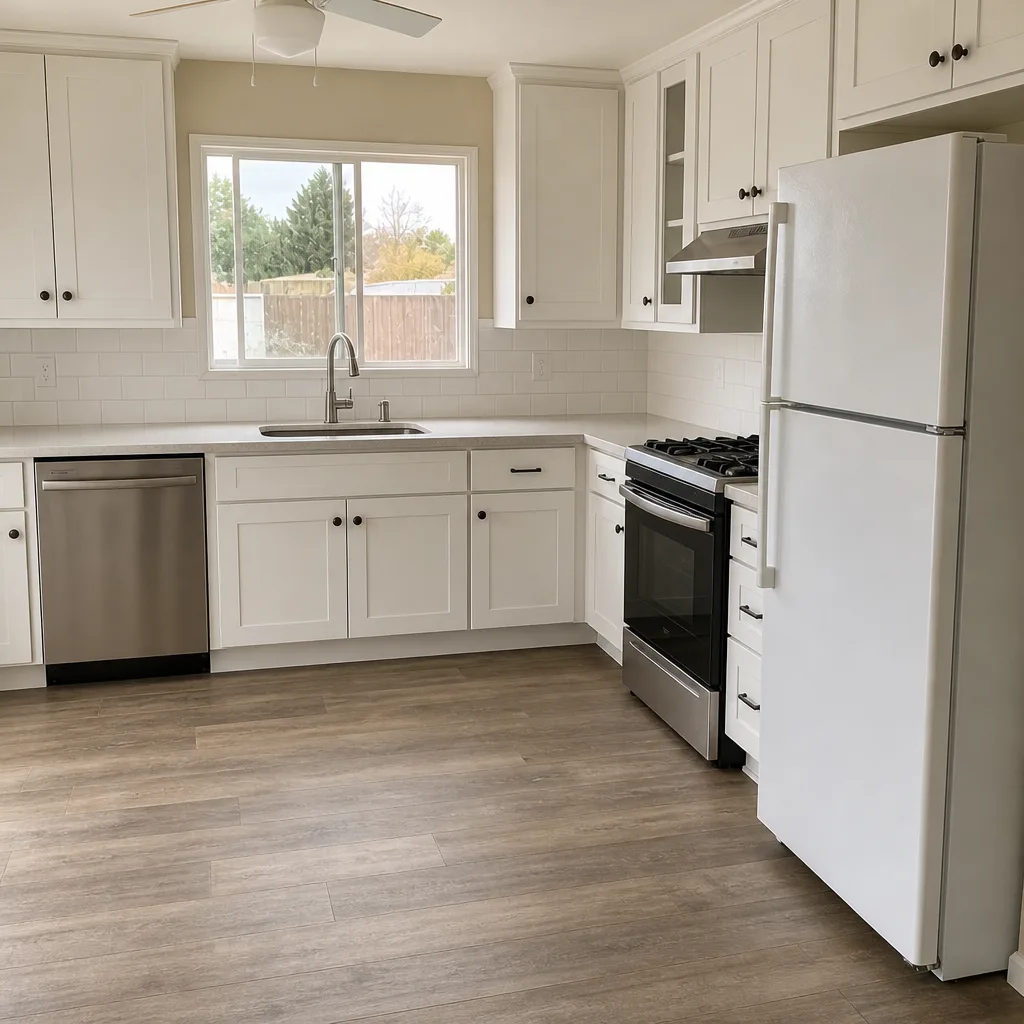 After
When to Call a Professional
Some work is a homeowner’s to handle: paint, trim, a light switch swap, moving a fence panel. Other work is not. Call a licensed contractor when the job involves anything structural, when it touches the electrical panel, when the gas line is being altered, or when the roof pitch makes a fall dangerous. In Antioch, anything that triggers a permit is a call-a-professional item by definition. Water intrusion through a roof, a foundation crack that’s widening, a plumbing leak under a slab: those are not weekend projects on clay soil, and a contractor who says otherwise is not doing you a favor.
Groundwork Construction Co. of Antioch offers free estimates in Antioch. Call (888) 419-3650 to schedule one. Estimates are line-itemed, permits are priced separately, and the number you see is the number you pay.
Frequently Asked Questions
A mid-range full bathroom remodel in Antioch runs roughly $18,000 – $35,000 in 2026, or about $210 per square foot. The higher end applies when plumbing is relocated, the subfloor is rebuilt over older framing, or finish selections move to custom cabinetry and slip-resistant stone tile. The national average of $150 per square foot understates the Antioch market by roughly 30 percent because of Bay Area labor rates and permit fees. Call (888) 419-3650 for an exact quote on your bathroom; estimates are free.
Antioch projects run 15 – 25% above national averages because of three stacked factors: Bay Area labor rates that set the wage floor for every trade here, expansive clay soil that requires deeper footings and thicker base on anything touching the ground, and City of Antioch permit and inspection fees that add 3 – 6% to a project total. Highway 4 logistics and older housing stock add a few more points on many jobs. Call (888) 419-3650 for a free estimate that prices your specific scope.
A fair bid in Antioch should not change once work starts, provided the scope is fully described and the contractor has priced a capped contingency for unforeseen conditions. Fixed pricing with no change orders means the number you sign is the number you pay, unless you add scope yourself. If a contractor presents a bid with open-ended allowances, ask what the cap is in writing before you sign. For an estimate with fixed pricing, call (888) 419-3650.
Yes. Permits are pulled and inspections are passed on every Antioch project that requires them, and permit fees appear as a separate line on the estimate so you can see exactly what the City of Antioch charges. Roof replacements, additions, ADUs, structural changes, and most electrical and plumbing work require permits in Antioch. Call (888) 419-3650 to schedule your free estimate; the permit line is itemized before you sign.
Plan a 6 – 10-week permit window from submittal to permit-in-hand, then 4 – 7 months of construction for a typical Antioch addition or ADU. The variance comes from the number of inspection cycles, whether the site needs utility relocation, and the winter rain window. Anything touching clay soil benefits from starting site work in the dry season. Call (888) 419-3650 to schedule a free design consult and get a real schedule for your project.
The biggest trap is a lump-sum bid with no line items, no separated permit fees, and an open-ended “unforeseen conditions” clause. That bid is not pricing your project; it’s pricing an entry point that will grow. A fair bid shows labor as a percentage, materials by brand and specification, permits as a pass-through, and overhead and profit as an explicit line. Call (888) 419-3650 for an estimate you can audit line by line. Estimates are free.
The Bottom Line
Antioch construction costs in 2026 run 15 – 25% above national averages, and the reasons are specific: Bay Area labor rates, clay soil that reaches into every footing and base course, and real City of Antioch permit fees. A fair bid shows labor, materials, permits, and overhead as separate lines. The fastest way to tell a good bid from a padded one is to check those lines against the percentages in this guide: 40 – 48% labor, 30 – 38% materials, 3 – 6% permits, 8 – 12% overhead, 8 – 12% profit. If the bid shows them and caps the contingency, you’re dealing with a professional. If it doesn’t, keep shopping.
Ready for a line-itemed estimate you can actually read? Call Groundwork Construction Co. of Antioch at (888) 419-3650 to schedule your free estimate. Upfront pricing, no surprises, and the 730-Day Done Right Promise on every project from foundation to finish line.
Written by the team at Groundwork Construction Co. of Antioch.