
Last updated November 17, 2026
 Bathroom remodeling
 Kitchen remodeling
 Home additions & ADU
 Roofing
 Windows & doors
 Driveway & pavers
 Fence
Free written scope consultation - allowances, timeline, and change-order rules on paper before a single trade is scheduled
Bathroom Remodeling Warning Signs Every Homeowner Should Know
If your new tile grout is already cracking at the corners within the first 90 days, it’s not a grout problem. It’s a subfloor deflection problem that your contractor should have caught before the first tile went down. Most bathroom remodel failures we see in Antioch don’t show up as sudden disasters. They arrive as small, easy-to-miss signals that were visible for months before the ceiling below the shower started staining. This guide decodes those signals: cracks, smells, missing inspections, permit gaps, and the contractor behaviors that tell you a project is drifting toward expensive trouble – whether you’re mid-remodel right now or sizing up work that was finished last year.
Quick Answer
The biggest warning signs of a failing bathroom remodel are corner grout cracks within the first year, persistent musty smells from a brand-new room, a shower pan that holds water or leaks to the floor below, skipped moisture barrier inspections, and full gut jobs pulled without permits. Any one of these points to a construction or waterproofing defect, not cosmetic wear, and should be checked by a trained professional before the damage spreads.
Styles & brands we work with
- Kitchen remodeling
- Bathroom remodeling
- Home additions & ADU
- Roofing
- Windows & doors
- Driveway & pavers
- Fence
Table of Contents
- Corner Grout Cracks vs. Field Grout Cracks
- How to Test a Shower Pan for Waterproofing Failure
- The Smell Test: What Musty Air From a New Bathroom Means
- Contractor Red Flags During the Project
- Permits and Inspections: What a Real Gut Job Requires
- Subfloor and Deflection Problems You Can Spot Early
- What to Document and When to Call a Stop
- Why Antioch Bathrooms Fail Differently
Corner Grout Cracks vs. Field Grout Cracks: What Each One Tells You
Not all grout cracks are the same, and the difference matters more than most homeowners realize. Corner cracks and field cracks point to two different failure modes, and one of them is far more serious.
Corner grout cracks appear where two planes of tile meet – inside corners of a shower wall, where the wall meets the floor, around a niche. Grout is rigid. Building materials aren’t. Where two surfaces move in different directions, grout will eventually crack unless the joint was built with flexible sealant instead. Corner cracks within the first 90 days usually mean one of two things: the installer grouted a joint that should have been caulked, or the substrate behind the tile is moving more than it should.
Field grout cracks show up in the middle of a flat tiled surface, nowhere near an edge. These are more concerning. A field crack almost always traces back to movement underneath: a subfloor that flexes under foot traffic, a backer board that wasn’t fastened to spec, or tile set over a surface that wasn’t flat enough to begin with. Tile doesn’t crack on its own. Something under it is moving.
What to check before you call anyone
- Photograph the crack with a ruler or coin next to it for scale, and note the date you first saw it.
- Press firmly on the tile on either side of the crack. Flex or a hollow sound means the bond underneath has failed.
- Look at where the crack runs. Straight lines often follow a backer board seam; spiderweb patterns usually indicate point loading or a void beneath.
- Check whether the crack is growing. Mark the ends with a pencil and measure again in two weeks.
In our experience across Antioch bathroom remodels, corner cracks that appear in the first three months and keep widening are the single most common early sign of a subfloor or framing issue that was never addressed. A crew that sets tile without checking deflection first is setting you up for a do-over.
How to Test a Shower Pan for Waterproofing Failure
A shower pan that leaks doesn’t announce itself. It quietly damages the framing, the ceiling below, and sometimes the room next door before anyone notices. Here’s how to check for trouble without tearing anything apart.
The 24-hour pan test
- Plug the drain with a test plug or a rubber stopper that seals fully.
- Fill the pan with about an inch of water – enough to cover the entire floor surface.
- Mark the water line on the tile with a pencil.
- Wait 24 hours. Do not use the shower during this time.
- Check the water line. If it dropped noticeably, the pan is losing water somewhere.
- Look at the ceiling below the bathroom for any new staining, sagging, or dampness. Check the walls on the opposite side too.
If the water level drops and there’s no visible leak, the water is going somewhere it shouldn’t – typically into the mortar bed under the tile, which means the waterproof membrane has failed or was never installed correctly. In Antioch, where we see temperature swings between cool nights and warm afternoons, a pan that was poured and tiled without a proper cure period is more likely to develop hairline cracks in the membrane that only show up under sustained water.
Other signs of a failing pan
- Loose or hollow-sounding tiles near the drain
- Efflorescence – a white, powdery residue – along the base of the shower walls
- Grout that stays dark long after the shower has dried
- A musty smell that gets stronger after every shower
- Soft spots in the drywall on the adjacent wall or below
Any of these means moisture is escaping where it shouldn’t. Fixing a failed pan early costs a fraction of what it costs after the subfloor and framing have rotted. If you’re seeing these signs in an Antioch home, get a professional assessment before you keep using the shower.
The Smell Test: What Musty Air From a Brand-New Bathroom Means
A new bathroom should smell like nothing. Maybe a faint trace of grout sealer for a few days, then nothing. If your finished bathroom has a persistent musty, damp, or earthy odor – especially one that intensifies after showers – the vapor barrier or waterproofing is likely compromised.
Musty air in a brand-new bathroom almost always means moisture is trapped somewhere it shouldn’t be. The most common culprits:
- No vapor barrier behind the shower walls. Moisture migrates through the tile and grout into the wall cavity, where it feeds mold on the paper facing of drywall.
- Vapor barrier installed on the wrong side or with gaps. Even a correctly chosen barrier does nothing if it’s stapled full of holes or overlaps incorrectly at the corners.
- Improperly sealed shower pan liner. Water gets under the tile and sits in the mortar bed, never fully drying out.
- Inadequate ventilation. A bathroom fan that vents into the attic instead of outdoors pushes moisture into the structure. In Antioch’s warmer months, that trapped humidity creates ideal conditions for mold growth in the attic and ceiling framing.
The smell test is one of the most reliable early warning signs because your nose detects what your eyes miss. If you can smell dampness within the first six months of a new bathroom, don’t wait. Moisture that’s been trapped for a year can turn into a mold remediation project and a full tear-out.
Contractor Red Flags During the Project Itself
Most of the warning signs homeowners ask about are things they notice after the job is done. But the most valuable ones appear while the work is still happening. Here’s what to watch for in real time.
Skipping the moisture barrier inspection
In a properly run bathroom remodel, the waterproofing goes in before the tile, and it gets inspected before the tile covers it up. If your contractor tiled over a moisture barrier the same day it went up, or never paused for you to look at it, that’s a red flag. Waterproofing is the one element you can never verify after the fact – once the tile is down, you’re trusting the installer’s word. Ask to see the pan liner and wall membrane before tile goes on. A contractor who resists that request is telling you something.
No permit for a full gut job
A cosmetic refresh – new paint, a vanity swap, re-caulking – usually doesn’t require a permit. A full gut job that moves plumbing, electrical, or framing does. Many Antioch bathroom remodels fall under permit requirements because they touch the plumbing rough-in or add a new drain location. If your contractor is doing a full tear-out and hasn’t pulled a permit, you’re the one who inherits the liability. Unpermitted work shows up in disclosures when you sell, and it can force a retroactive inspection and corrections at your expense.
Refusing to show subcontractor licenses
Bathroom remodels often involve a plumber, an electrician, and a tile setter. In many states, each of those trades requires its own license. If your general contractor can’t or won’t produce current license information for the subs on your job, you don’t actually know who’s working in your home. A professional operation keeps those credentials current and makes them available without drama.
Other project-stage red flags
- No written schedule or a schedule that keeps shifting without explanation
- Change orders that appear after work is already done instead of before
- A crew that isn’t uniformed or can’t tell you who they work for
- No one answers the phone when there’s a problem – or you only get a voicemail
- Materials arriving that don’t match the approved spec, with no conversation about substitutions
The pattern behind all of these is the same: a contractor who is comfortable cutting corners in the open will cut them where you can’t see. Building a bathroom correctly means doing things in order, with inspection points along the way, and keeping the homeowner informed at every stage.
Permits and Inspections: What a Real Gut Job Actually Requires
Permit rules vary by jurisdiction, but the logic is consistent: if work touches the systems that keep a house safe and functional, it gets inspected. A bathroom gut job almost always does.
Here’s a general sequence of inspection points a full bathroom remodel typically requires:
- Demolition and framing inspection – confirms structural changes before anything is closed up.
- Rough plumbing inspection – verifies drain, supply, and vent lines before the walls close.
- Rough electrical inspection – checks wiring, GFCI protection, and exhaust fan connections.
- Waterproofing or pan inspection – where required, confirms the shower pan and moisture barrier before tile.
- Final inspection – confirms everything meets code and the work matches the permitted scope.
Different Antioch projects will require different combinations of these, and the exact schedule depends on what your remodel touches. What doesn’t change is this: if a contractor tells you permits aren’t needed for a full gut, ask them to show you the code or call the building department yourself. It’s a five-minute call and it protects you from inheriting work that will cost real money to correct.
Pulling permits and passing inspections is the baseline expectation for any serious remodeling partner, and it’s part of the 730-Day Done Right Promise we stand behind – the work is documented, inspected, and backed in writing, not just promised verbally.
Subfloor and Deflection Problems You Can Spot Early
The subfloor is the silent player in every bathroom remodel. It’s under the tile, under the backer board, and under the membrane, but it determines whether the whole assembly survives the next decade. Most failures that start as grout cracks and end as tile replacement trace back to deflection: the floor flexing more than tile can tolerate.
How to check for deflection problems
- Stand in the middle of the bathroom floor and shift your weight from foot to foot. A floor that bounces noticeably, or that feels soft in the center, has too much deflection for tile.
- Look at the floor from the doorway during the check. Gaps under baseboards that grow or shrink as weight shifts are another sign.
- Check the joist span and size below the bathroom if it’s accessible. A structural chart or a licensed professional can confirm whether the span is adequate for tile.
- Look for cracks in the tile near the center of the room, not just the corners. Center cracks are the tell.
Old Antioch homes often have subfloors built to different standards than what modern tile requires. A house with a long joist span and a 1-inch-thick tile over a lightweight backer board is a candidate for exactly the corner-crack pattern described at the top of this guide. A contractor who checks deflection before setting tile is doing the job right. One who doesn’t is selling you a floor that will fail inside the warranty period.
If you’re evaluating a floor that’s already tiled and you’re seeing these signs, a professional can test it and tell you whether the fix is a repair or a rebuild. Catching it early usually means the difference between a targeted repair and a whole-floor replacement.
What to Document and When to Call a Stop
Mid-remodel is a hard place to be. You’ve paid a deposit, you’ve got a crew in your house, and now something looks wrong. Here’s a structured way to handle it.
What to document immediately
- Photos of every issue with a date and short note – what it is, where it is, and what it looked like when you found it.
- Any text messages, emails, or written change orders from the contractor.
- The signed contract, including the scope, schedule, and payment terms.
- Copies of permits and inspection records, or written confirmation that none exist.
- A dated log of every conversation: who said what, when, and what they promised.
When to call a stop
Call a stop if work is about to cover up something defective – tile going over an uninspected pan liner, backer board going up over a moisture barrier full of gaps, or walls closing before plumbing and electrical inspections. Also call a stop if the contractor’s license information doesn’t check out, if they refuse to pull a permit for a full gut, or if the workmanship quality has dropped so far that continuing means more to undo.
If the contractor won’t stop and won’t address the concern, a written notice by email with a 48-hour deadline to respond is a reasonable next step. A professional outfit will respond. A contractor who doesn’t is giving you the answer you needed about whether they’re the right partner for the rest of the project.
Why Antioch Bathrooms Fail Differently
Antioch has its own pattern of bathroom failures, and it’s worth knowing because it changes what you should be watching for.
Summer heat is the biggest factor. Antioch’s long dry summers mean bathrooms experience big swings between a hot, humid shower environment and dry indoor air. Grout and sealant take that cycling on every plane. A bathroom that would survive for years in a stable climate can crack lines and fail seals faster here. That’s why we recommend a flexible sealant at every change of plane, not just grout – and it’s why we check the moisture barrier closely on every Antioch bathroom remodel.
The Delta breeze and the cooler nights have their own effect. Moisture that builds up during a hot day doesn’t always vent out the way it would in a drier inland climate, especially if the bathroom fan is undersized or vents into the attic instead of outdoors. Venting matters more in Antioch than most homeowners expect.
Older housing stock is the third factor. Many Antioch homes have bathrooms that have been remodeled once or twice over the decades, sometimes with materials that were state of the practice at the time but don’t hold up next to modern waterproofing systems. When we open up a bathroom that hasn’t been touched in a while, we often find the previous remodel eliminated or bypassed the vapor barrier entirely. It doesn’t take a disaster to make a real difference – a careful inspection and a proper rebuild gets the whole assembly right.
If your remodeling needs extend beyond the bathroom, our team handles full-scope construction in Antioch across kitchens, roofing, and additions, so the same accountability carries through the whole house.
Common Mistakes to Avoid
- Hiring on price alone without checking license and permits. The cheapest bid in Antioch is often the one that skips the permit and the subfloor check. Ask for license information and confirm permits are part of the scope before you sign.
- Letting tile go down before the pan liner is inspected. Once tile is set, the waterproofing is invisible for the rest of the bathroom’s life. Insist on seeing the membrane before it’s covered.
- Treating corner grout cracks as a cosmetic issue. Corner cracks that keep widening are structural signals, not surface wear. They get worse, not better, and the fix gets more expensive the longer you wait.
- Venting the bathroom fan into the attic. It feels like the easy path, and it pushes moist air straight into the structure. Vent the fan out the roof or wall, never into an attic cavity.
- Skipping the 24-hour pan test at handoff. A shower pan can pass a visual check and still be leaking. The test takes a day and catches the failure before it becomes a ceiling repair.
- Not documenting the remodel. Photos, change orders, and inspection records protect you if the work needs to be defended later. If the contractor won’t put promises in writing, that’s your warning.
- Assuming a warranty covers workmanship without a defined term. A vague verbal warranty means nothing when you need it. Ask for the workmanship coverage in writing, with a defined number of days. Our 730-Day Done Right Promise covers our remodeling work for two full years, and it exists precisely because vague coverage isn’t coverage at all.
See the difference
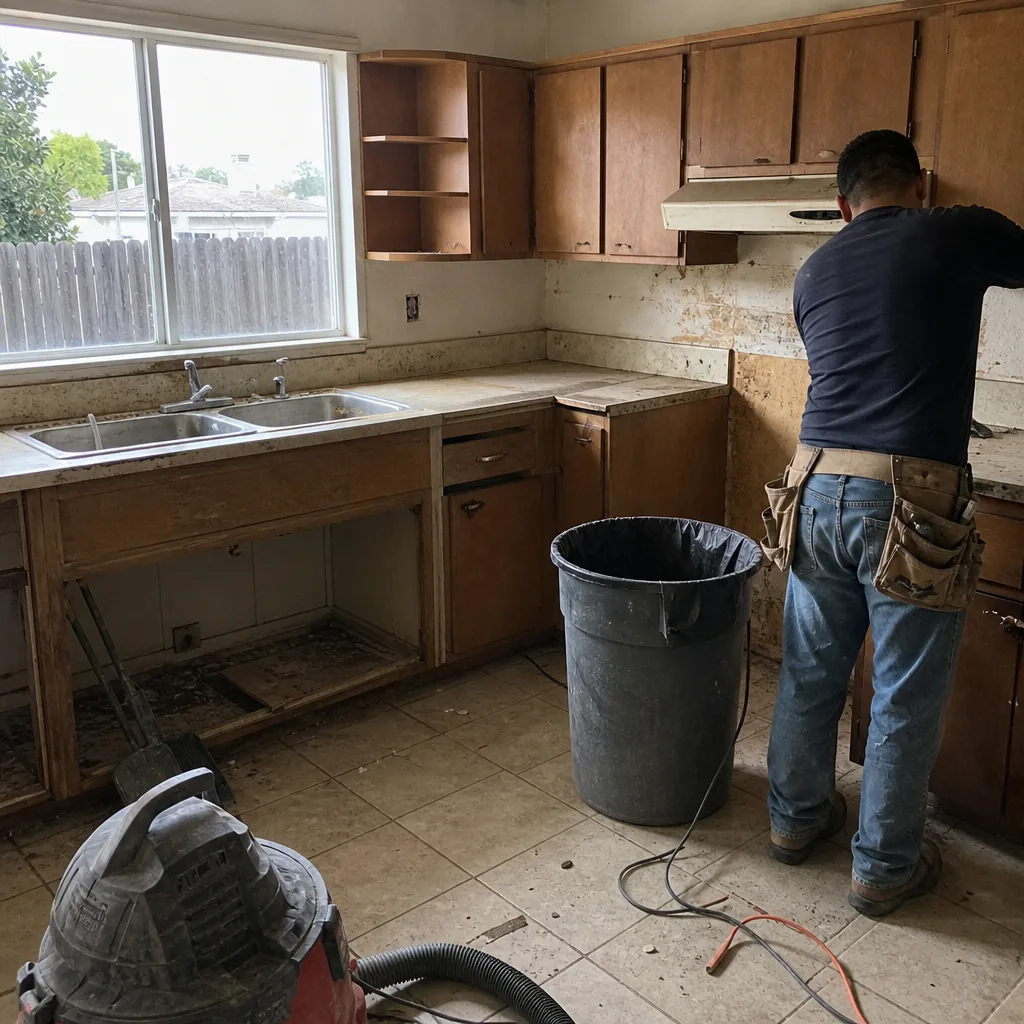 Before
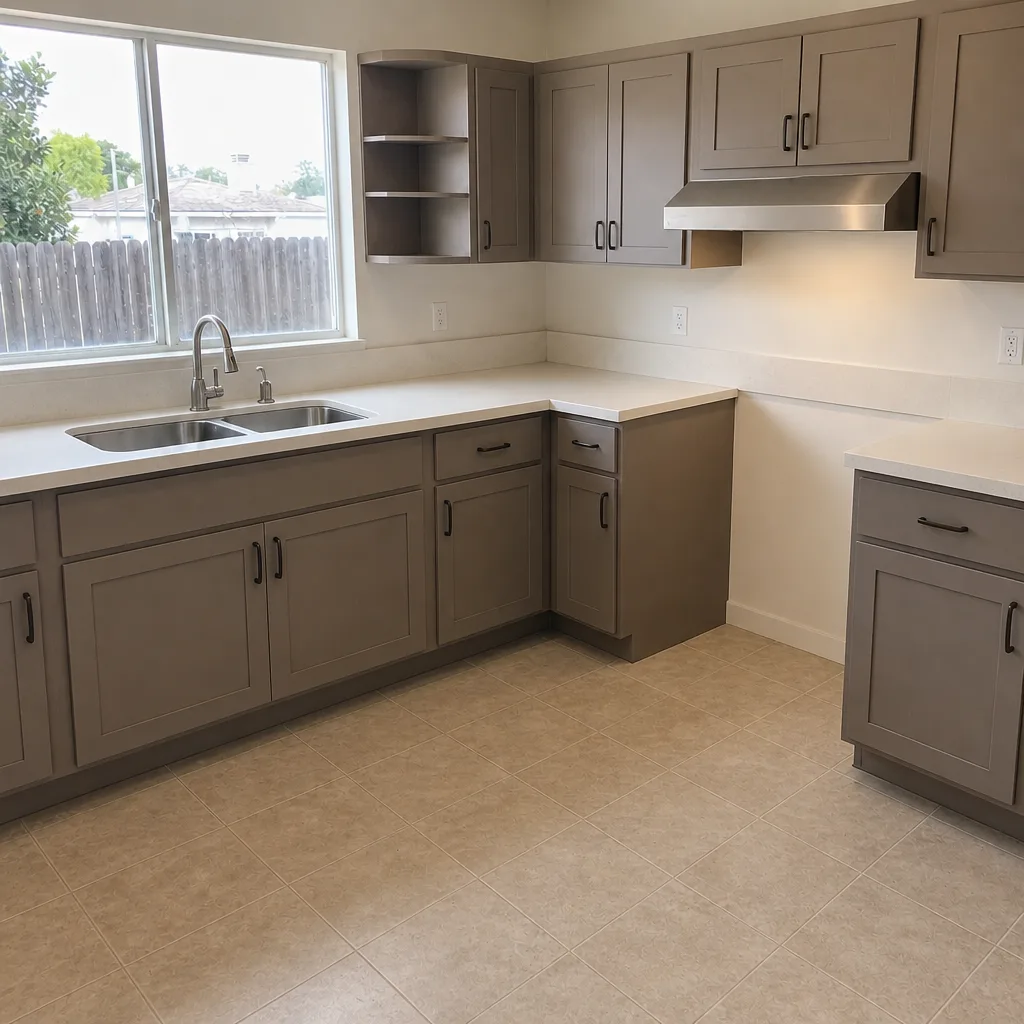 After
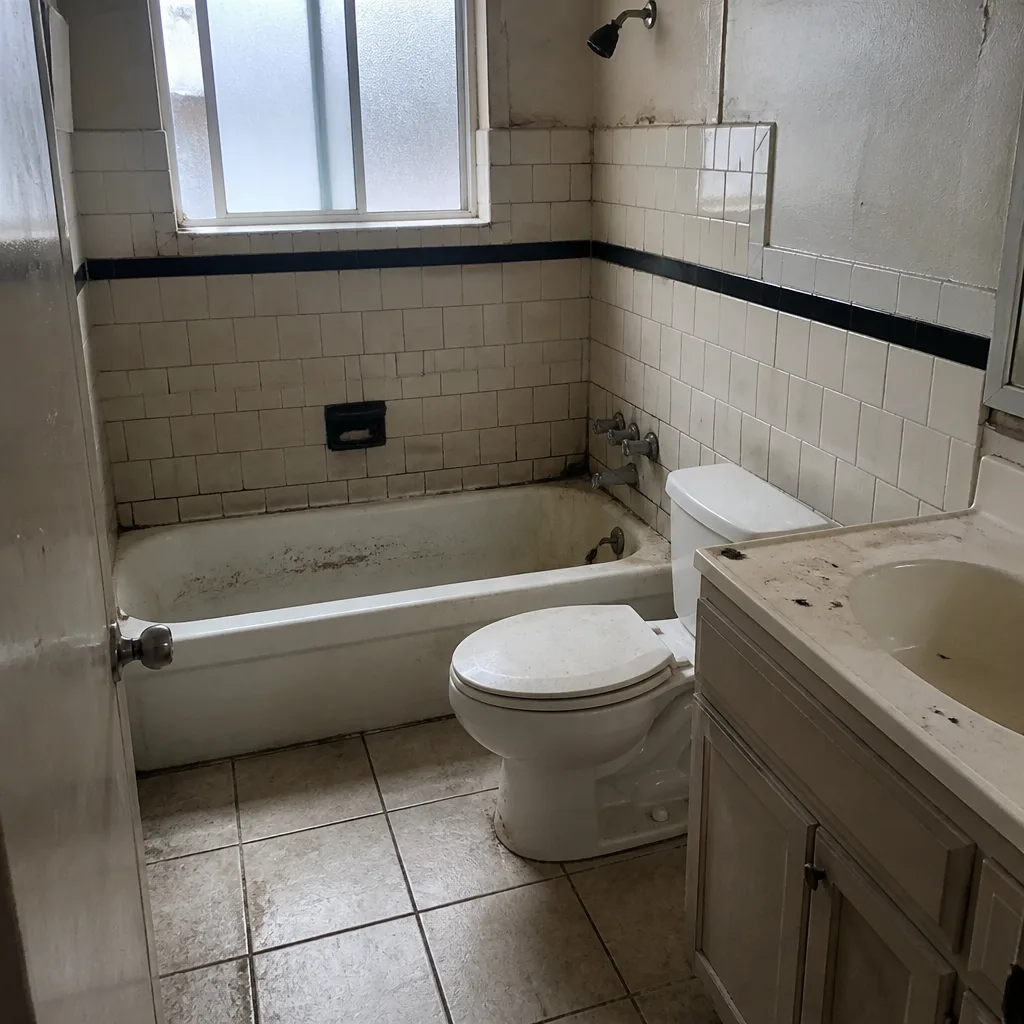 Before
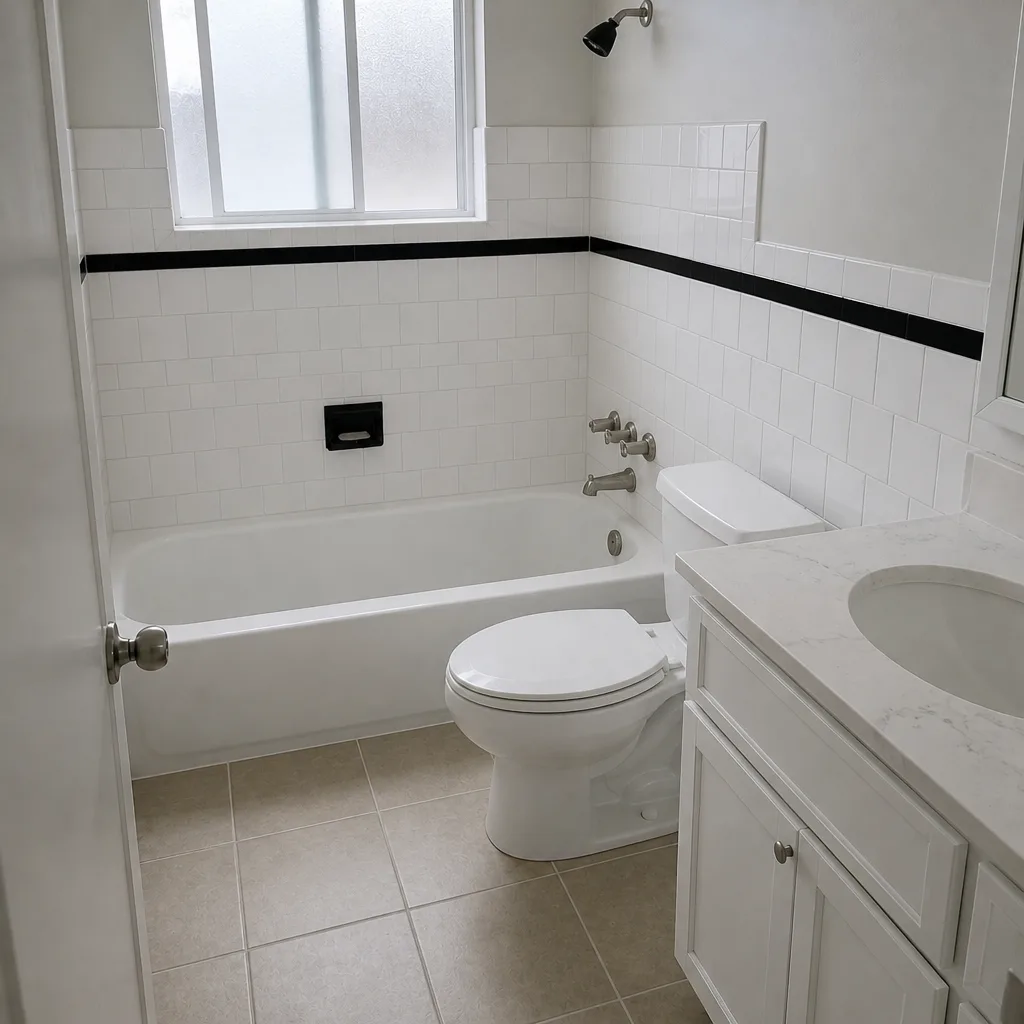 After
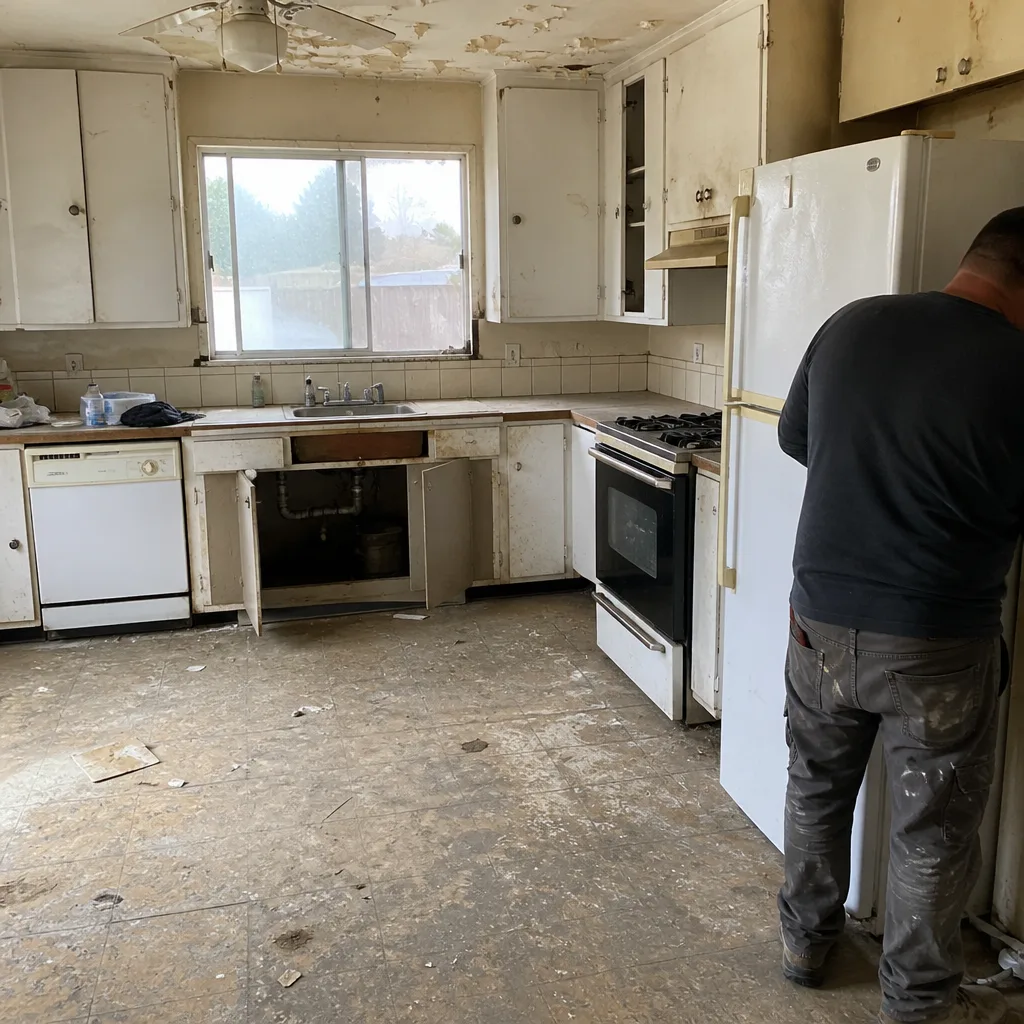 Before
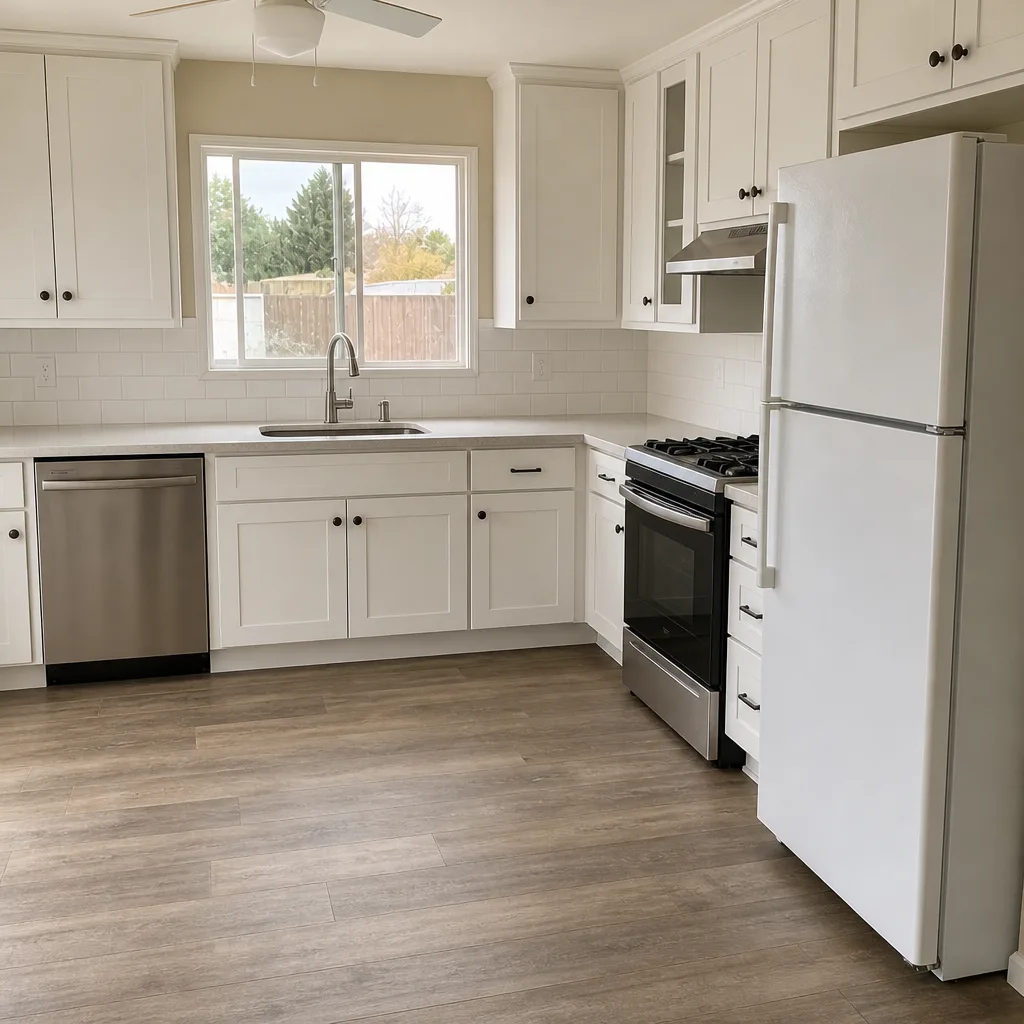 After
When to Call a Professional
Call a professional if you’re seeing corner cracks that widen over weeks, a musty smell in a new bathroom, water staining below or beside the shower, hollow-sounding tile, or a full gut project that was pulled without a permit. Each of those signals a defect that gets worse with time and more expensive with delay. A trained contractor can tell you quickly whether the fix is a targeted repair or a rebuild of the waterproofing assembly, and that answer is worth getting early. Groundwork Construction Co. of Antioch offers free estimates in Antioch – call (888) 419-3650. Our technicians have up to 12 years of experience, and every project comes with upfront pricing and the 730-Day Done Right Promise in writing.
If your bathroom is part of a larger project, we also handle home additions and ADU construction in Antioch, and can coordinate the plumbing, electrical, and tile trades under a single scope.
Frequently Asked Questions
Fixing a failed shower pan or waterproofing system typically runs $4,000 to $12,000 depending on the damage extent, and a full bathroom rebuild with subfloor repair often runs $15,000 to $30,000. The cost depends on how much rot or water damage has spread into framing and subfloor. Call (888) 419-3650 for an exact quote – estimates are free.
A properly scoped remodel shouldn’t change price mid-project unless new conditions are discovered during demolition. We offer no-hassle upfront pricing and written line-item quotes, so the number you see is the number you pay. If a hidden issue is uncovered, we stop work and quote the additional scope in writing before proceeding. Call (888) 419-3650 to schedule a free estimate.
Yes. Permits are pulled as part of the project scope, and inspections are scheduled and passed before the work is closed up. A full bathroom gut job typically requires plumbing, electrical, and final inspections, and we manage all of it. If a previous contractor skipped permits on your Antioch home, we can help you sort out the corrections. Call (888) 419-3650 for a free consultation.
A full bathroom remodel in Antioch typically takes three to six weeks from demolition to final walkthrough, depending on the scope, inspection scheduling, and material lead times. Cosmetic refreshes can run faster; plumbing relocation and floor replacement extend the timeline. Call (888) 419-3650 to get a realistic schedule for your specific project.
Not always. A single corner crack that appears in a joint that should have been caulked is fixable with a targeted repair. Multiple corner cracks, or any field crack in the middle of a tile, points to a larger deflection or substrate issue that usually requires opening up the floor. A professional can test the floor and give you a clear answer before you commit to a rebuild. Call (888) 419-3650 for a free estimate in Antioch.
Document everything – photos, texts, the signed contract, and a dated log of every conversation – and request an immediate pause on any work that’s about to cover up a defect. If the contractor won’t stop or won’t produce license and permit information, that’s your answer about whether to continue. Call (888) 419-3650 to have a second set of eyes on the project before you spend more money fixing a problem you could have caught.
The Bottom Line
Bathroom remodels rarely fail without warning. Corner grout cracks, field cracks, musty smells, water where it shouldn’t be, skipped inspections, and missing permits are all visible signals – if you know what you’re looking at. The single most valuable habit is documentation: photograph, date, and write down everything you notice, then get a professional assessment before the problem grows. In Antioch, the dry summers and older housing stock make deflection and moisture barriers the two highest-risk areas to check. If any warning sign on this list matches your situation, get an assessment before the damage spreads. Groundwork Construction Co. of Antioch backs every project with the 730-Day Done Right Promise, background-checked uniformed technicians, and upfront pricing – call (888) 419-3650 for a free estimate.
If you’re weighing other exterior or structural projects alongside the bathroom, our driveway and pavers work in Antioch and our fence installation services follow the same inspected, warranted approach, from foundation to finish line.
Written by the team at Groundwork Construction Co. of Antioch.