
Last updated November 17, 2026
 Bathroom remodeling
 Kitchen remodeling
 Home additions & ADU
 Roofing
 Windows & doors
 Driveway & pavers
 Fence
Free written scope consultation - allowances, timeline, and change-order rules on paper before a single trade is scheduled
Bathroom Remodeling Maintenance Schedule: What to Do and When
Most bathroom remodels show their first signs of failure within 18 months – not because the work was bad, but because nobody told the homeowner what to do after move-in day. The caulk beads that looked factory-perfect at the final walkthrough dry out, crack, and let water slip behind new tile. The exhaust fan quietly loses half its pull. Nothing dramatic happens. Then one morning you press on a floor tile and it rocks under your foot, or you spot a dark line along the base of the shower wall that wasn’t there last month. This guide is the maintenance calendar we wish every Antioch homeowner had at the end of a bathroom renovation: what to check monthly, every six months, annually, and at the five-year mark, so the investment you made on day one still holds up on day 1,000.
Quick Answer
A bathroom remodel needs a light monthly check, a caulk and exhaust fan inspection every six months, a deeper annual review covering grout, shut-off valves, and floor tile, and a full re-seal of wet-zone seams every three to five years. The single highest-value habit is exercising your shut-off valves once a year – a two-minute task that prevents the most expensive emergency call a homeowner can make. In Antioch, hard water and hot, dry summers make mineral buildup and caulk drying worse than in most of the Bay Area, so the six-month intervals below are not optional.
Styles & brands we work with
- Kitchen remodeling
- Bathroom remodeling
- Home additions & ADU
- Roofing
- Windows & doors
- Driveway & pavers
- Fence
Table of Contents
- Why a New Bathroom Needs a Maintenance Schedule at All
- The Monthly Bathroom Check (10 Minutes)
- Every Six Months: Caulk and the Exhaust Fan
- The Annual Deep Check: Grout, Valves, and Floor Tile
- The Settling Check: Catching Lippage Before It Cracks
- Year Three and Beyond: Resealing, Re-caulking, and Component Aging
- How the 730-Day Done Right Promise Intersects With Owner Maintenance
- Antioch-Specific Maintenance Notes
Why a New Bathroom Needs a Maintenance Schedule at All
A bathroom is not a finished object. It’s a system of materials, seals, and mechanical components, and each one has its own expiration clock. The tile itself might outlive the house. The caulk around your shower curb is rated for roughly five to seven years under ideal conditions – less in a room that swings between steam and dry air twice a day. The exhaust fan motor loses efficiency gradually, so quietly that you won’t notice until the ceiling above the shower starts showing moisture. The grout lines look permanent but they’re porous and they collect soap scum, body oils, and Antioch’s mineral-heavy water.
Here’s the part that surprises people: the expensive failures in a bathroom almost never announce themselves. A failed wax ring or a leaking supply line under the vanity can run for weeks inside a cabinet before you see a stain on the ceiling below. By then you’re replacing subfloor, not caulk. The schedule in this guide is built around catching those slow failures while they’re still cheap. When we hand over a finished bathroom in Antioch, we walk the homeowner through this calendar because a remodel that isn’t maintained is a remodel on a countdown.
The Monthly Bathroom Check (10 Minutes)
Ten minutes once a month, ideally the same weekend each month so it becomes automatic. You’re not repairing anything here. You’re looking, listening, and wiping – which is how you catch a problem while it’s a five-dollar fix instead of a five-thousand-dollar one.
- Look at the ceiling below the bathroom (if you have a lower floor). Any new stain, ring, or soft spot means water is escaping somewhere above. Note it and stop the moisture source before it spreads.
- Wipe the base of the shower and tub where the wall meets the floor pan or tub. Run a finger along the caulk seam. Gritty, crumbling texture means the caulk is starting to fail.
- Check the toilet base and the floor around it. Rocking, a faint sewage smell, or discoloration at the base points to a failing seal – fix it fast.
- Turn the exhaust fan on and hold a tissue to the grille. If the tissue barely clings, the fan is losing pull. More on this below.
- Open the vanity cabinet and look under the sink for drips, corrosion on the supply lines, or a swollen cabinet floor.
- Look at the grout lines in the shower for dark spots that don’t scrub out. That’s the early signal of a seal problem, not a cleaning problem.
None of these steps take more than a minute or two. Done monthly, they catch nearly everything before it turns into a demolition project. In Antioch’s hot, dry summers, the tissue test on the exhaust fan matters more than you’d think – the fan is working harder to pull out humid air when the outside air is already warm.
Every Six Months: Caulk and the Exhaust Fan
Twice a year, spring and fall, you do the two inspections that protect the biggest surfaces in the room. These are the checks that window the calendar – miss them and the annual deep check gets much more expensive.
Caulk around wet zones
Caulk is the first line of defense at every seam where water pools: the tub-to-wall joint, the shower curb, the shower niche edges, the sink backsplash, and the floor-to-wall base in a tiled shower. Silicone caulk lasts five to seven years; latex or acrylic caulk often fails within three, which is why we specify silicone in wet zones. Twice a year, press your thumbnail into the bead at several points. If it’s hard, cracked, pulling away from the tile, or has gone milky where it meets the porcelain, it’s failing. Remove and re-caulk before the next shower season, not after. This is a job most homeowners can do themselves with the right caulk and a caulking tool, and it’s cheap. Doing it late is where the real cost lives.
The exhaust fan
A bathroom exhaust fan should clear the room’s air in roughly 8 minutes for a standard bathroom. Over time the motor slows, the housing fills with dust, and the ductwork can kink or sag – all of which silently reduce its pull. The exhaust fan is the leading cause of mold that grows behind new tile walls, because a fan that’s only pulling 60% of what it should can’t keep up with daily showers. At the six-month check, pull the cover, vacuum the grille and the blades, and re-run the tissue test. If the tissue droops, have a technician check the duct path and the motor. A fan replacement is inexpensive; mold remediation behind a tiled wall is not.
The Annual Deep Check: Grout, Valves, and Floor Tile
Once a year, set aside an hour. This is the check that protects the structural parts of the bathroom – the parts where failure means pulling tile or opening a wall. Do it every fall, before the wet season, so you’re going into winter with everything sealed.
- Inspect the grout lines throughout the bathroom. Grout is porous. Look for cracks, missing sections, and darkened areas that don’t come clean. Grout that has cracked needs regrouting or a sealer refresh; cracked grout under the toilet or in the shower floor is a water pathway waiting to open.
- Exercise every shut-off valve. Slowly turn the water supply valves under the sink and at the toilet off and then back on. This is a two-minute task that prevents the most expensive emergency call a homeowner can get – a seized or leaking shut-off valve when a supply line bursts. A valve that hasn’t moved in three years may not close at all when you need it to. If a valve feels stiff, leaks after you turn it, or won’t seat, have a plumber replace it now.
- Check the toilet for rocking, for a flapper that doesn’t seal, and for a running fill valve. A running toilet is a silent water bill and a slow way to wear out the fill hardware.
- Check the supply and drain lines under the sink and behind the toilet for corrosion, moisture, or mineral scale.
- Do the settling check on the floor tile – see the next section.
- Re-seal the stone and grout in the shower and around the sink if the surfaces are natural stone or unglazed tile, which need a fresh sealant annually.
In Antioch, this matters as much as anywhere. Hard water leaves scale on shower glass and tile that adds up quietly, and a soft cloth wipe-down after each shower is the cheapest maintenance you’ll ever do. The annual check is when you confirm the seals held up over the year.
The Settling Check: Catching Lippage Before It Cracks
New tile floors in a bathroom settle. That’s true of any renovation – the subfloor, thinset, and tile all adjust to the new loads. The problem is that most settling is invisible until it isn’t. A “settling check” means walking the floor once a year and listening for a hollow sound underfoot, then pressing on the corners of any suspicious tiles with your hand. Lippage – a tile edge sitting higher than its neighbor – is the first warning. If a tile rocks slightly on the corner, a hairline crack is likely to develop at the joint, and a crack in a wet-room floor tile lets water in under the tile and into the thinset.
What to do if you find it: don’t ignore a hollow or rocking tile. A single loose tile can usually be re-set without disturbing the rest of the floor, but a long-settled tile field has to come up. If your floor tiles are large-format (18 inches or more), the settling window is a bit longer and the risk of a spread crack is higher when it does happen. In our experience, most settling checks catch problems in the first 12 to 24 months after a remodel – which is exactly why we build the 730-Day Done Right Promise around that window.
One caution that applies here: if the floor feels spongy or a tile lifts easily with a fingernail, that signals a subfloor issue, not just settling. That’s a professional call, not a homeowner repair.
Year Three and Beyond: Resealing, Re-caulking, and Component Aging
After the second renovation anniversary, the maintenance rhythm shifts from “what’s settling” to “what’s aging.” Every material in the bathroom has a lifespan, and recognizing the ones that come up on a predictable schedule keeps the bathroom looking like it did on the final walkthrough for a decade.
- Re-caulk wet-zone seams fully every 3 – 5 years. The six-month check catches failure early; the three-to-five-year cycle replaces the beads before they fail. Shower-to-tub corners, niche edges, and the wall-to-floor joint are the priority.
- Re-seal tile and grout every 1 – 2 years in the shower, every 2 – 3 years elsewhere. Natural stone and unglazed tile need the shorter interval. Sealed grout needs a refresh once water stops beading on the surface.
- Replace the exhaust fan after roughly 10 years if you started hearing a rattle or the tissue test is consistently weak, even after cleaning. A motor that’s pulling properly for 10 years is doing well.
- Inspect the toilet flapper and supply line every few years. Cheap parts that quietly fail. Replace the flapper every three to five years, the supply hose when it starts to feel stiff.
- Check the shower pan and shower door seals for leaks at the hinge and handle points.
- Watch for tile staining and grout darkening in high-traffic areas – in a hard-water city like Antioch, a full deep clean and re-seal at the three-year mark is a smart investment.
Assume the mechanicals need more attention than the surfaces. Tile and stone will hold up for decades; the parts that fail first are the seals and the fan.
How the 730-Day Done Right Promise Intersects With Owner Maintenance
Our 730-Day Done Right Promise means if it wasn’t done right, we make it right – and it covers the workmanship of your remodel for two full years. That’s one of the longest workmanship guarantees in residential construction. But a workmanship warranty and a maintenance calendar cover different things. Understanding the line matters if you ever need to claim.
What the warranty covers: failures in the work itself – a shower pan that leaks because it was installed incorrectly, a tile that lifts because the thinset wasn’t right, a valve that leaked at the fitting. If we did it and it failed, we come back and fix it. No fine-print games, and the coverage lasts 730 days from the day we hand over the keys.
What voids coverage: not the normal maintenance, but neglect of it. A shower that fails because the caulk bead went unmaintained for two years isn’t a workmanship problem. A ceiling with mold because the exhaust fan was never cleaned and the duct was never checked isn’t either. Neither is water damage from a shut-off valve you never turned because you didn’t know to. The honest rule is simple: maintain the system, and the workmanship promise stands behind you. Ignore it, and you’re on your own for failure that neglect caused. We’d rather tell you that upfront than after the fact.
The good news is that everything in this guide is inexpensive and easy. The maintenance list costs a few hours a year and a couple hundred dollars in supplies and re-caulking over five years. It’s the difference between a bathroom that holds up on day 1,000 and one that’s already on its second round of repairs.
Antioch-Specific Maintenance Notes
Antioch sits in the East Bay, and the local conditions change what a bathroom maintenance calendar needs to account for. Our water is hard, which drives mineral buildup on glass, tile, and faucets, and shortens the life of caulk and grout sealant. Our summers are hot and dry; our winters bring a wet season with more indoor humidity. Both ends of the year stress the seals, and the swing between them is what makes the six-month caulk check more important here than in a milder climate.
Newer neighborhoods in Antioch see particular settling patterns because the soils and slab conditions vary across the city. Homes in the older, established parts of town have their own quirks – smaller bathrooms with original plumbing that deserves a valve check every single year, not every two. When we finish a bathroom remodel in Antioch, we tune the maintenance calendar to the specific home. A slab-on-grade house needs a different settling check than a raised-floor home. A house with a long run of copper supply lines needs a different valve inspection rhythm than one with newer PEX. The guide above is the general framework. The specific rhythm we hand over with the keys is tuned to what we saw during the build.
If your bathroom is part of a larger project – a full home renovation, an added bathroom, a layout change – the maintenance calendar gets longer, not shorter. More fixtures, more valves, more seams. The same rules apply, and the same six-month and annual schedule keeps them all protected.
Common Mistakes to Avoid
- Never turning the shut-off valves. The single most expensive failure in a bathroom is a valve that won’t close when a supply line bursts. Exercise them annually and you’ll never be that emergency call.
- Ignoring the exhaust fan until the ceiling stains. The fan fails silently. Test it twice a year with a tissue, and clean it while you’re at it. In a hot Antioch summer, a weak fan is a mold problem waiting to open.
- Waiting for caulk to visibly crack before replacing it. By the time it’s cracked, water is already getting behind it. Press test every six months; re-caulk on the schedule, not on the failure.
- Treating grout as a cleaning problem instead of a sealing problem. Dark grout that won’t scrub out is a seal problem. Re-seal it – and in a hard-water city, expect to do it every year or two in the shower.
- Skipping the settling check in the first two years. New tile floors settle. Most issues show up in the first 12 – 24 months, and that’s the window to catch them cheap instead of replacing a whole floor.
- Assuming the 730-Day Done Right Promise covers everything. It covers workmanship. It doesn’t cover maintenance you skipped. Know the line before you need to use it.
- Using the wrong caulk. Latex caulk in a wet zone fails in roughly three years. Silicone in wet zones is the only sensible choice, and it’s what we specify – homeowners who swap it out for the cheap stuff pay for it later.
See the difference
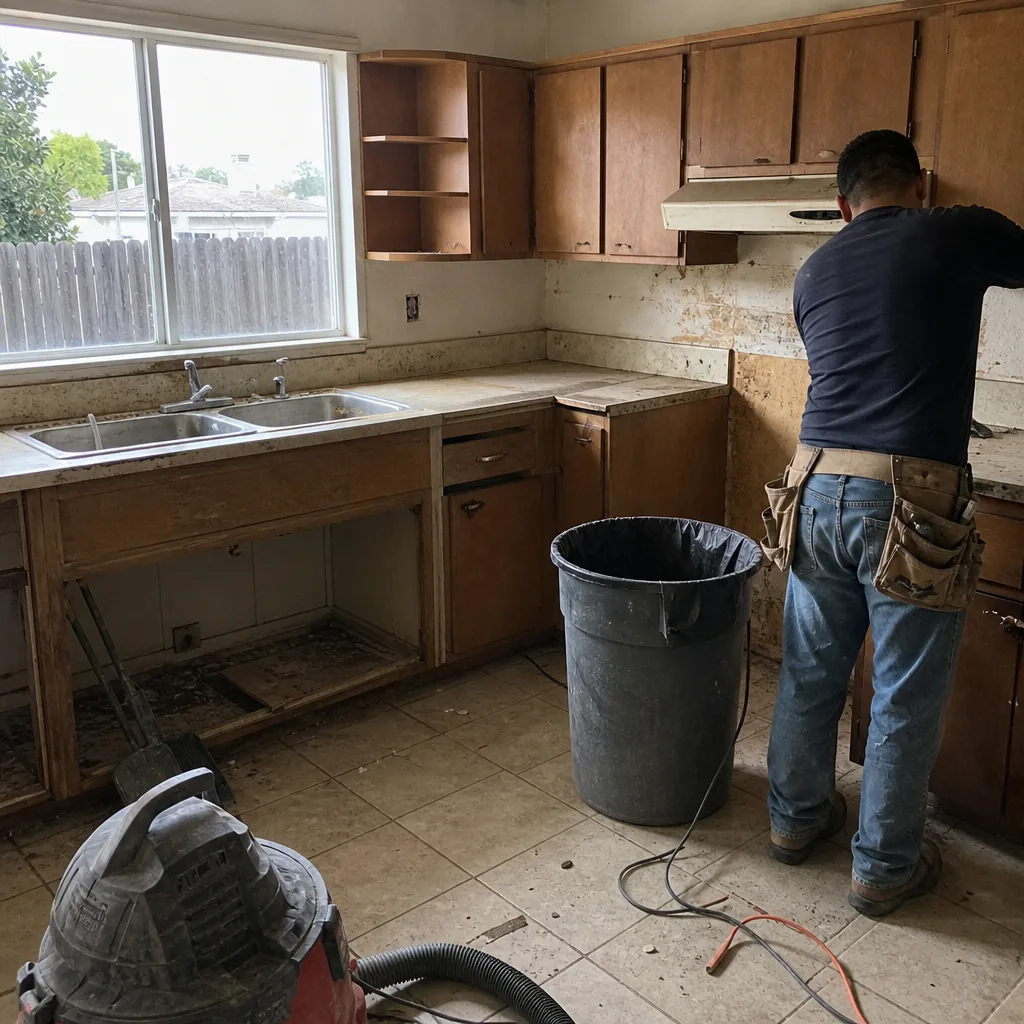 Before
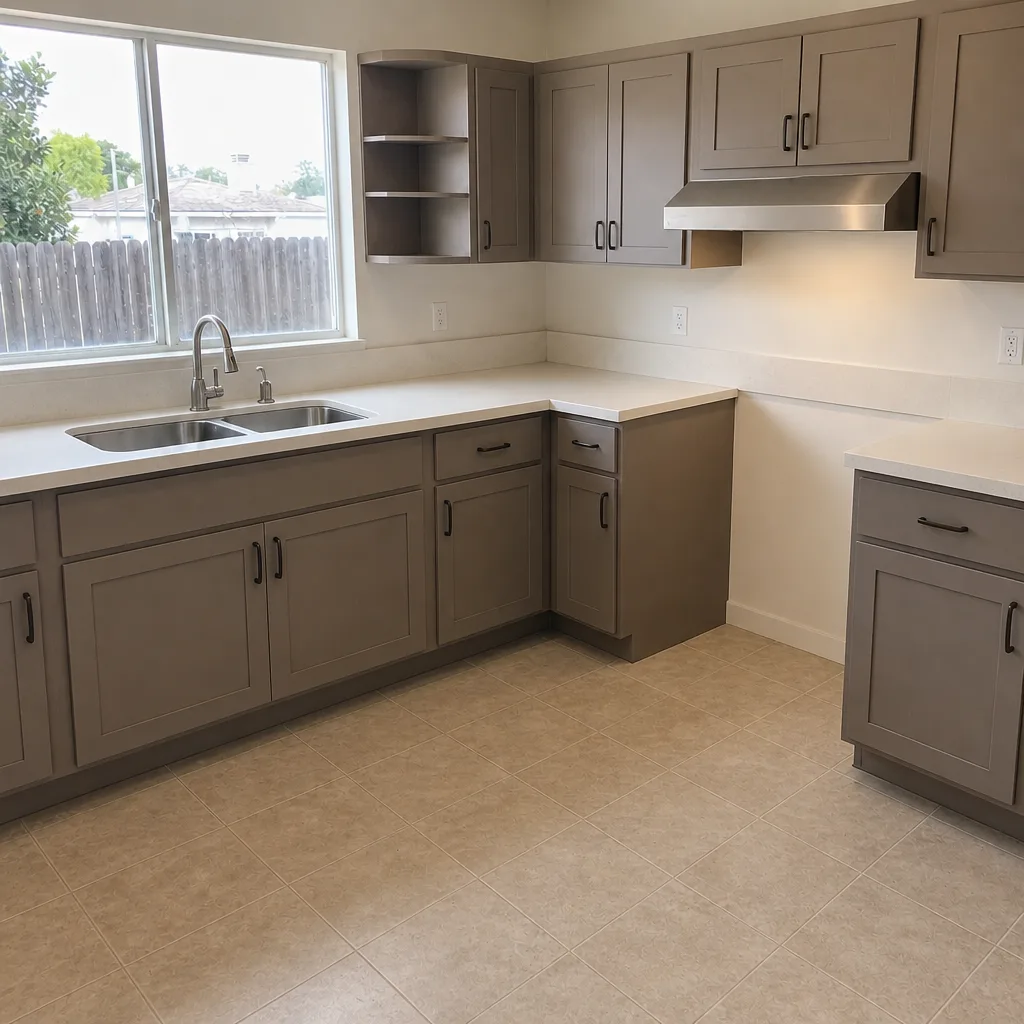 After
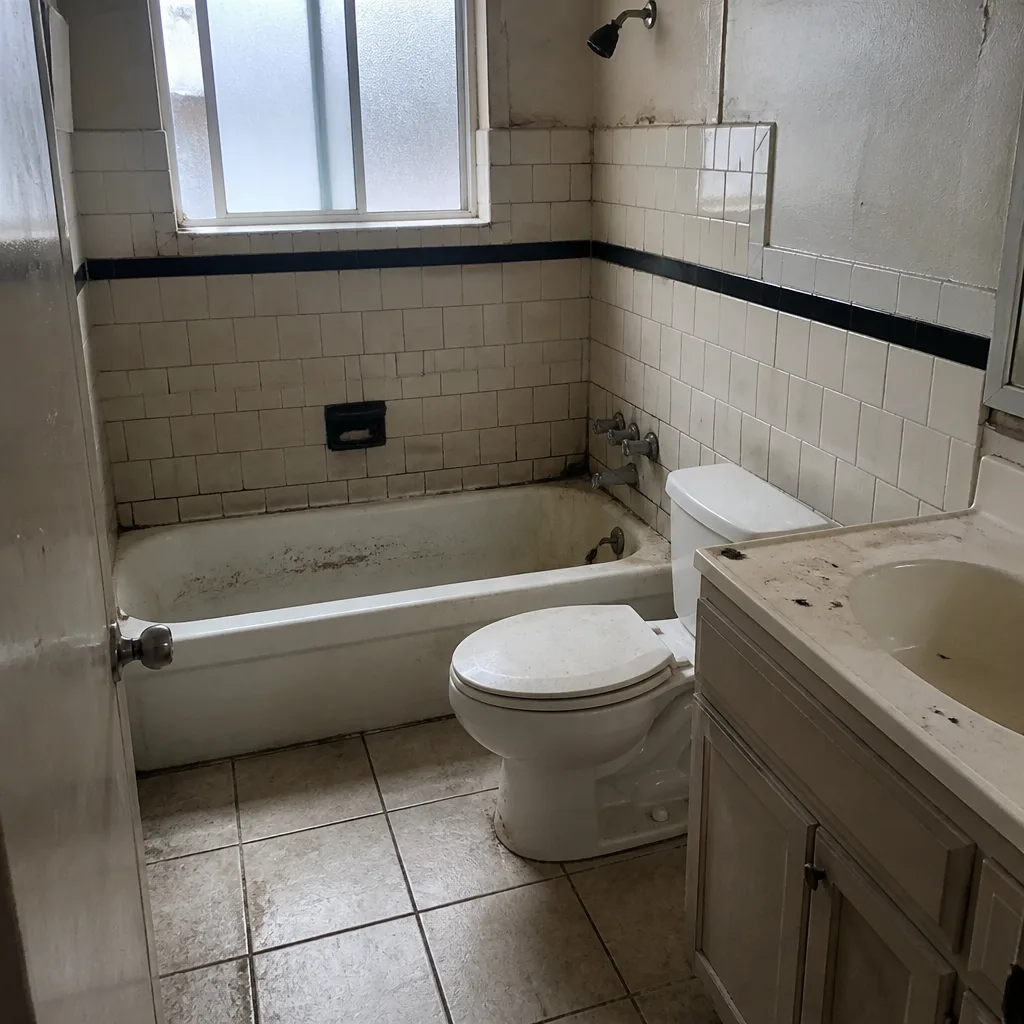 Before
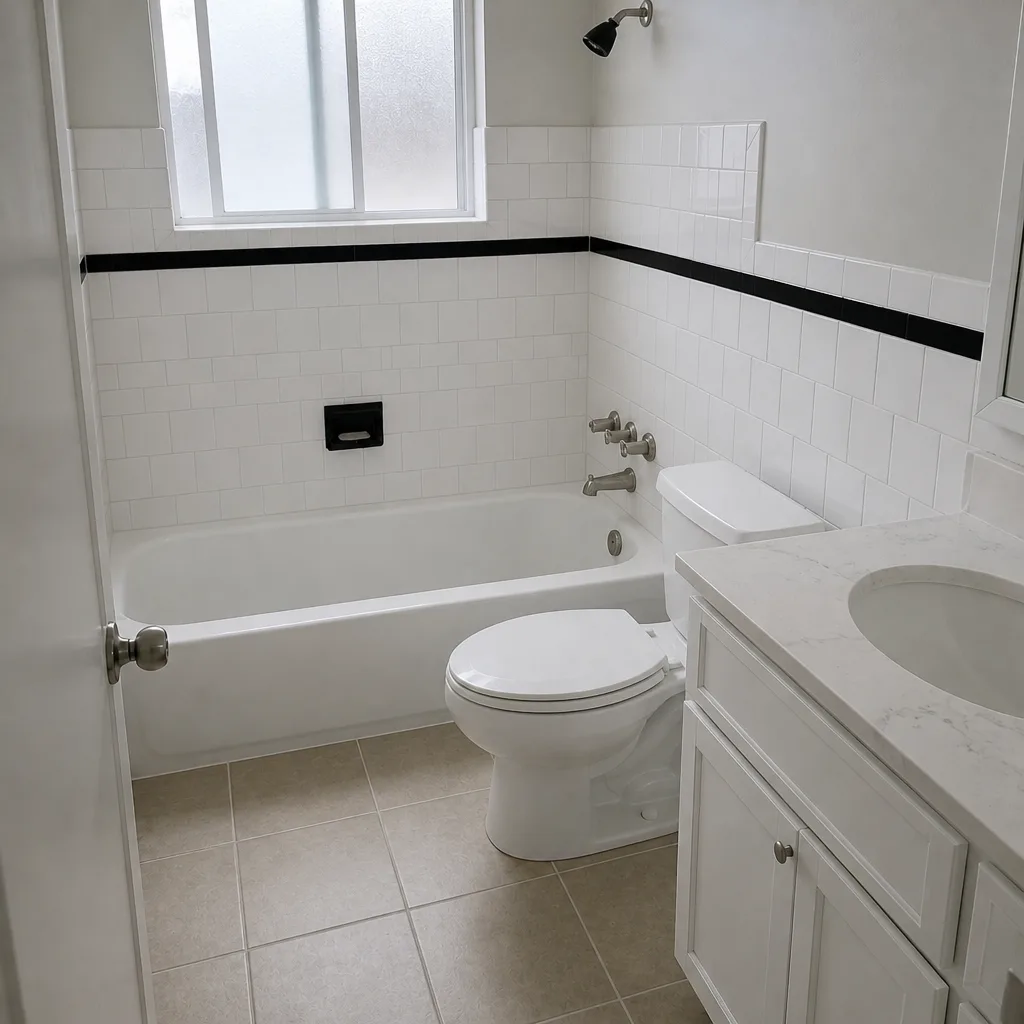 After
 Before
 After
When to Call a Professional
Most of this calendar is homeowner work: press tests, cleanings, valve exercising, tissue tests, and re-caulking. But some situations call for a professional, and knowing which ones saves money and, in a few cases, prevents real damage.
- A failed shower pan or a leak under a tiled floor. Water in the subfloor or a shower pan that leaks means the waterproofing layer is compromised. That’s a demolition and rebuild, not a caulk fix.
- Any water stain on the ceiling below the bathroom. Get a professional eyes on it before it spreads. Drywall replacement is cheap; a mold problem is not.
- A subfloor that feels spongy or a tile that lifts easily. That signals a structural issue, not settling.
- A shut-off valve that won’t seat or leaks after you turn it. Have a plumber replace it immediately. This is the case where a maintenance task reveals a safety issue.
- An exhaust fan that stays weak after cleaning and a duct check. A fan that won’t pull means mold risk behind the walls, and that’s not a DIY fix.
If you’re not sure whether something is maintenance or a repair, that’s when to call. Groundwork Construction Co. of Antioch offers free estimates in Antioch – call (888) 419-3650, and we’ll tell you straight whether it’s a fix, a repair, or something the warranty should cover. We’d rather answer that question on the phone than have you find out the hard way.
Frequently Asked Questions
Re-caulk the wet zones every three to five years, and check them every six months. Silicone caulk lasts longer than latex, so we specify silicone at the tub-to-wall joint, the shower curb, and the niche edges. If the bead feels hard, cracked, or pulls away from the tile, replace it right away rather than waiting for the calendar.
Hold a tissue to the grille with the fan running. If it clings and holds, the fan is pulling; if it droops, the fan is losing efficiency. Vacuum the grille and blades first, then retest. A fan that stays weak after cleaning needs a duct or motor check – in Antioch’s humid winters, a weak fan is the leading cause of mold behind tile walls.
DIY supplies run $15-$40 for caulk and tools. A professional re-caulk of a shower typically runs $150-$400 depending on the number of seams, and it’s worth it in the wet zones. Call (888) 419-3650 for an exact quote – estimates are free.
Walking the floor once a year and looking for hollow sounds underfoot or tile edges that sit higher than their neighbors (lippage). Press on suspicious corners with your hand. Lippage is the first warning that a tile is working loose; catching it early lets us re-set the tile before a crack opens.
The promise covers workmanship, not maintenance. If the work itself failed – an improperly set tile, a shower pan leak from install – we fix it within the 730 days. If the caulk failed because it was never maintained, that’s an owner maintenance item, not a workmanship claim. We explain the line clearly before we start.
Yes. At the final walkthrough we walk you through this exact calendar – the monthly checks, the six-month caulk and fan inspection, the annual valve and settling check – tuned to your specific home. Call Groundwork Construction Co. of Antioch at (888) 419-3650 to schedule your free estimate or a design consult, and we’ll put the maintenance plan in writing.
The Bottom Line
A bathroom remodel doesn’t fail on the day the contractor leaves. It fails 18 months later, quietly, because no one told the homeowner what to maintain. The schedule is simple: a 10-minute monthly look, a caulk and exhaust fan check every six months, a deeper annual review of grout, valves, and floor tile, and full re-sealing and re-caulking every three to five years. The highest-value task in the entire calendar is exercising your shut-off valves once a year. Do that, and the bathroom you invested in on day one is still holding up on day 1,000. Our 730-Day Done Right Promise backs the work; this calendar protects it. From foundation to finish line, we’re happy to be your construction partner in Antioch. For a free estimate on your next bathroom project – or to ask a specific maintenance question – call us at (888) 419-3650. Live person, 24/7, no voicemail, no delays.
Related Reads
If your maintenance schedule is pointing to bigger projects, the team at Groundwork Construction Co. of Antioch home can help you plan the next step. For exterior work, see our guides on Driveway & Pavers in Antioch and Fence Installation in Antioch. And if a growing household has you thinking about new rooms, start with Home Additions & ADU in Antioch.
Written by the team at Groundwork Construction Co. of Antioch.