
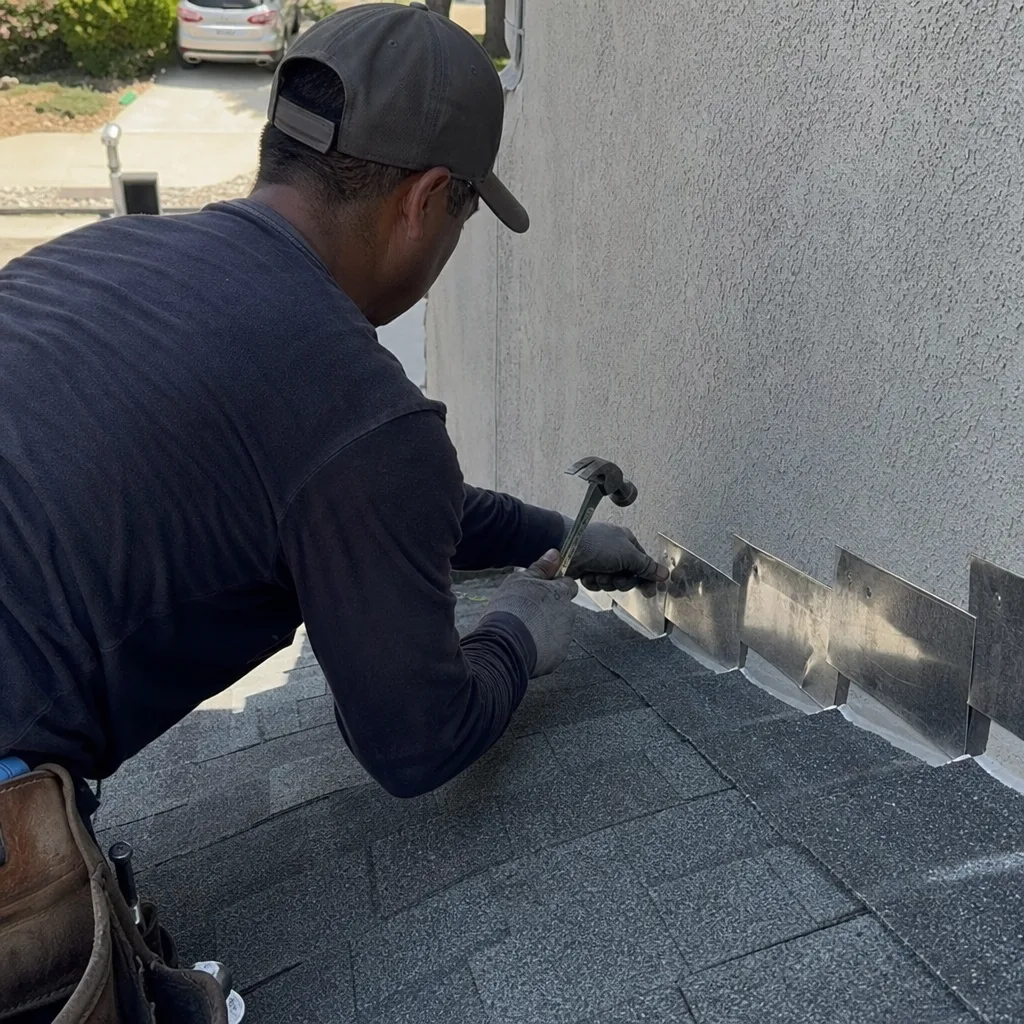
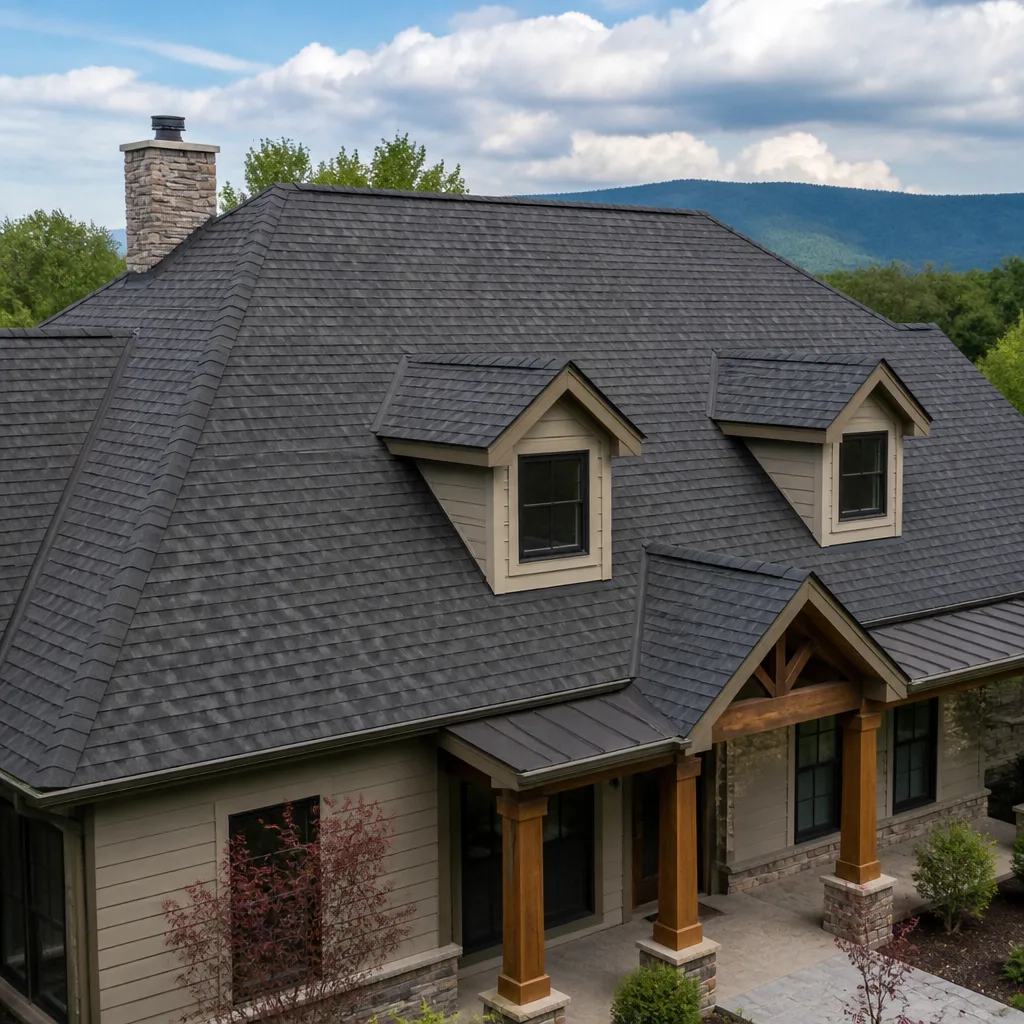
 Roofing
 Kitchen remodeling
 Bathroom remodeling
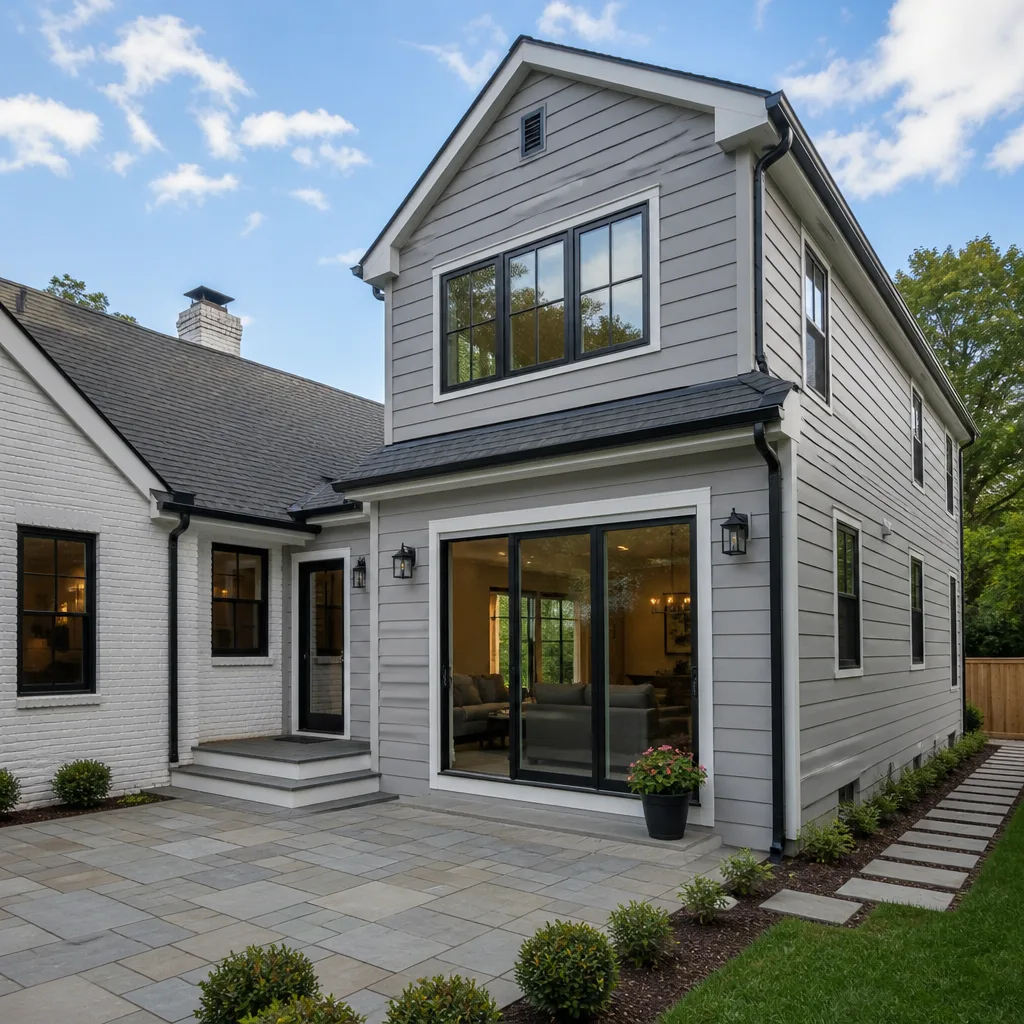 Home additions & ADU
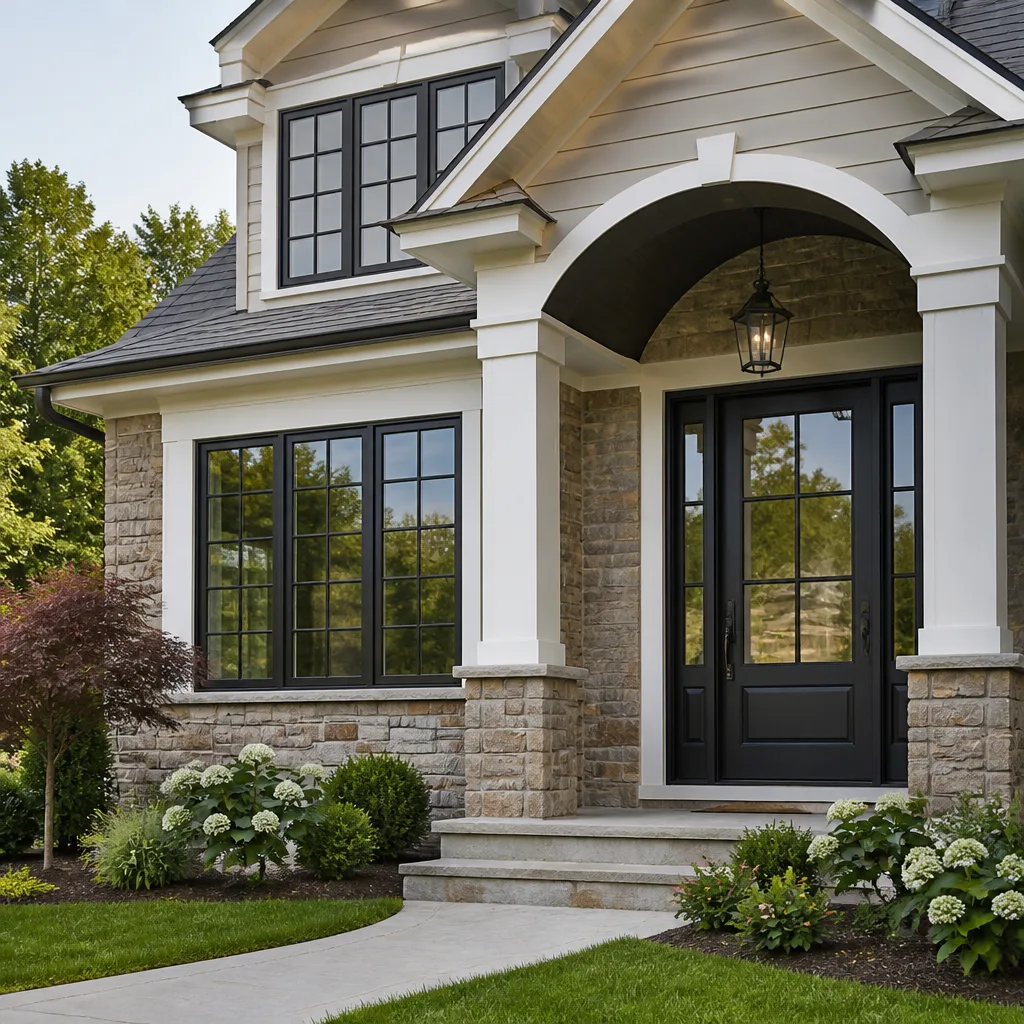 Windows & doors
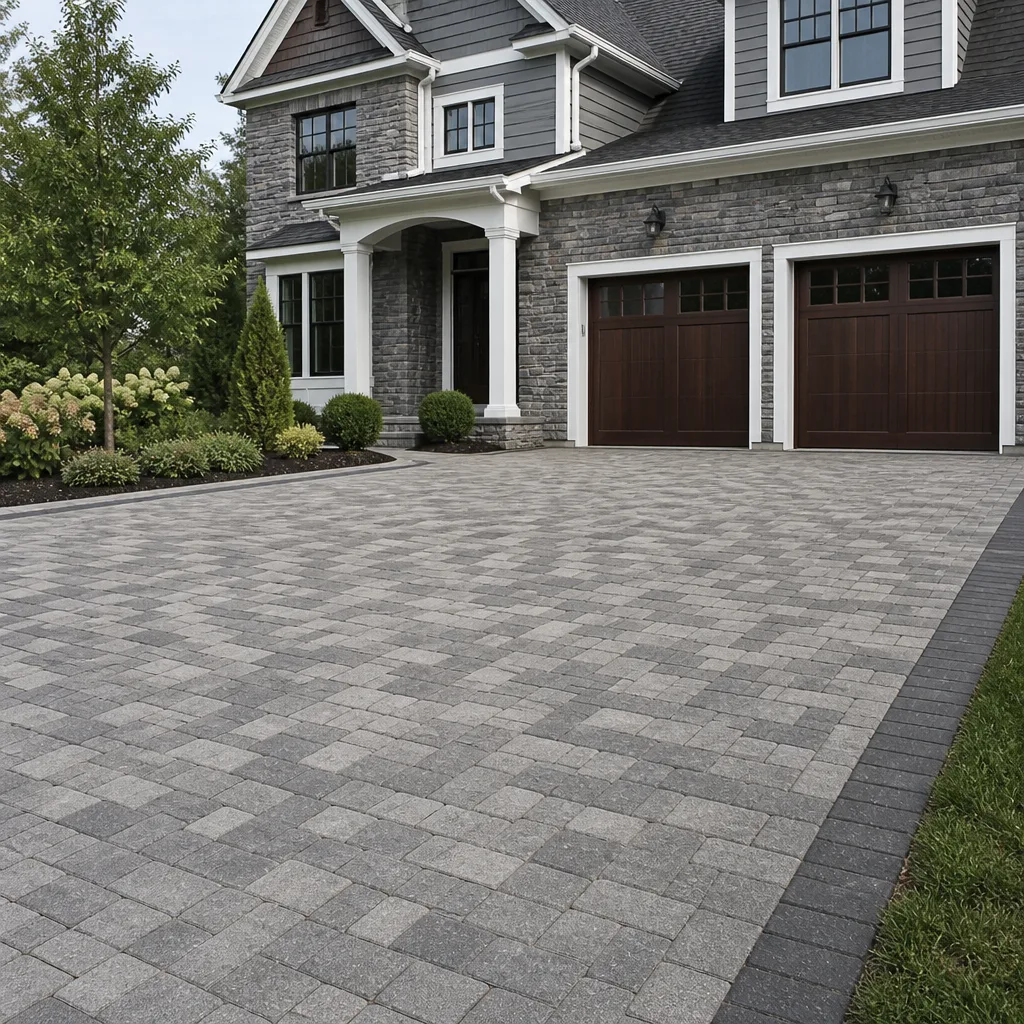 Driveway & pavers
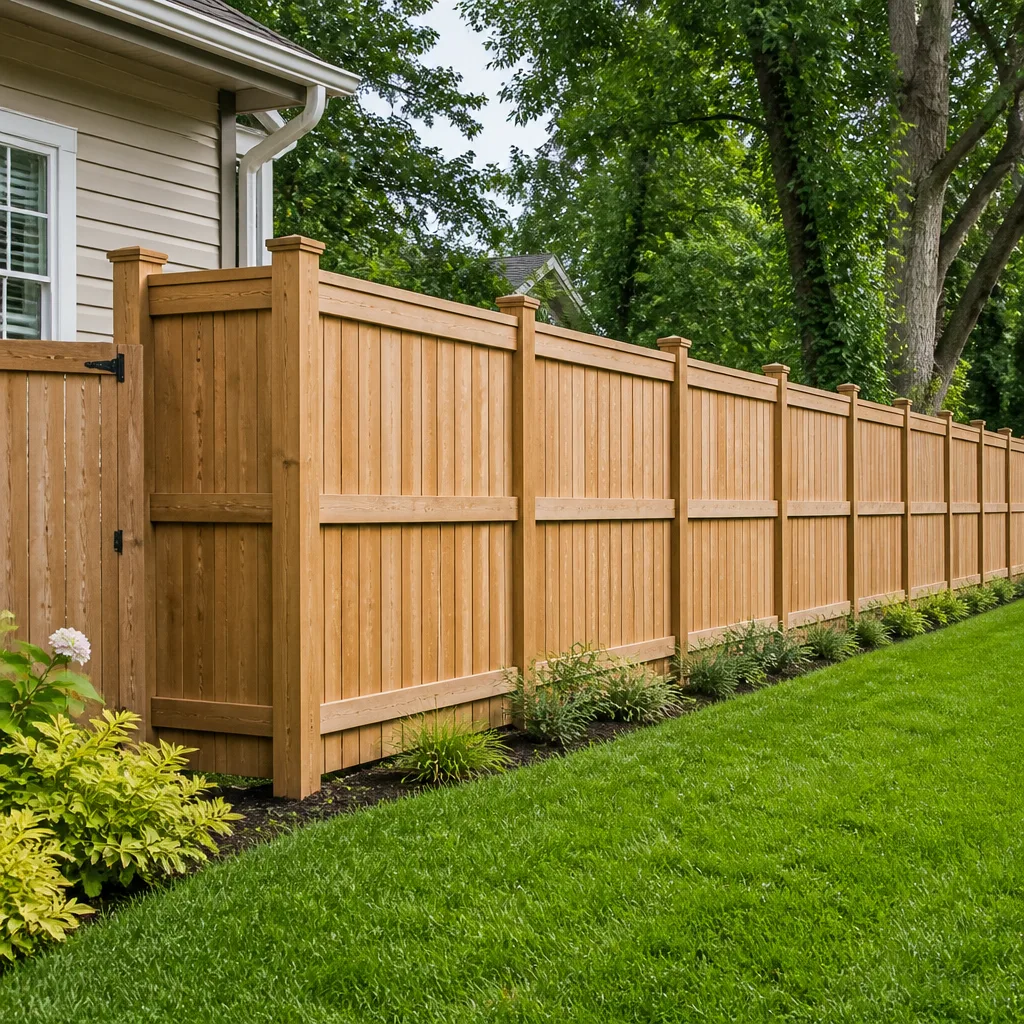 Fence
Free written scope consultation - allowances, timeline, and change-order rules on paper before a single trade is scheduled
Specialty Roofing in Livermore, CA: What the Job Actually Involves
Specialty roofing in Livermore covers the work a standard shingle crew isn’t set up for: heavy-gauge standing seam, low-slope membrane on detached shops and additions, complex hips and valleys on custom ranch homes, and the structural bracing that earthquake country demands. A typical specialty job here runs two to four days on site and lands between $8,000 and $20,000 for a replacement-scope project, or $400 to $1,800 for targeted repairs, with metal systems reaching $15,000 to $40,000. Call (888) 419-3650 and a live person picks up, day or night, to talk through what your roof needs.
How We Run a Specialty Roofing Job, Stage by Stage
Roofing out here isn’t a one-day flip. Acreage properties, detached workshops, and oversized doors change the sequence, and homeowners who want it done right the first time need to know what lands on which day.
Stage 1: On-site assessment and written scope (day 1, 60 to 90 minutes). We walk the roof, the fascia, the flashing at every penetration, and the attachment points on any detached structure. You get a line-item written estimate, not a range scribbled on a business card. This is where you decide whether the project is a full tear-off or an overlay, and whether the shop building gets done in the same pass.
Stage 2: Permits and engineering review (3 to 10 business days, depending on scope). Livermore sits on the Greenville Fault, and the building department wants to see bracing and attachment details for anything structural. You sign off on the final material selection while we handle the submittal. Older downtown homes sometimes pull a retrofit requirement into the permit scope, so we flag that before demo, not after.
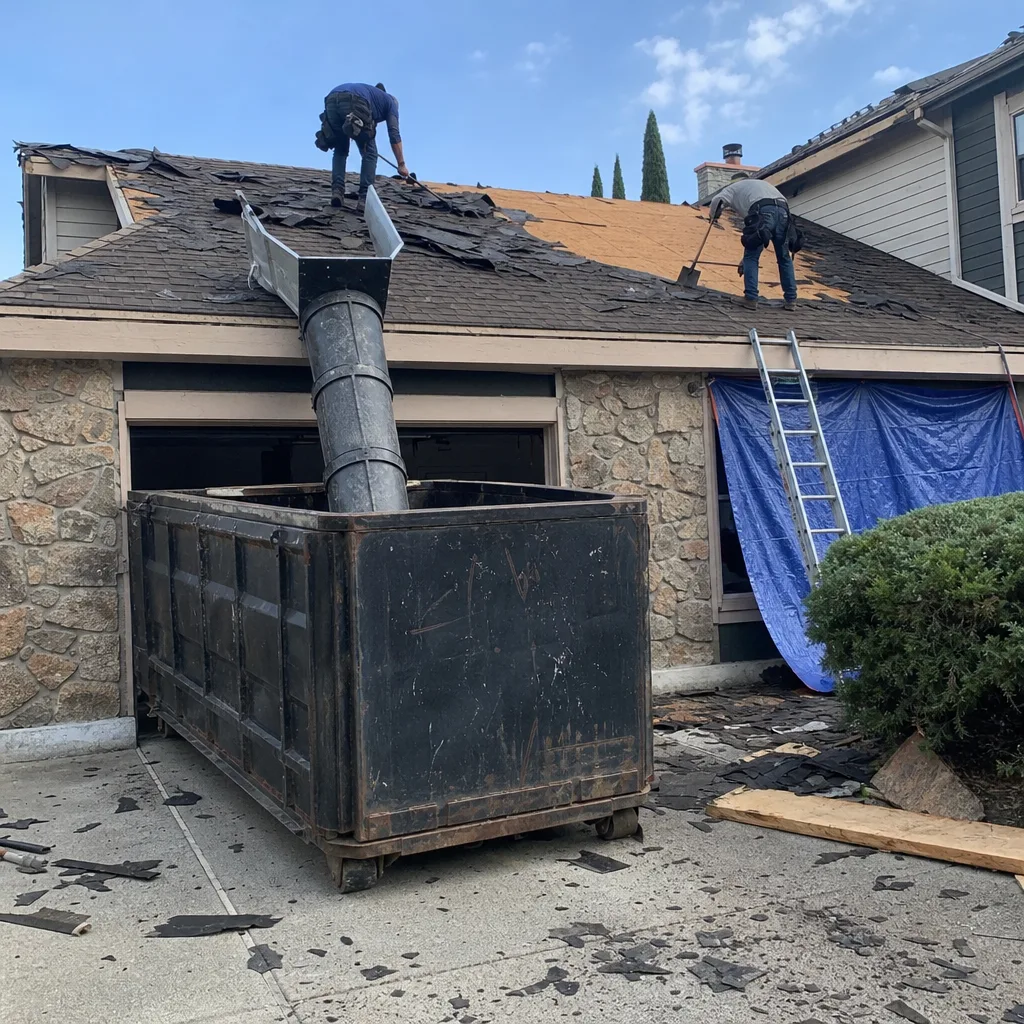
Stage 3: Tear-off, deck inspection, and repair (day 2, most of the day). Old roofing comes off, the deck gets inspected for rot and soft spots, and any compromised sheathing is replaced and photographed. On the 1970s-to-90s tract homes in 94551, we often find fastener patterns that don’t meet current uplift requirements; those get corrected here.
Stage 4: Underlayment, flashing, and the roofing system itself (days 2 through 4). Ice-and-water membrane at the valleys and eaves, then the chosen system goes down. Detached workshops and outbuildings get the same treatment as the house because they take the same wind and heat load. Oversized and heavy doors on those buildings get checked against the new roof line so nothing binds.
Stage 5: Final inspection and cleanup (day 4, plus the city inspection when scheduled). We magnet-sweep the yard and driveway, walk the job with you, and hand over the warranty documents. Every project carries the 730-Day Done Right Promise: if it isn’t done right, we make it right.
Styles & brands we work with
- Kitchen remodeling
- Bathroom remodeling
- Home additions & ADU
- Roofing
- Windows & doors
- Driveway & pavers
- Fence
The Specialty Roofing Options You’ll Choose Between
Most of the decisions happen in the first week, and they fall into a handful of real forks in the road.
- Standing seam metal vs. exposed-fastener panels. Standing seam hides the fasteners and holds up to Livermore’s 95-to-105°F summer swings with far less thermal movement; it costs more up front and lands in the metal range above. Exposed-fastener panels are cheaper and quicker, but the washers degrade faster under our UV load.
- Low-slope membrane on shops and additions. TPO and modified bitumen are the two working choices for a flat or near-flat roof over a detached workshop. TPO handles heat better; modified bitumen is more forgiving on older, uneven decks.
- Class A fire-rated assemblies. With the Diablo Range wildfire interface at the edge of town, the assembly rating matters. GAF and CertainTeed both make Class A systems we install, and the upgrade is usually a modest line item rather than a full re-roof.
- Impact and wind-rated underlayment. A better underlayment adds a small percentage to the total and buys years of leak protection at the valleys. Worth it on any home past the 20-year mark.
- Gutter and drainage integration. Heavy clay soils mean water has to leave the roof and the foundation zone fast. Integrated gutter and downspout work is priced into the scope, not bolted on later.
What Specialty Roofing Costs in Livermore, CA
Plan on $8,000 to $20,000 for a specialty replacement-scope project, $15,000 to $40,000 for a full metal roof, and $400 to $1,800 for targeted work like flashing repair or a single-valley rebuild. Five variables move the number:
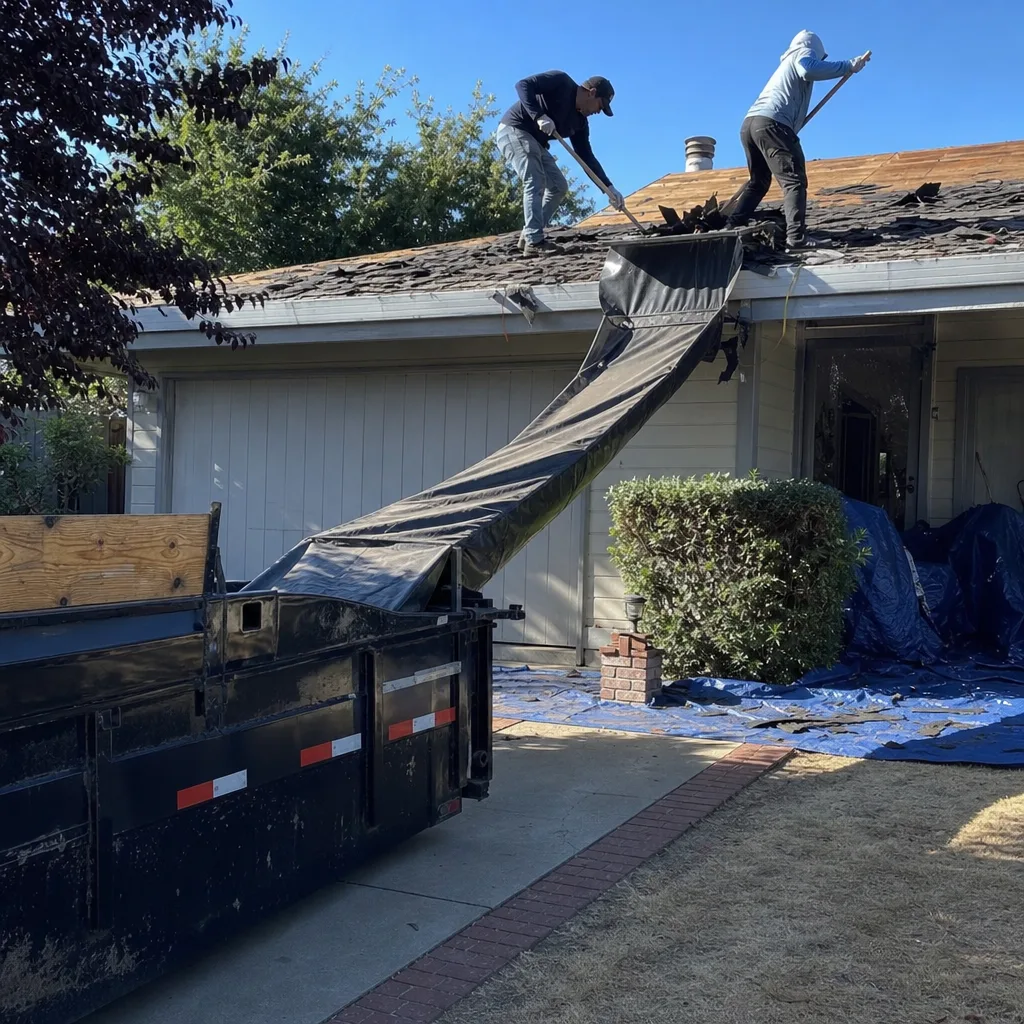
- Square footage and complexity. Hips, valleys, dormers, and multiple roof planes on a custom ranch home add labor and material waste. A simple gable is the low end; a cut-up roof is the high end.
- Existing condition. Rot, soft sheathing, or a second layer of old roofing that has to come off pushes the total up. We price the deck repair as a separate line so you see exactly what it costs.
- Material grade. Standing seam against an exposed-fastener panel is the widest swing on the page. Class A fire-rated assemblies sit in the middle.
- Permit and seismic scope. Greenville Fault bracing requirements and any retrofit triggered by the permit add design and inspection cost.
- Detached structures. Workshops and outbuildings add square footage and access time, and longer service drives out to acreage properties affect scheduling.
Every written estimate is line-item and upfront: the number you see is the number you pay, no surprises once the deck is open. What’s included is tear-off, deck repair up to the stated allowance, underlayment, flashing, the roofing system, cleanup, and permit handling. What isn’t included, unless it’s written in, is full deck replacement beyond the allowance, structural framing changes, and gutter replacement on the house itself.
See the difference
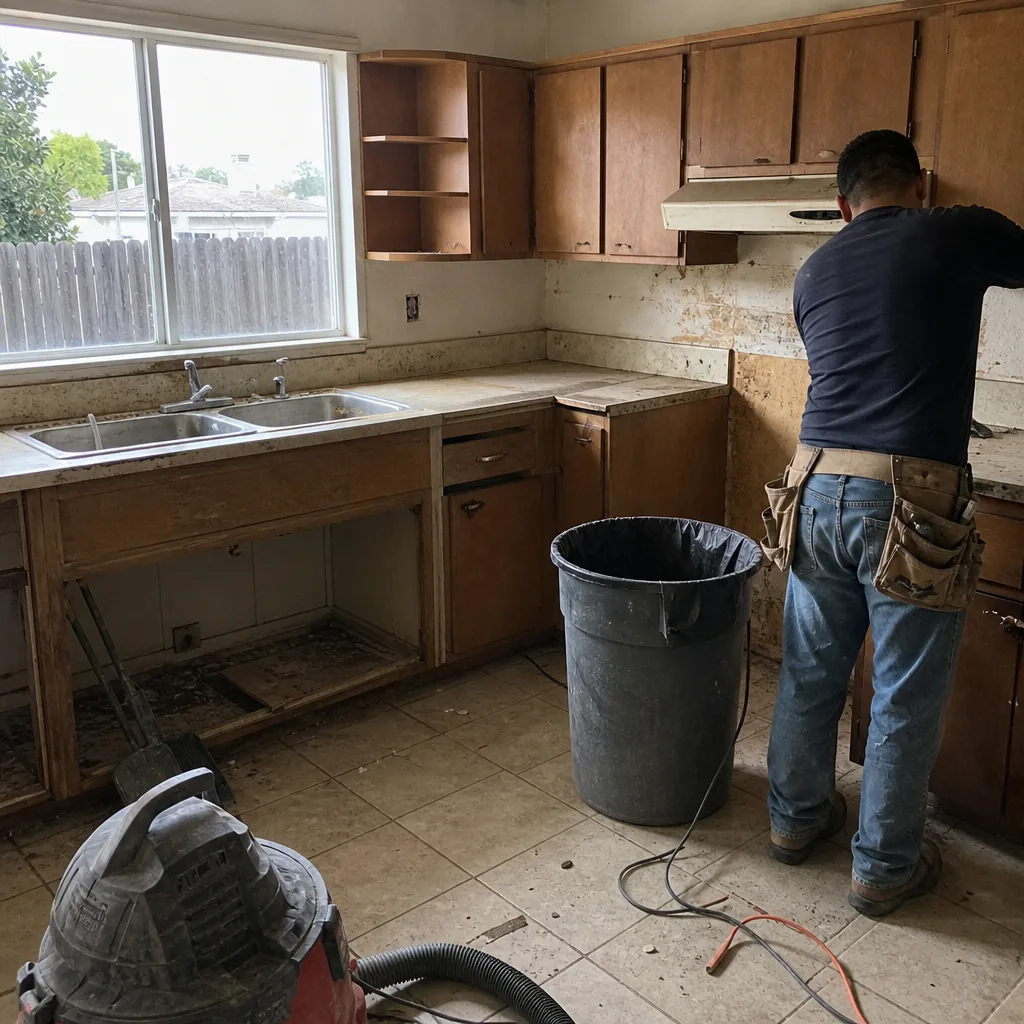 Before
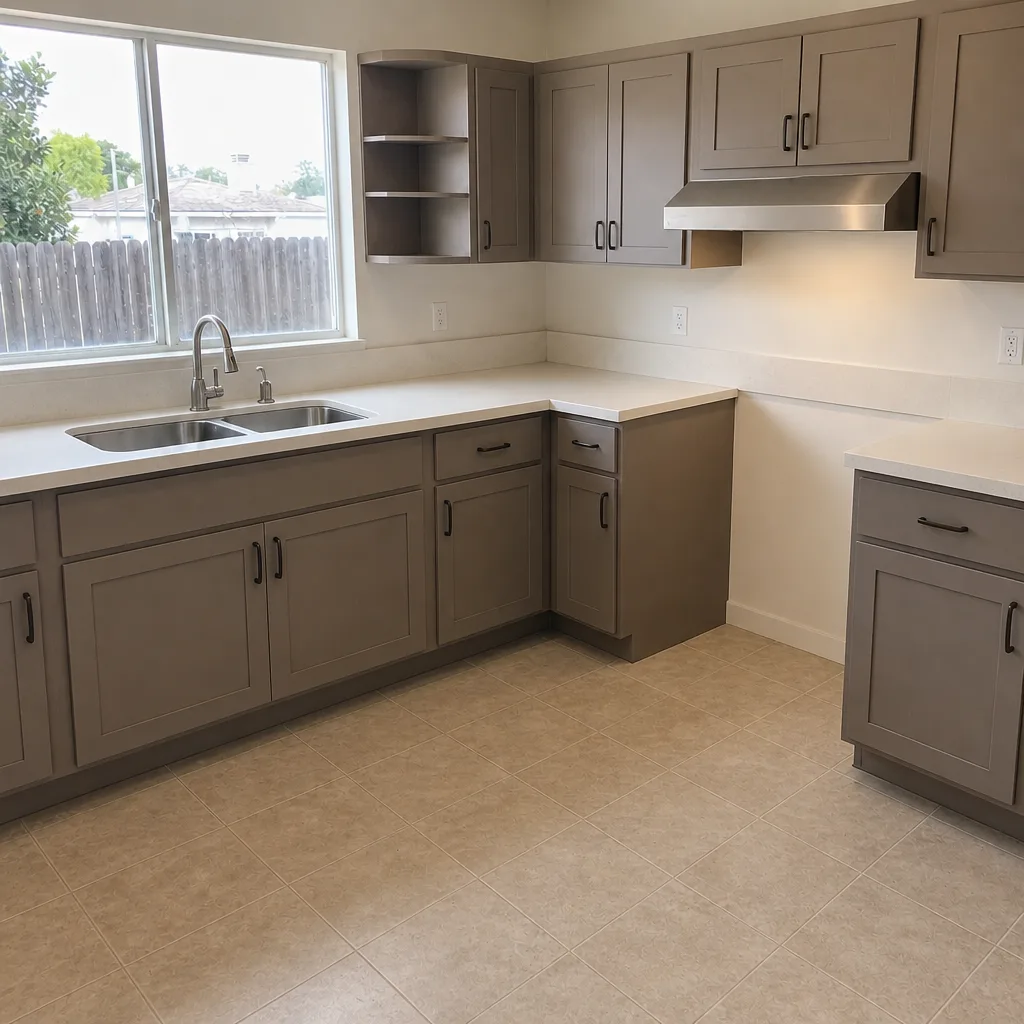 After
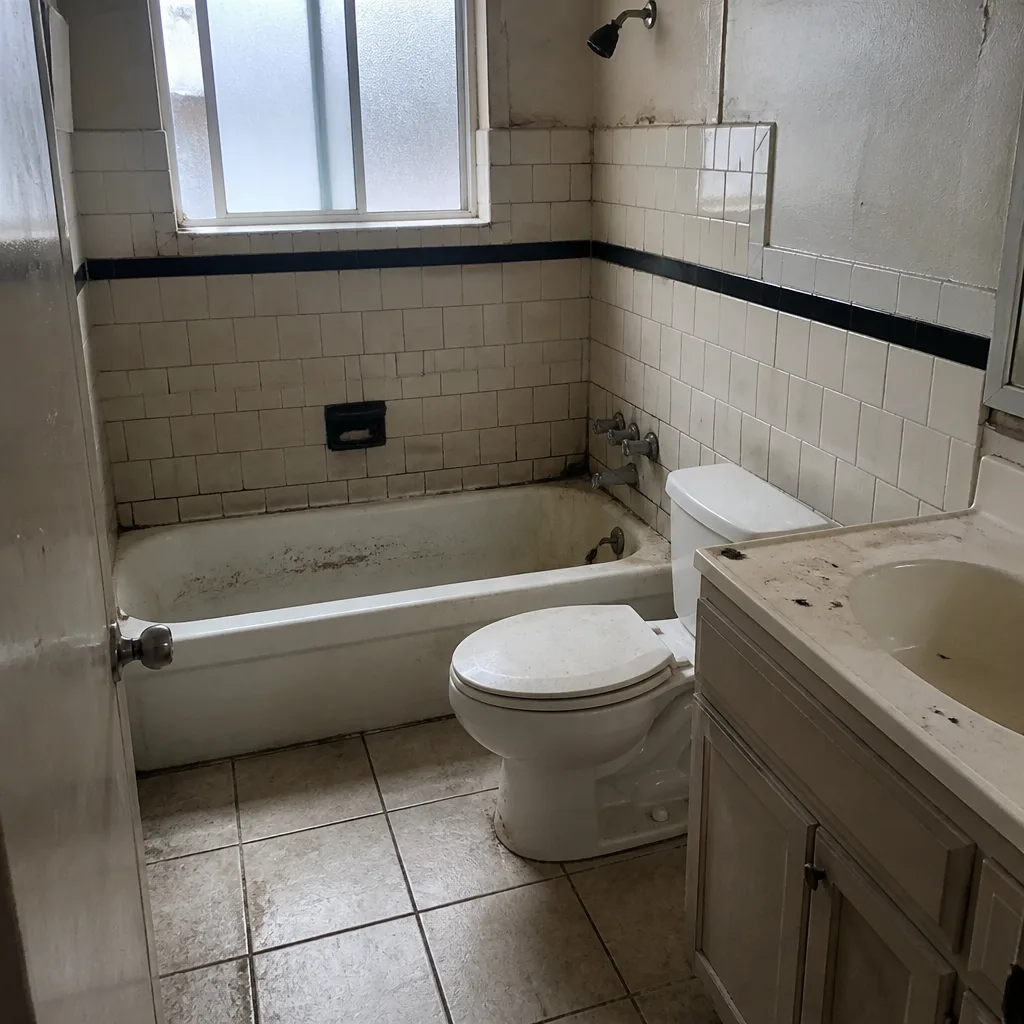 Before
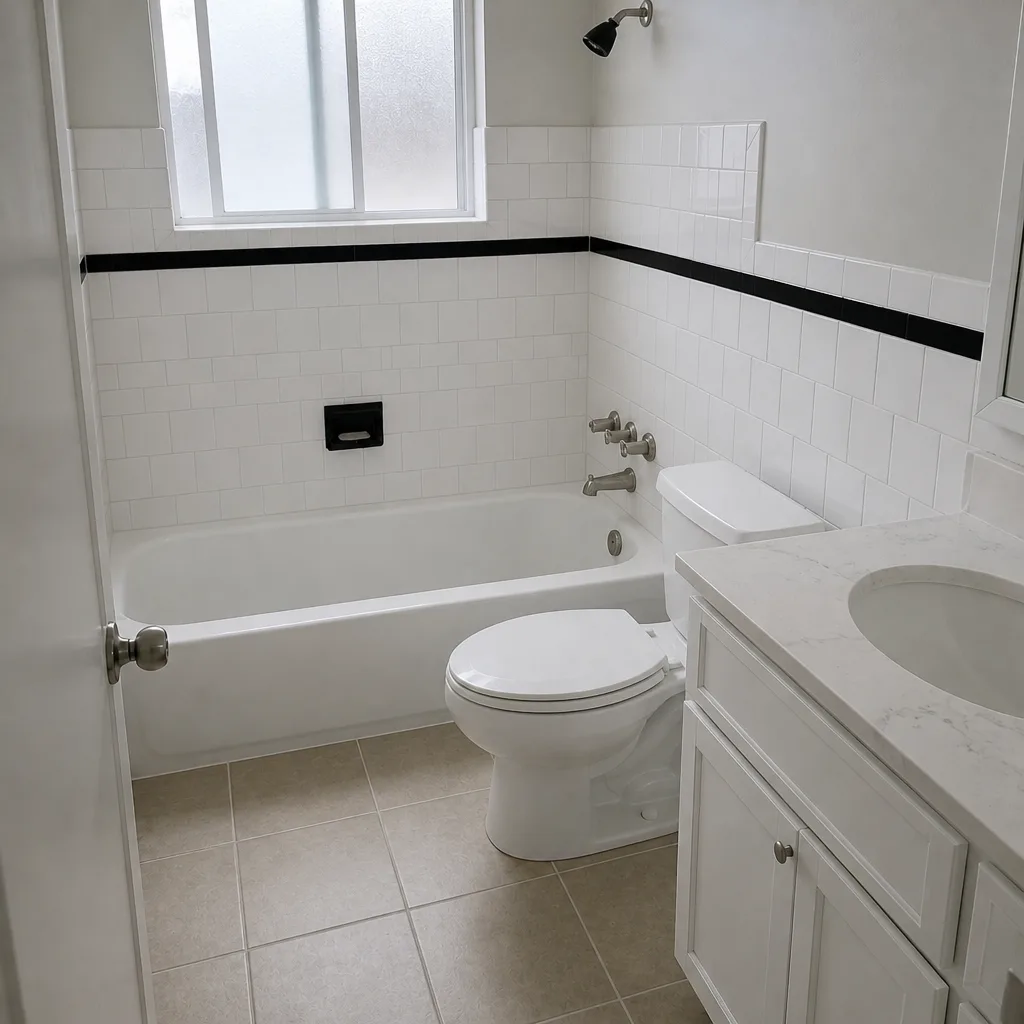 After
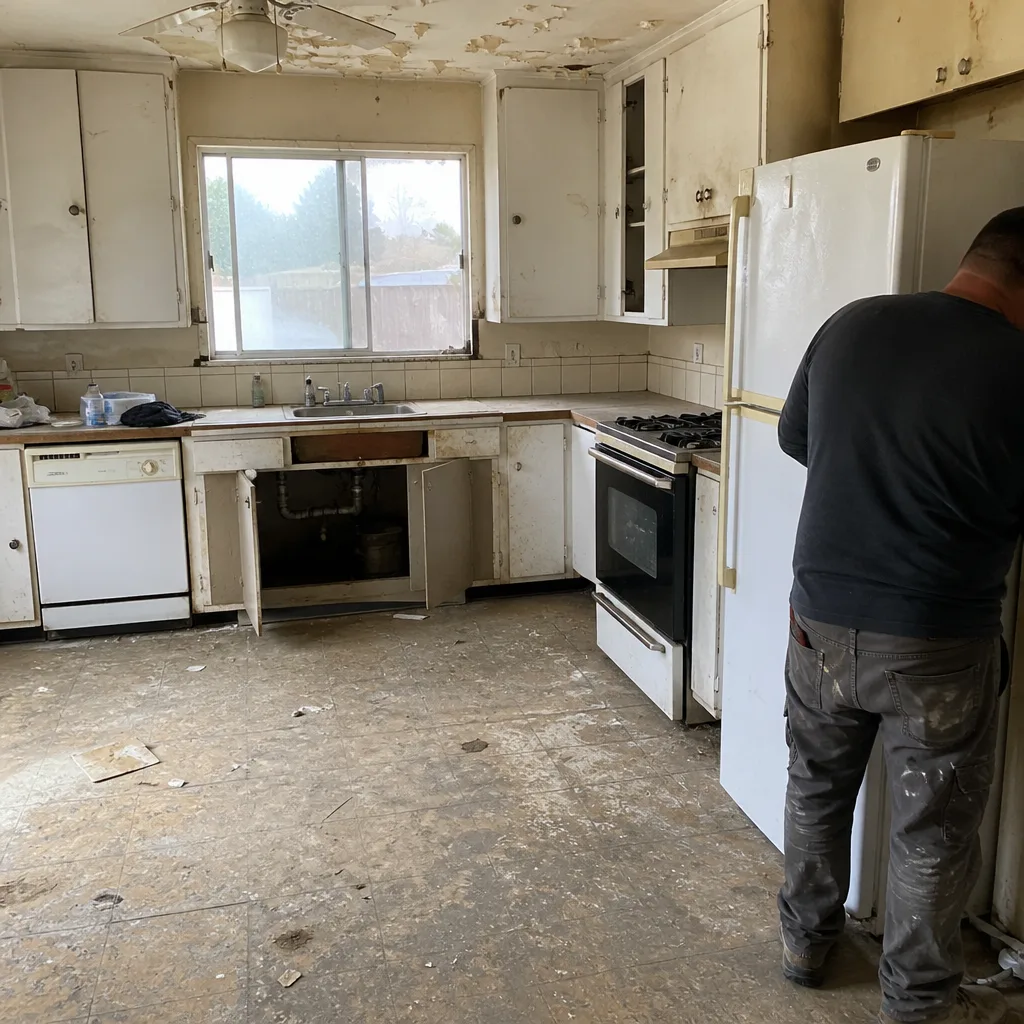 Before
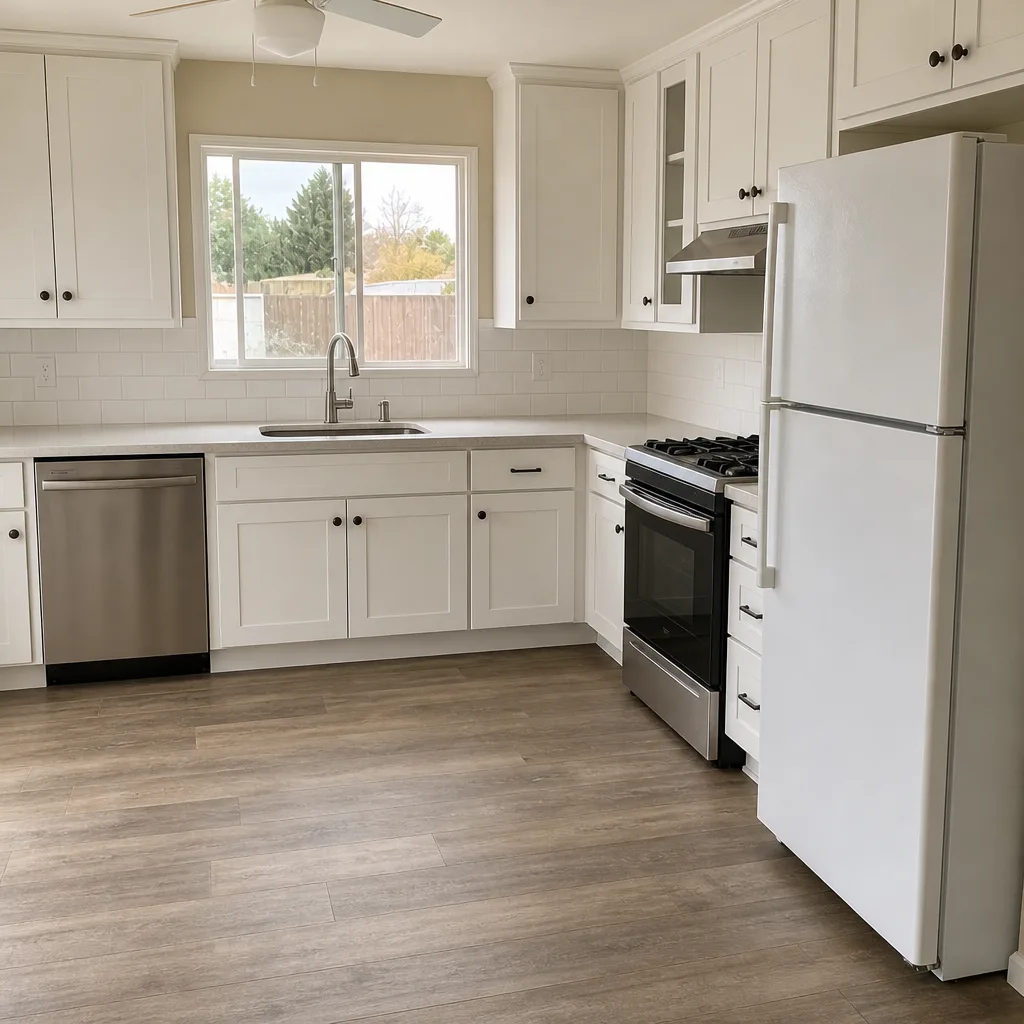 After
What Livermore Homes Specifically Do to This Job
The Greenville Fault runs under this valley, and that shapes the work more than anything else. Downtown Livermore (94550), with its early-1900s to 1950s single-story ranches and Victorians on raised foundations, is where we find unreinforced brick chimneys and cripple walls that predate any seismic code. A roofing permit on those homes can pull a full retrofit requirement from the building department, so we plan for it rather than discover it mid-job. Out in 94551, the 1970s-to-90s tract homes and newer infill need modern structural ties and current uplift fastening, which we correct during the tear-off stage. The Diablo Range wildfire interface adds a second layer: fire-resistant assemblies on the same roof we’re bracing for earthquakes. Clay-heavy soils and hot summers cause foundation movement that shows up as roof-plane distortion and cracked flashing, and winter rain around the foundation drives drainage and erosion issues we solve at the gutter line. Homeowners here tend to want the whole scope handled in one trip, and we build the job around that. If the wider project is on your list, this is often part of a full Roofing in Livermore plan, and we cover the whole of Livermore plus the surrounding valleys.
Serving Livermore, CA – Our Local Coverage Area
We serve Livermore and nearby communities. Use the map below to see the area we cover. If you’re nearby, we can almost certainly help.
Frequently Asked – Specialty Roofing in Livermore
Most specialty roofing projects take two to four days on site, plus three to ten business days for permits and engineering review. Complex hip-and-valley roofs and detached workshops push toward the four-day end. Call (888) 419-3650 for a timeline specific to your roof.
Yes. The building department requires permits for re-roofs and structural bracing, and the Greenville Fault seismic requirements mean attachment details get reviewed. We pull the permits and handle the inspection, and every project carries our 730-Day Done Right Promise.
Sometimes. A straight tear-off and re-roof on a sound deck usually stays in roofing-only scope. Homes with unreinforced chimneys or older cripple walls often trigger a retrofit requirement, and we flag that during the assessment so it’s priced up front.
Replacement-scope specialty roofing runs $8,000 to $20,000, metal systems $15,000 to $40,000, and targeted repairs $400 to $1,800. Grade, deck condition, and seismic scope are the main drivers. Call (888) 419-3650 for an exact quote; estimates are free.
Every job is covered by the 730-Day Done Right Promise: if it isn’t done right, we make it right. That’s one of the longest workmanship guarantees in residential construction, and it’s backed in writing with the manufacturer warranty on the system you choose.
Get Your Free Specialty Roofing Estimate in Livermore
A specialty roofing project deserves a written, line-item estimate and a crew that shows up in uniform and on schedule. Call (888) 419-3650 and a live person answers, day or night, to book a free on-site estimate. We’ll walk the roof, flag any Greenville Fault retrofit concerns, and hand you a fixed price with no surprises. If you’re weighing other exterior work, homeowners often pair this with Energy-Efficient Windows in Livermore or Sliding & Patio Doors in Livermore from our Roofing and exterior service lines.
Written by the team at Groundwork Construction Co.