
Last updated November 17, 2026
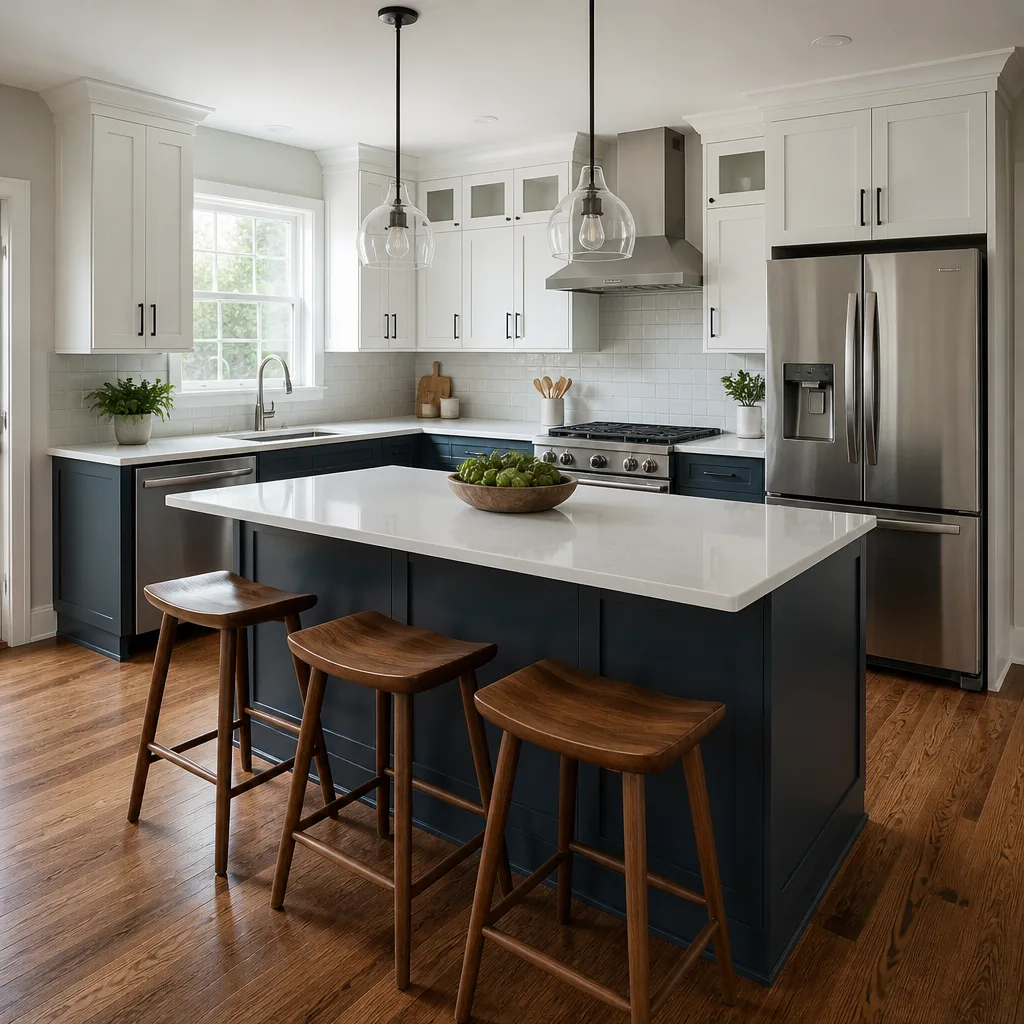 Kitchen remodeling
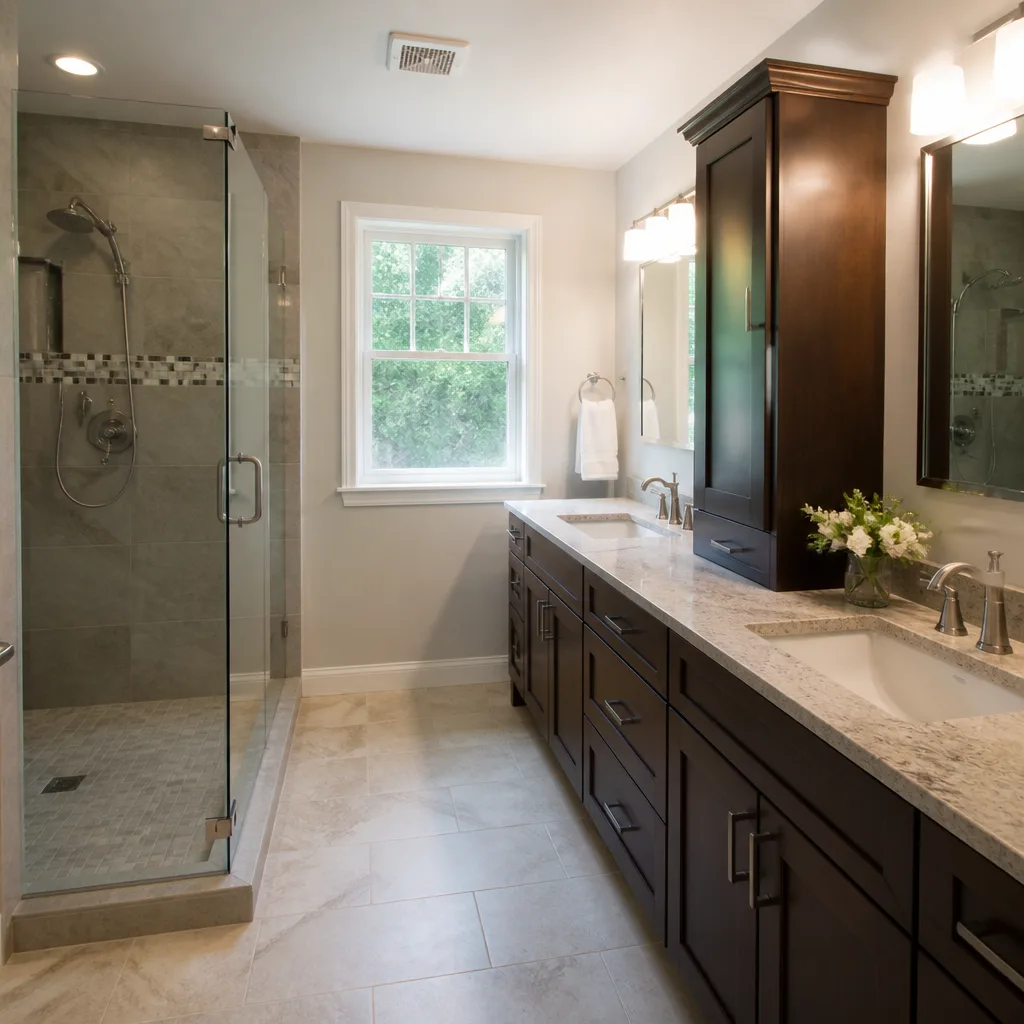 Bathroom remodeling
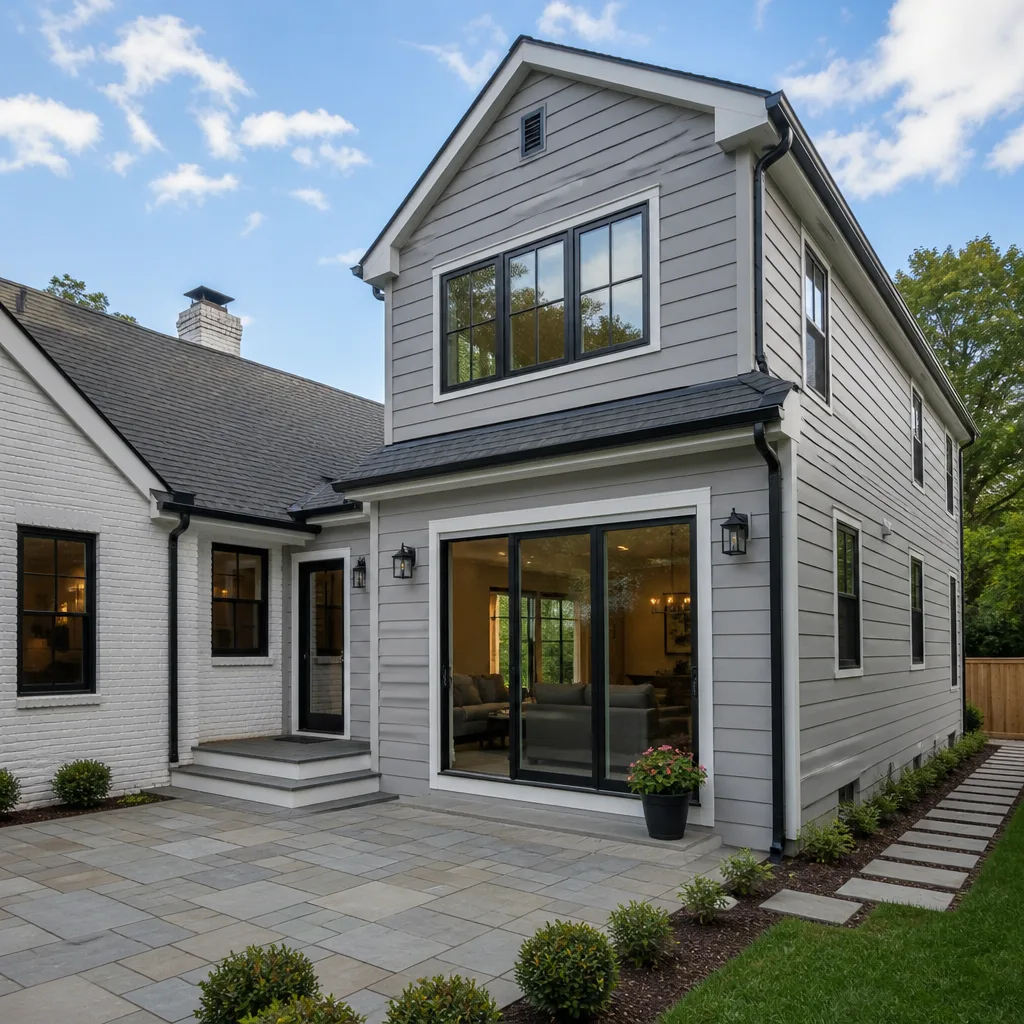 Home additions & ADU
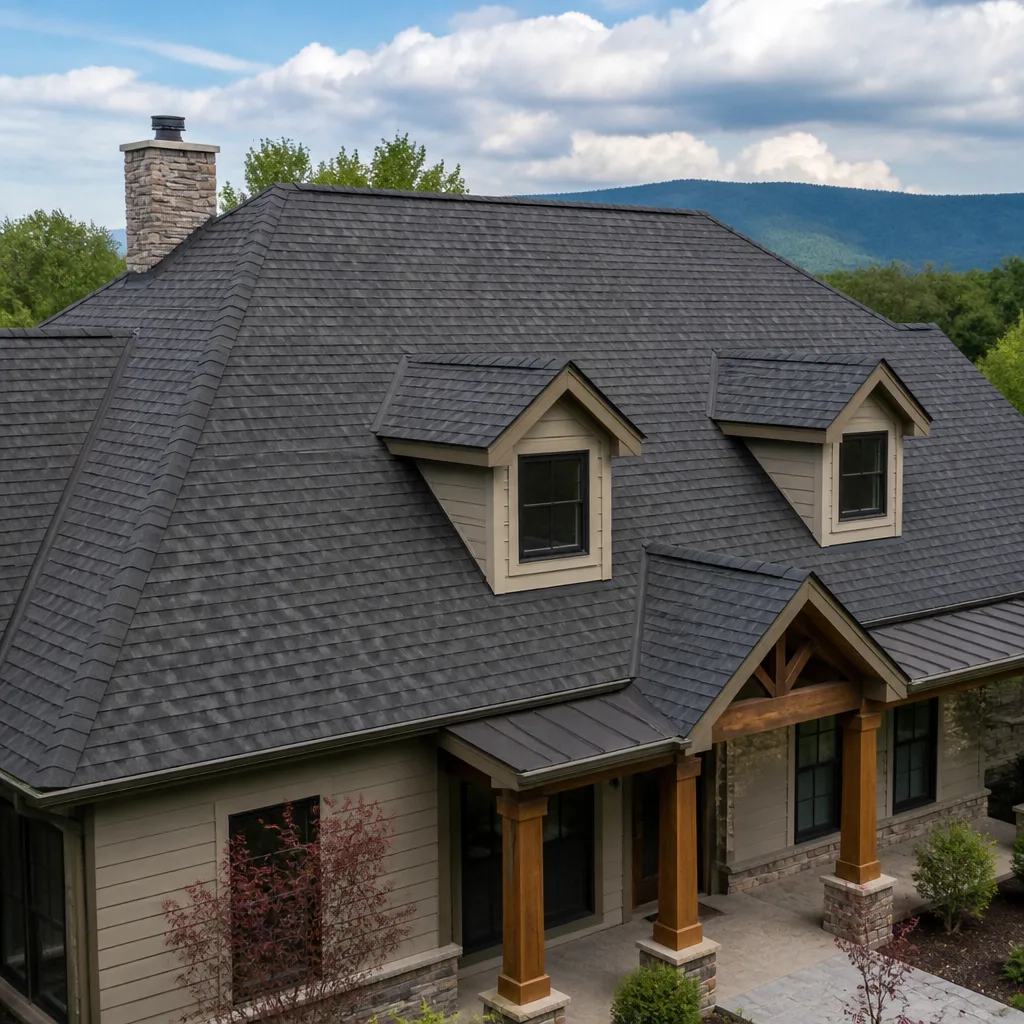 Roofing
 Windows & doors
 Driveway & pavers
 Fence
Free written scope consultation - allowances, timeline, and change-order rules on paper before a single trade is scheduled
How to Hire a Construction Contractor in Antioch: A Step-by-Step Guide
Here’s something worth sitting with before you call anyone: at the time of writing, three of the highest-rated construction contractors on Yelp in Contra Costa County had active complaints on file with the Contractors State License Board. Five stars. Hundreds of reviews. And open CSLB complaints. That gap between what reviews tell you and what a license record tells you is where most Antioch homeowners get hurt. This guide walks you through the five-step vetting sequence that actually protects your money, explains what to ask and in what order, and covers the details specific to Antioch’s market right now – where demand from remodelers and ADU builders has let underqualified operators stay booked on referrals alone. You’ll learn how to read a CSLB record, structure the first conversation, spot a bid that’s missing half a scope, and know which California contract clauses are non-negotiable.
Quick Answer
To hire a construction contractor in Antioch, follow this order: verify the license and classifications on the CSLB website, interview the contractor with permit-specific questions, get at least three written itemized bids, compare those bids for what’s missing rather than just the bottom line, and confirm the contract includes a payment schedule tied to milestones, a written workmanship warranty, and a lien waiver clause. Reviews and referrals are a starting point, not a substitute for that sequence.
Styles & brands we work with
- Kitchen remodeling
- Bathroom remodeling
- Home additions & ADU
- Roofing
- Windows & doors
- Driveway & pavers
- Fence
Table of Contents
- Step 1: Verify the License on the CSLB Website
- Step 2: Structure the First Conversation Around Permits
- Step 3: Compare Bids by What’s Missing
- Step 4: Lock In the California Contract Clauses That Matter
- Red Flags Specific to Antioch’s Current Market
- How to Handle Payments and Protect Your Money
- Why Antioch Jobs Are Different From the Rest of the County
Step 1: Verify the License on the CSLB Website
Every licensed contractor in California is listed in the Contractors State License Board database, and the lookup takes about ninety seconds. Go to cslb.ca.gov, click “Check a License,” and enter the license number from the contractor’s bid. If they can’t give you a license number on the spot, that’s your answer – move on. Unlicensed contractors in California can’t legally take on jobs above $500 in combined labor and materials, so a lowball quote without a license is a criminal act in progress, not a bargain.
The field most homeowners skip is classifications. A contractor’s license isn’t a single blanket permission to build anything. It lists specific classifications for the work they’re legally allowed to perform. The common ones:
- Class A – General engineering contractor. Earthwork, grading, paving, sewers, and structures that support a roadway or waterway. Relevant if you’re regrading a sloped Antioch lot.
- Class B – General building contractor. Can manage a full build or remodel that involves at least two unrelated trades. This is the license you want for a kitchen gut or an addition.
- Class C-39 – Roofing only. If a bid for a roof replacement plus a solar-ready structural upgrade is on a C-39, the structural part is outside the scope of their license.
- Class C-36 – Plumbing only. Same logic applies if a “full bathroom remodel” quote is on a C-36.
So when you pull up a contractor’s record, look at those classifications and ask yourself whether the license matches the job. A C-39 roofing contractor can legally install a new GAF or Owens Corning system. He can’t legally tear down a load-bearing wall to enlarge your attic. If the license doesn’t match the scope, walk. Call (888) 419-3650 for a free estimate from a contractor whose license is on file and matches the work.
Step 2: Structure the First Conversation Around Permits
This is the step that separates contractors who know Antioch from contractors who just operate in Antioch. The city of Antioch issues its own permits, and the permit process for residential work – kitchens, bathrooms, additions, fences, driveways, roofs – runs through the Contra Costa County building department for most permitted scopes, with Antioch’s own planning requirements layered on top for setbacks, height, and lot coverage. A contractor who regularly pulls permits here can walk you through the process without a pause. Someone guessing will stumble.
Structure your first call or in-person meeting so the answers reveal what they actually know. Ask these in this order:
- “Walk me through the permit process for this exact job in Antioch.” Listen for specifics – which department receives the application, how long plan review typically takes, whether there’s a site inspection before approval. Vague answers here mean they don’t pull their own permits.
- “Who pulls the permit – your company or me?” The right answer is them. Some contractors ask homeowners to pull owner-builder permits to save money. That shifts code liability onto you, and it can void your insurance coverage if something goes wrong.
- “What inspections will this job need, and who’s responsible for scheduling them?” A foundation pour has framing inspection requirements. A roof replacement in Antioch’s dry spring season might not need a mid-project inspection, but it needs a final. A contractor who can’t name the inspections for their own scope is describing a job they haven’t done here before.
- “Have you pulled a permit for a similar project in this part of Antioch in the last two years?” A yes with a specific address or neighborhood is credible. A yes with no detail is not.
- “What’s your subcontractor network look like?” Real builders have established relationships – electricians, plumbers, drywall, stucco – they’ve used repeatedly. Crews who travel in from out of the area for work often don’t, and that shows up as schedule gaps mid-project.
The whole conversation takes twenty minutes. What it tells you about whether the contractor is systematically running their business or improvising is worth far more than the five stars on their Yelp page.
Step 3: Compare Bids by What’s Missing
Here’s the counterintuitive part of bid comparison: the price is the least useful number on the page. What you’re really comparing is the scope of work document – and specifically, what’s not in it. Two bids that both say “kitchen remodel” can be $20,000 apart entirely because one contractor listed the drywall repair and the other didn’t, or because one assumed the existing subfloor could be reused and the other budgeted for new plywood.
Get three written bids, and put each one through this framework:
- Are the materials named? A serious bid doesn’t say “cabinets.” It says KraftMaid or an equivalent brand and the specific door style line. A roof bid doesn’t say “architectural shingles” – it says GAF Timberline or Owens Corning Duration. Samsung or Kohler fixtures instead of “vanity top and sink.”
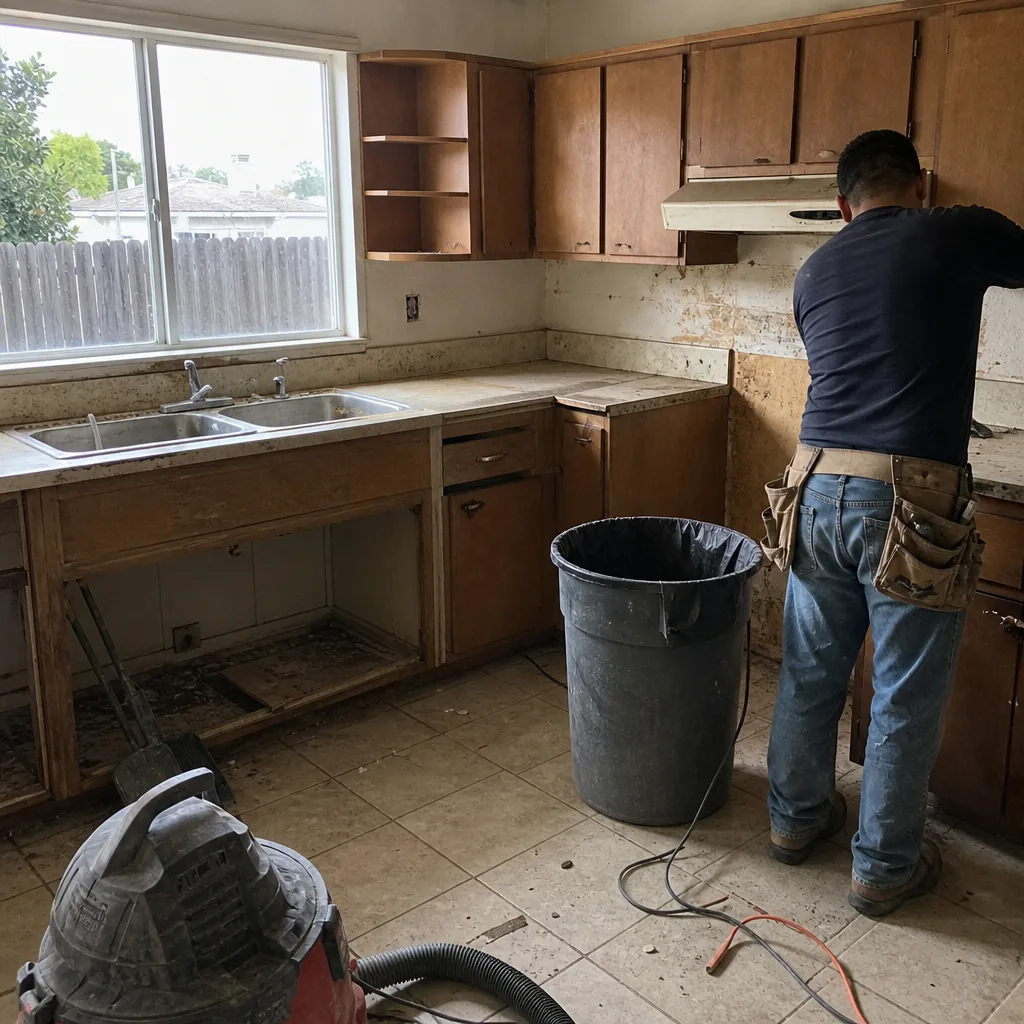
- Is the demo and disposal priced? In older Antioch neighborhoods – the 1950s and 1960s single-family homes common in the A Street and G Street areas – demo often uncovers surprises: single-skin walls, buried electrical conduit running through a hallway, or aluminum wiring in kitchen circuits. A bid that doesn’t itemize demo and hauling is likely to add it later as a change order.
- Are permits and fees listed separately? Permit costs are real and sometimes significant. A bid that folds them into a lump sum hides the number; a bid that omits them entirely is understated.
- Is there a milestone schedule with dates? “8-10 weeks” is a guess. A proper bid breaks the project into phases – demo, rough-in inspections, drywall, finish work, final walkthrough – with a target date for each.
- Is the workmanship warranty spelled out? Manufacturer warranties cover the shingle or the cabinet hardware. What covers the install? A manufacturer warranty is not a guarantee against a bad nail pattern. This is a distinction that comes up a lot with roofs.
- What’s the change order policy? No contractor can predict what’s behind a wall in a 60-year-old house, but a good one defines in writing how surprises get priced and approved. An open-ended “we’ll bill you for extras” clause is a red flag.
Line up the three bids side by side, one column per item, and price the missing line items in your head before you compare totals. The cheapest bid is often the most expensive project. Call (888) 419-3650 for a written line-item estimate that shows every scope element.
Step 4: Lock In the California Contract Clauses That Matter
California has specific contract requirements for home improvement jobs, and several of them are the ones contractors push back on. Knowing which clauses are non-negotiable protects you from liability you probably didn’t realize you were taking on.
Non-negotiable clauses
- Written contract over $500. California requires a written home improvement contract for any job over that amount. Don’t accept a handshake and a text message confirming a start date.
- Three-day right to cancel. For home improvement contracts signed at the buyer’s home, you have three business days to cancel. A contractor can’t waive this or pressure you to sign on the spot and start immediately.
- Payment schedule capped at $1,000 or 10% down. Down payment cannot exceed 10% of the total contract price or $1,000, whichever is less. A contractor asking for 30%, 40%, or the full job in advance is out of compliance or out of his league, or both.
- Written workmanship warranty. Get it in the contract, not verbal. Ours is a 730-Day Done Right Promise, one of the longest in residential construction – but even a 1-year warranty beats a “we stand behind our work” email.
- Lien waiver or notice. Under California’s mechanics lien rules, a subcontractor or supplier can lien your property if they’re not paid, even if you’ve paid the general contractor in full. Get a lien waiver from the contractor and a subcontractor list at signing, plus a prelim notice process in writing.
Two clauses contractors commonly push that shift liability to you
- The “owner-builder permit” clause. Some contractors will offer to knock a few thousand off the bid if you pull the permit as the owner. This shifts code compliance liability and inspection failures onto you, and it can void your homeowners coverage if there’s a structural or fire issue later. Don’t take it.
- The “not responsible for existing conditions” catch-all. A fair clause names what “existing conditions” means – termite damage, non-code plumbing, unpermitted prior work. An open-ended version lets the contractor walk away from anything they discover, which is exactly when you need them to finish.
Read the contract before you sign, not after the first invoice. Call (888) 419-3650 to see what a clean, written, line-item contract looks like – free estimate and design consult.
Red Flags Specific to Antioch’s Current Market
The construction market in Antioch right now has a specific problem other parts of Contra Costa County don’t see at the same scale: post-pandemic demand has pulled in crews from outside the county who are taking jobs they don’t have the local contractor network to finish. When the framing crew from two counties away discovers they need a stucco subcontractor who knows Antioch’s inspection requirements, they can lose weeks. That’s how a four-week project becomes an eight-week one on your dime.
Watch for these:
- No local subcontractor list. Ask them to name the electrician, plumber, and drywall crew they’re using. If they can’t produce a name, they don’t have one.
- Bids that are identical in word count to three others. Some out-of-area and online-lead-driven contractors run off a template bid. Real bids read like they’ve been through the house.
- Reviews that cluster around price. Reviews that say “great price, fast work” without specific detail are the easiest kind to generate and the least useful. A review that says “resolved a final inspection issue in two days” is more valuable.
- A truck with no ladders on it. Sounds like a joke. It isn’t. If the crew that shows up for a full-scope remodel has no ladders, no materials trailer, and no signage on any vehicle, that’s a project flipper rather than a builder. Background-checked, uniformed technicians on a marked job isn’t a guarantee, but the absence of any of it is a real signal.
- Calls that go to voicemail only. A contractor who doesn’t answer or return your calls during the sales process won’t answer during the build either.
- Specialists quoting outside their trade. A C-39 roofer quoting your kitchen remodel. A C-36 plumber quoting your roof. Cross-trade quotes from a specialist are a red flag, not a convenience.
- Stucco-specific warning for the Delta side of town. Antioch sits on the Delta, and older stucco homes near the water occasionally develop moisture issues from wind-driven rain. A contractor who doesn’t mention moisture barrier on a stucco-adjacent remodel doesn’t know the local climate.
How to Handle Payments and Protect Your Money
The payment schedule protects you or it protects the contractor. There’s no middle ground. The California default (10% or $1,000, whichever is less) is a floor, not a suggestion.
- Down payment: 10% or $1,000, whichever is less. On a $60,000 kitchen, that’s $1,000. Not $18,000.
- Progress payments: Tied to completed milestones that you can verify with your own eyes, not to calendar dates. “Framing complete” and “rough-in inspections passed” are milestones. “Week 4” is not.
- Material deliveries: If a payment is tied to materials being delivered on site, get a photo or walk the driveway. Don’t pay for tile that hasn’t arrived.
- Final payment: 10-20% held back until you have a signed off final inspection and a written punch list complete. Nobody gets fully paid until you’re satisfied.
- Lien waivers: Get a conditional lien waiver from each subcontractor and supplier with each progress payment, and a final unconditional waiver at close-out. This is the piece most homeowners skip and most regret.
The best financial structure links payment to inspection milestones so you’re never more than one milestone out of pocket. When a contractor offers that structure without being asked, that’s a company that’s been in business – and if they’ve been at it since 2014, they’ve learned why the structure works. Call (888) 419-3650 to talk through a milestone payment schedule on your project. Estimates are free.
Why Antioch Jobs Are Different From the Rest of the County
Antioch’s building stock is not Walnut Creek’s. The city grew fast in the 1950s through the 1980s, which means a lot of current remodels are happening in homes that were built when single-pane aluminum windows, 40-amp electrical service, and copper-pipe-that’s-now-at-end-of-life were standard. Any contractor working in Antioch needs to expect to find one of those three on an average kitchen or bathroom remodel, and needs to know how to price it upfront.
The Delta climate also matters. Antioch sits on the San Joaquin River, with wind exposure that’s higher than inland Contra Costa, and summer heat that’s more intense than the bay side of the hills. Roofing needs to be spec’d for wind uplift more carefully than in an inland city. Fence installation – wood particularly – degrades faster on wind-exposed lots. Driveways and pavers need to be graded for drainage in yards that can be flat and prone to ponding. These are details that come from working in the city, not from a generic building knowledge base.
Permit-wise, additions and ADUs in Antioch have to account for the city’s specific requirements on lot coverage, height limits, and setbacks – and the state’s ADU law changes since 2020 have simplified many of those paths but not eliminated the local requirements. If you’re planning an addition or a backyard unit, work with a contractor who has pulled one in Antioch recently. Our Home Additions & ADU in Antioch page has more on how the process runs here, and our Driveway & Pavers in Antioch and Fence Installation in Antioch pages cover the outside-the-house scopes that Antioch lots usually need first.
Common Mistakes to Avoid
These turn up repeatedly. If you avoid all seven, you’ll be ahead of most homeowners in Antioch.
- Hiring off the first five-star review. Review platforms don’t show CSLB complaints. Cross-check every finalist against the CSLB database before you sign.
- Accepting a bid that doesn’t name materials. “Architectural shingles” is not a roofing material; it’s a category. KraftMaid is. GAF Timberline is. If the bid won’t say what brand and model, the answer is whatever’s cheapest that week.
- Allowing the contractor to pull the permit in your name. Owner-builder permits shift code compliance and inspection liability to you. In Antioch, that can also complicate resale.
- Paying more than 10% or $1,000 down. This is California law, and it’s the single best protection written into statute. Contractors who argue with it aren’t on your side.
- Skipping the subcontractor list at signing. You need to know who the electrician and plumber are in advance, both to verify their licensing and to preserve your lien protection.
- Treating the construction schedule as fixed. Antioch’s permit review timelines shift with the county’s workload. Build a two-week buffer into your expectations for plan review, and plan for your house to be off-limits for longer than the contractor estimates.
- Hiring a crew without a local subcontractor network. Out-of-area crews are a growing presence in Antioch right now, and they’re the most common source of mid-project schedule collapse when a trade they’ve promised turns out to have no one on the ground here to do it.
And one more, because we’ve seen it end jobs: never send money without a written invoice tied to a completed milestone. Texted cash apps are convenient and leave you with no proof of payment when you need it.
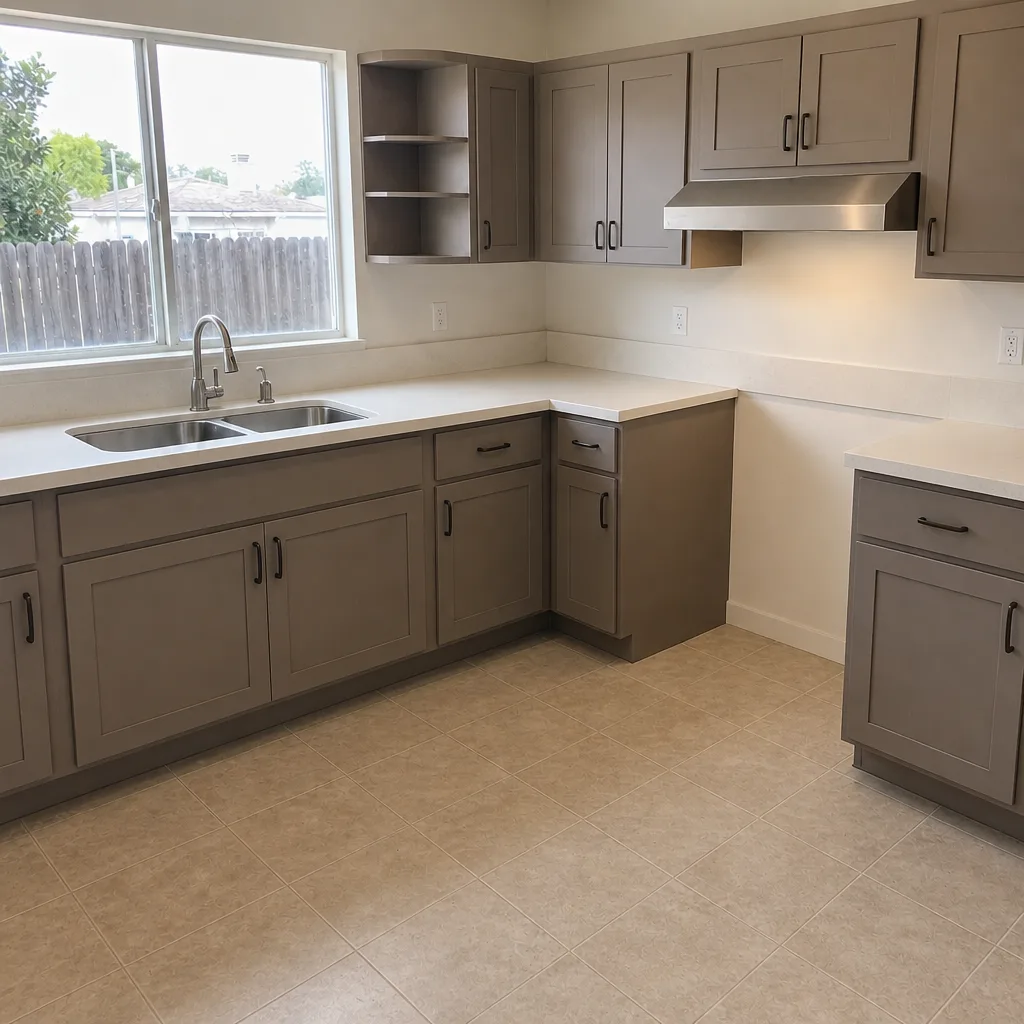
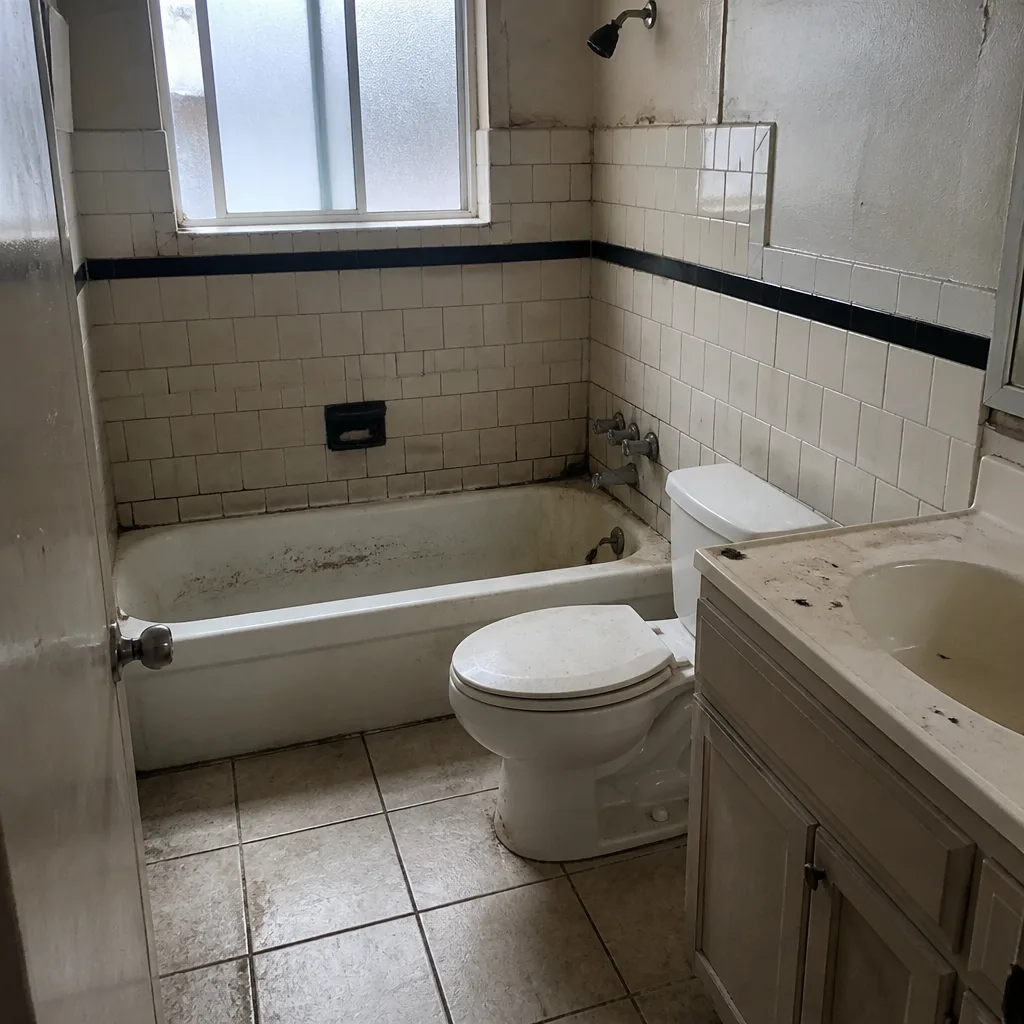
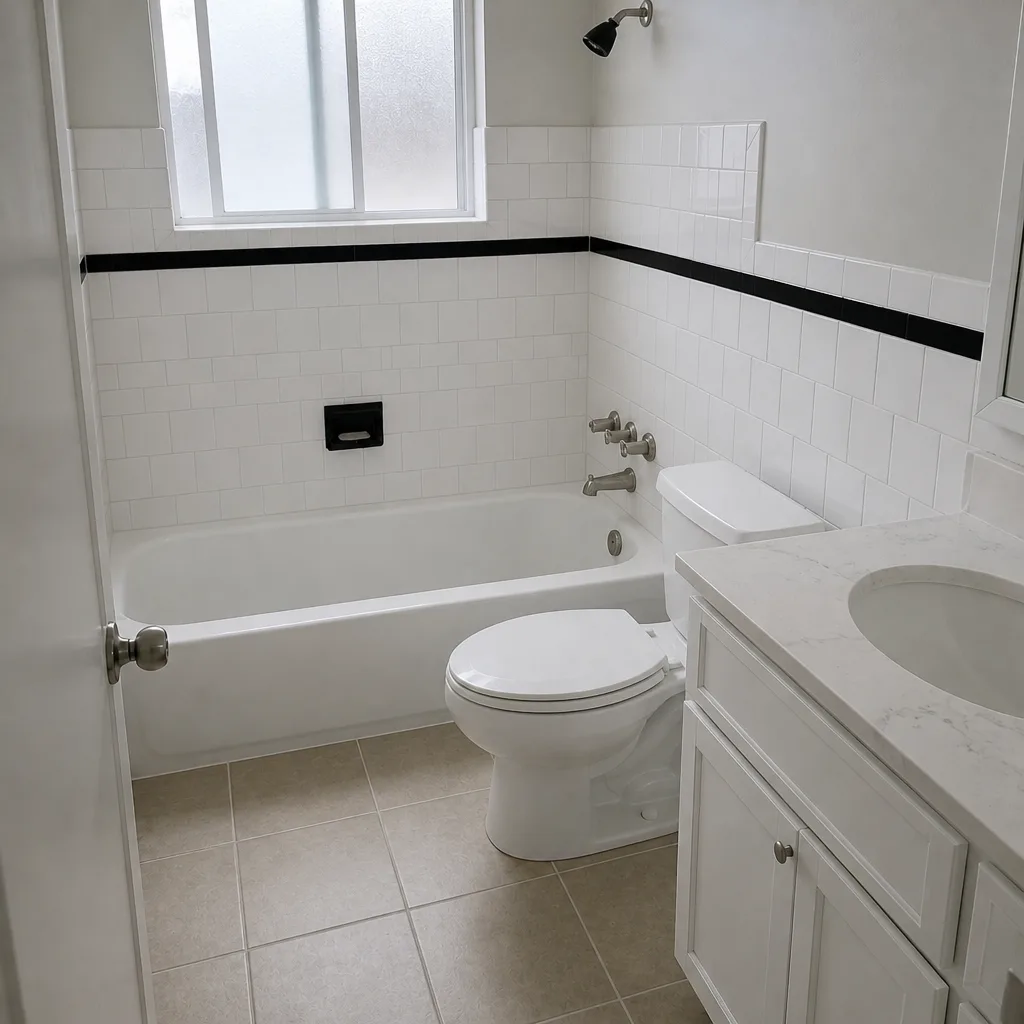
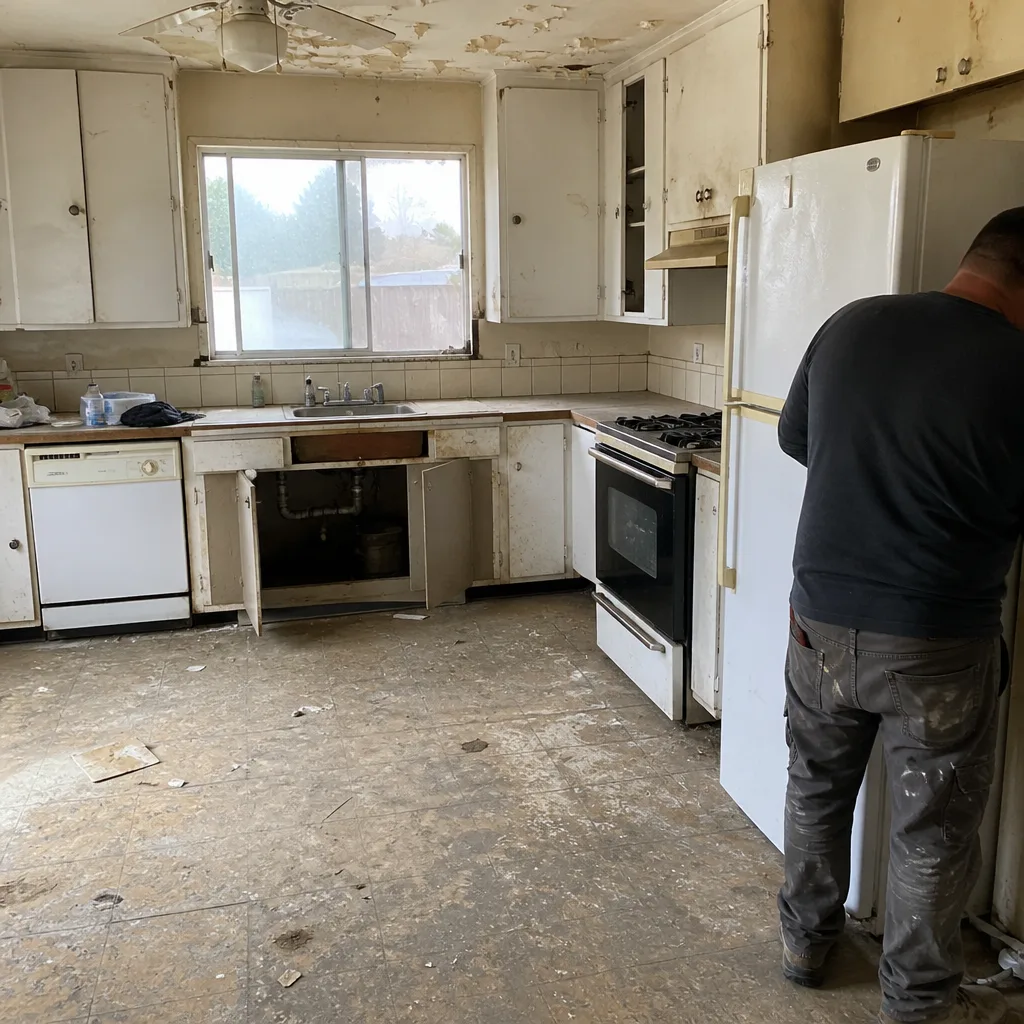
See the difference
 Before
 After
 Before
 After
 Before
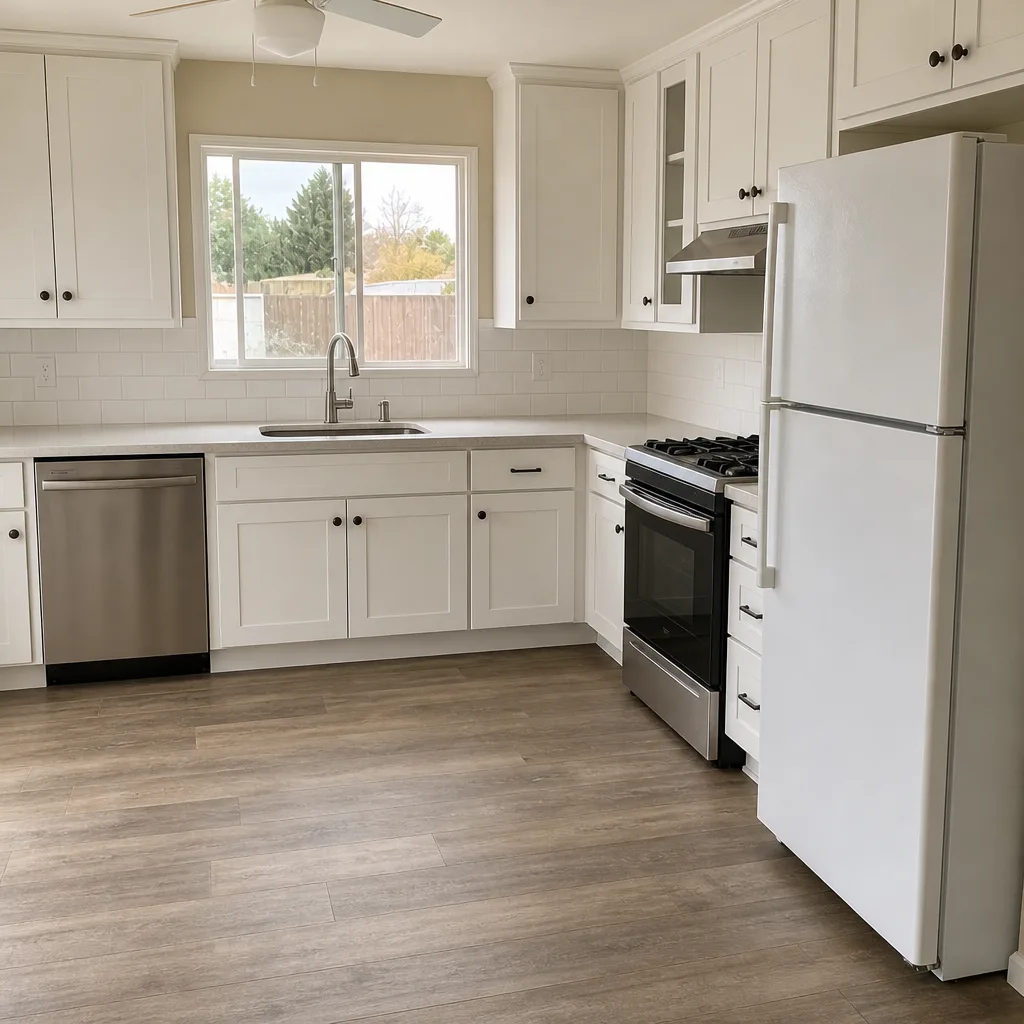 After
When to Call a Professional
Some projects clearly call for a professional – and we’d rather tell you that plainly. Any work that touches the structure (load-bearing walls, additions, ADU construction), any electrical panel or full-circuit work, any gas line work, anything on a steep roof or involving heights above a single-story eave, and any permitted scope in Antioch is work you shouldn’t be doing yourself. The code requirements are real, the injury risk is real, and the permit process is unforgiving about owner-builder assumptions. The scopes where a homeowner can usually self-perform with reasonable safety: painting, minor landscaping, fence maintenance on existing fences, and cosmetic work under six feet. If your project is a kitchen overhaul, a bathroom renovation, a roof replacement, an addition, or an ADU in Antioch, Groundwork Construction Co. of Antioch offers free estimates – call (888) 419-3650. A live person answers 24/7, so you can call Sunday night with questions and get a real answer.
Frequently Asked Questions
Go to cslb.ca.gov, click “Check a License,” and enter the license number from the contractor’s written bid. The record will show the license status, the classifications the contractor is legally permitted to work under, the bond and insurance on file, and any complaints or disciplinary actions. If the contractor won’t give you a license number, that’s your answer. Call (888) 419-3650 for a license-verified free estimate.
Yes – most kitchen and bathroom remodels in Antioch require a permit, especially if you’re moving plumbing or electrical, or changing the footprint. Cosmetic work (painting, cabinet refacing without changing the layout, replacing a light fixture on a like-for-like basis) typically doesn’t. When in doubt, pull the permit. Call (888) 419-3650 to ask whether your specific scope needs one – free estimate and design consult.
California law caps the down payment on a home improvement contract at 10% of the total price or $1,000, whichever is less. Any contractor asking for more than that is out of compliance, regardless of how they frame it. Call (888) 419-3650 to see a milestone-based payment schedule – written, itemized, and aligned with that cap.
Workmanship warranties on residential construction vary widely. One year is the common minimum; premium builders offer longer. The number matters less than what’s actually covered and whether it’s in writing – manufacturer warranties cover the material, not the install. Our 730-Day Done Right Promise is one of the longest workmanship guarantees in residential construction – if it’s not done right, we make it right. Call (888) 419-3650 for a copy of the written warranty language on your project.
Yes, more than in the past. Post-pandemic demand for construction in Antioch has attracted crews from outside Contra Costa County, and some of them don’t have established subcontractor networks here. The result is often a crew that can start a project but can’t finish it on schedule because their electrician or drywall sub isn’t local. Ask any contractor who bids your job to name their subcontractor list up front. Call (888) 419-3650 to see an Antioch-focused crew list.
You can, but you shouldn’t on anything beyond your primary residence’s minor repairs. An owner-builder permit makes you legally responsible for code compliance and inspection failure, which can void your homeowners coverage on future issues and complicate resale. Some contractors will offer a discount to shift the permit to your name – decline it. Call (888) 419-3650 to have permits pulled under the contractor’s license, the way it should be.
A full kitchen remodel in Antioch typically runs 6 to 10 weeks once permits are in hand, plus 3 to 6 weeks for plan review depending on the current county workload. Bathrooms run 3 to 5 weeks. Additions and ADUs run 4 to 6 months including permitting. The single biggest cause of a blown schedule is missing materials or missed inspections, not scope surprises. Call (888) 419-3650 for a milestone schedule on your specific project.
The Bottom Line
Hiring a construction contractor in Antioch comes down to five steps done in the right order: CSLB verification with a hard look at the classifications field, an interview structured around permits and subcontractor networks, three written bids compared by what’s missing rather than by bottom line, contract clauses that keep liability off your side of the table, and a payment schedule capped in California’s favor. No amount of five-star reviews substitutes for that sequence. It takes about a week of your time to run, and it’s the difference between a project that finishes on schedule and one that becomes a cautionary tale at your neighbor’s barbecue. Run the sequence.
If you want a contractor whose license, insurance, contract, and warranty are ready for you to check before you ask – and one whose technicians are background-checked and arrive in uniform – call Groundwork Construction Co. of Antioch at (888) 419-3650 to schedule your free estimate and design consult. A live person answers around the clock. Upfront pricing, no surprises. Permits pulled and inspections passed. We’re talking with Antioch homeowners all week. Take us up on the conversation.
Explore our full scope at the Groundwork Construction Co. of Antioch home.
Written by the team at Groundwork Construction Co. of Antioch.